


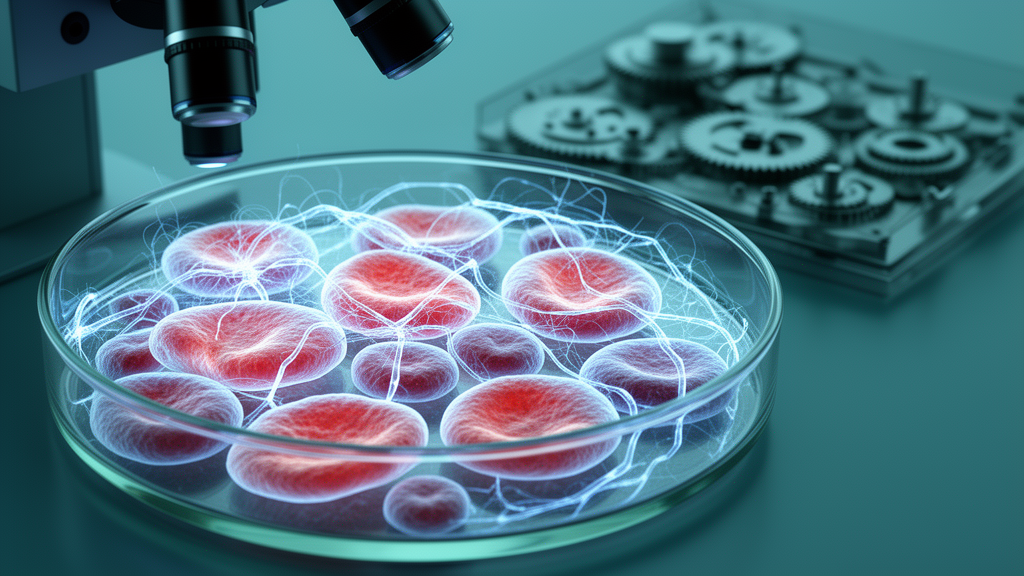
A large-scale benchmarking study published in Nature Methods has found that self-supervised deep learning models can read the microscopic fingerprints of drugged cells more reliably than the classical feature-engineering pipelines that have dominated morphological profiling for years. The work, led by Walid M. Abdelmoula and colleagues, pretrained four self-supervised learning approaches on roughly 1.77 million unlabeled images covering 119,876 chemical compounds from the Joint Undertaking for Morphological Profiling–Cell Painting (JUMP–CP) dataset, generated across seven laboratories, and then tested how well the learned representations could recover biological relationships the models had never been told about.
In a Cell Painting assay, cells are stained so that the nucleus, mitochondria, endoplasmic reticulum, Golgi apparatus, actin cytoskeleton and nucleoli all light up in different channels, and a perturbing compound leaves a characteristic visual signature. Traditionally, extracting that signature has required segmenting individual cells and hand-designing hundreds of measurements of shape, intensity and texture, most commonly with the open-source CellProfiler software. The new study bypasses both steps entirely: the foundation models learn directly from raw multi-channel images, with no labels, no segmentation masks and no curated feature lists.
The four models spanned three families of self-supervised learning. DINO relies on contrastive knowledge distillation, training a student network to match a slowly updated teacher across augmented crops of the same image. MAE and iTPN are masked generative models that learn by reconstructing randomly hidden patches of the input, with iTPN adding a hierarchical vision transformer architecture. DINOv2 is a hybrid that combines the contrastive distillation of DINO with masked patch modeling through a concurrent iBOT objective. All models shared the same ViT-B16 backbone so that differences in performance could be attributed to the learning mechanism rather than to architecture.
After pretraining, the model weights were frozen and used purely as feature extractors. On the held-out JUMP–Target2 set of 302 compounds annotated to 160 gene targets, the top-performing self-supervised models significantly outperformed CellProfiler in compound-replicate retrieval, with P values at or below 0.001 from two-sided Welch’s t-tests. At a stringent retrieval threshold of mean average precision of at least 0.75, DINOv2 recovered 129 compounds (42.7 percent of the set) and DINO 128 (42.4 percent), compared with 90 compounds (29.8 percent) for CellProfiler, 107 for iTPN and only 53 for MAE. Notably, DINO and DINOv2 covered 96.6 percent of the compounds CellProfiler retrieved while adding many more of their own.
The contrastive and hybrid models also proved more biologically informative. On the phenotypic consistency task, which asks whether a model can retrieve a different compound sharing the same gene target across different experimental batches, DINO and DINOv2 delivered 31 to 37 percent gains in site-averaged mean average precision over CellProfiler for mechanism-of-action retrieval on the EU-OPENSCREEN Bioactives dataset of 2,464 compounds imaged in HepG2 and U2OS cells at four independent sites. In HepG2 cells, DINO retrieved 33 percent more mechanisms of action than CellProfiler with cross-site agreement, and it uniquely detected polo-like kinase and bromodomain inhibitors consistently across all four screening sites, with mean average precision scores of 0.326 and 0.076 against 0.028 and 0.027 for CellProfiler.
Generalization to unseen cell types held up in further tests. Applied without any fine-tuning to the BBBC021 dataset of MCF-7 breast cancer cells, DINOv2 achieved the best overall not-same-compound classification accuracy of 91.3 percent, ahead of CellProfiler at 90 percent, DINO at 86.4 percent, iTPN at 79.6 percent and MAE at 68.9 percent, even though one of the three fluorescence channels in that dataset had never been seen during pretraining. On the RxRx1 dataset of 1,138 gene knockdowns across four cell types, the U2OS-pretrained models generalized to HepG2, HUVEC and RPE cells, with DINOv2 attaining retrieved distinctiveness scores of at least 95 percent after postprocessing.
A substantial part of the study concerns the unglamorous but decisive problem of batch effects, the systematic technical variation that arises from differences in staining, plate layout, timing and equipment between laboratories. The authors systematically compared three correction methods applied to the learned embeddings: sphering, a whitening transform computed on control wells; plate-wise robust median absolute deviation normalization; and Harmony, an iterative algorithm originally developed for single-cell RNA sequencing. Applying all three in sequence, in the order sphering, then MAD, then Harmony, gave the best results for self-supervised features and significantly improved the reproducibility task for every model. Yet the study is candid that within-source correction is far easier than aligning data across laboratories, which remained challenging.
The ablation experiments also yielded practical lessons for anyone training such models. Models pretrained on data from multiple sources outperformed those trained on a single source even when the single-source dataset contained about 1.7 times more images, suggesting that chemical diversity matters more than sheer image volume. Combining cross-batch sampling, in which crops of the same perturbation are drawn from different experimental batches, with standard augmentation produced the best overall performance. A higher patch-token resolution of 8 by 8 pixels actually hurt, apparently because the quadratic cost of self-attention makes the longer token sequences prone to overfitting, while the larger ViT-B architecture beat the smaller ViT-S on both reproducibility and biological relevance. On the computational side, DINOv2 trained 1.7 times faster than DINO on the same data, and inference is quick across all models at roughly 1.5 minutes per plate.
The authors also probed what the models actually learn. By projecting local patch representations into principal component space and mapping them back onto the images, they showed that structures with similar representations cluster spatially, and that the area of the nucleus identified purely from these unsupervised clusters correlated strongly with the true nucleus area measured from the DNA channel, with DINOv2 correlation coefficients consistently exceeding 0.8. This suggests the models capture spatially resolved cellular semantics without any annotation, though the authors stress that deep learning features remain less interpretable than the engineered measurements of classical pipelines, an acknowledged limitation in a drug discovery context.
The study’s authors have released the pretrained models publicly under a CC BY-NC-SA 4.0 license, along with inference code and embeddings, hoping to accelerate adoption in the profiling community. The limitations are clearly stated: the models were pretrained exclusively on U2OS cells with chemical perturbations, comprehensive evaluation on large-scale genetic perturbation datasets such as the CRISPR and overexpression arms of JUMP–CP remains to be done, and more complex cell types such as neurons may require fine-tuning. Still, the consistent pattern across thousands of compounds, multiple laboratories and five cell types makes a strong case that label-free self-supervised representations, particularly those of DINO and DINOv2, offer a scalable and robust alternative to segmentation-and-feature-engineering workflows for turning cell images into biological insight.
Subject of Research: A comparative benchmark of self-supervised learning models for image-based morphological profiling of cellular perturbations
Article Title: Advancing morphological profiling with self-supervised learning through comparative insights into representation learning of cellular perturbations
Article References: Abdelmoula, W. M., Albuquerque, T., Jaensch, S., Pati, P., Van Dyck, M., Allen, S. J., Zhang, L., Mansi, T., & Liao, R. (2026). Advancing morphological profiling with self-supervised learning through comparative insights into representation learning of cellular perturbations. Nature Methods. https://doi.org/10.1038/s41592-026-03270-z
Image Credits: AI Generated
DOI: 10.1038/s41592-026-03270-z
Keywords: self-supervised learning, morphological profiling, Cell Painting, JUMP-CP, DINOv2, foundation models, drug discovery, batch effects, high-content imaging, CellProfiler, mechanism of action, vision transformers
News Source: Gregory Coleman. (October 29, 2026). Self-Supervised AI Models Outpace Classical Pipelines in Reading Cell Morphology. Scienmag.



