• HOME
  • NEWS
  • EXPLORE
    • CAREER
      • Companies
      • Jobs
    • EVENTS
    • iGEM
      • News
      • Team
    • PHOTOS
    • VIDEO
    • WIKI
  • BLOG
  • COMMUNITY
    • FACEBOOK
    • INSTAGRAM
    • TWITTER
Wednesday, July 8, 2026
BIOENGINEER.ORG
No Result
View All Result
  • Login
  • HOME
  • NEWS
  • EXPLORE
    • CAREER
      • Companies
      • Jobs
        • Lecturer
        • PhD Studentship
        • Postdoc
        • Research Assistant
    • EVENTS
    • iGEM
      • News
      • Team
    • PHOTOS
    • VIDEO
    • WIKI
  • BLOG
  • COMMUNITY
    • FACEBOOK
    • INSTAGRAM
    • TWITTER
  • HOME
  • NEWS
  • EXPLORE
    • CAREER
      • Companies
      • Jobs
        • Lecturer
        • PhD Studentship
        • Postdoc
        • Research Assistant
    • EVENTS
    • iGEM
      • News
      • Team
    • PHOTOS
    • VIDEO
    • WIKI
  • BLOG
  • COMMUNITY
    • FACEBOOK
    • INSTAGRAM
    • TWITTER
No Result
View All Result
Bioengineer.org
No Result
View All Result
Home NEWS Science News Health

Self-moisturising smart contact lenses

Bioengineer by Bioengineer
January 22, 2020
in Health
Reading Time: 2 mins read
0
IMAGE
Share on FacebookShare on TwitterShare on LinkedinShare on RedditShare on Telegram

IMAGE

Credit: Tohoku University


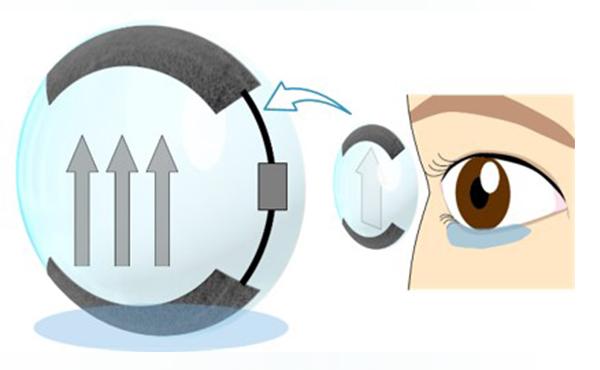
Researchers at Tohoku University have developed a new type of smart contact lenses that can prevent dry eyes. The self-moisturising system, which is described in the journal Advanced Materials Technologies, maintains a layer of fluid between the contact lens and the eye using a novel mechanism.

Smart contact lenses are wearable devices that could accelerate vision beyond natural human capabilities. They are being developed for a wide range of applications from non-invasive monitoring to vision correction to augmented reality display.

“Although there have been many recent advancements in new functions for smart contact lenses, there has been little progress in solving the drawbacks associated with wearing contact lenses day to day,” says Professor Matsuhiko Nishizawa, an engineer at Tohoku University.

One of the biggest problems with contact lenses is they can cause “dry eye syndrome” due to reduced blinking and increased moisture evaporation. Dry eye syndrome can lead to corneal wounds and inflammation as well as a feeling of discomfort.

In order to tackle this important problem, the researchers developed a new mechanism that keeps the lens moist. The system uses electroosmotic flow (EOF), which causes liquid to flow when a voltage is applied across a charged surface. In this case, a current applied to a hydrogel causes fluid to flow upwards from the patient’s temporary tear reservoir behind the lower eyelid to the surface of the eye.

“This is the first demonstration that EOF in a soft contact lens can keep the lens moist,” says Nishizawa.

The researchers also explored the possibility of using a wireless power supply for the contact lenses. They tested two types of battery, a magnesium-oxygen battery and an enzymatic fructose-oxygen fuel cell, both of which are known to be safe and non-toxic for living cells. They showed that the system can be successfully powered by these biobatteries, which can be mounted directly on the charged contact lens.

Further research is needed to develop improved self-moisturizing contact lenses that are tougher and capable of operating at smaller currents.

“In the future, there is scope to expand this technology for other applications, such as drug delivery,” says Nishizawa.

###

Media Contact
Matsuhiko Nishizawa
[email protected]
81-227-957-003

Original Source

https://www.tohoku.ac.jp/en/press/selfmoisturising_smart_contact_lenses.html

Related Journal Article

http://dx.doi.org/10.1002/admt.201900889

Tags: Biomedical/Environmental/Chemical EngineeringBiotechnologyChemistry/Physics/Materials SciencesMedicine/Health
Share12Tweet8Share2ShareShareShare2

Related Posts

Justice-Involved Individuals Use Emergency Departments Significantly More Often

July 8, 2026

FOXM1 Inhibition Enhances Maturation of Human iPSC-Derived Liver Cells

July 8, 2026

Smart textile electrodes map brain-to-muscle signals on the body surface.

July 8, 2026

Evidence supports traditional Chinese medicine for chikungunya fever management.

July 8, 2026
Please login to join discussion

POPULAR NEWS

  • Detection of EDCs in Breast Milk and Infant Urine Up to Six Months Highlights Early Exposure Risks

    77 shares
    Share 31 Tweet 19
  • New Drug Candidate Developed at McMaster Shows Potential for Treating Brain Cancer

    58 shares
    Share 23 Tweet 15
  • KTU Researchers Explore Ultrasound’s Role in Enhancing Blood Flow Beyond Diagnostics

    53 shares
    Share 21 Tweet 13
  • 高齢者の骨粗鬆症治療の持続性比較

    51 shares
    Share 20 Tweet 13

About

We bring you the latest biotechnology news from best research centers and universities around the world. Check our website.

Follow us

Recent News

Harnessing Neglected Livestock for Sustainable Food Systems in the Global South

Proteomic Analysis Identifies Prognostic Subgroups in SMARCA-Deficient Esophageal Cancer

DNA from bees and honey reveals honeybee ecology and interactions over time

Subscribe to Blog via Email

Enter your email address to subscribe to this blog and receive notifications of new posts by email.

Join 83 other subscribers
  • Contact Us

Bioengineer.org © Copyright 2023 All Rights Reserved.

Welcome Back!

Login to your account below

Forgotten Password?

Retrieve your password

Please enter your username or email address to reset your password.

Log In
No Result
View All Result
  • Homepages
    • Home Page 1
    • Home Page 2
  • News
  • National
  • Business
  • Health
  • Lifestyle
  • Science

Bioengineer.org © Copyright 2023 All Rights Reserved.