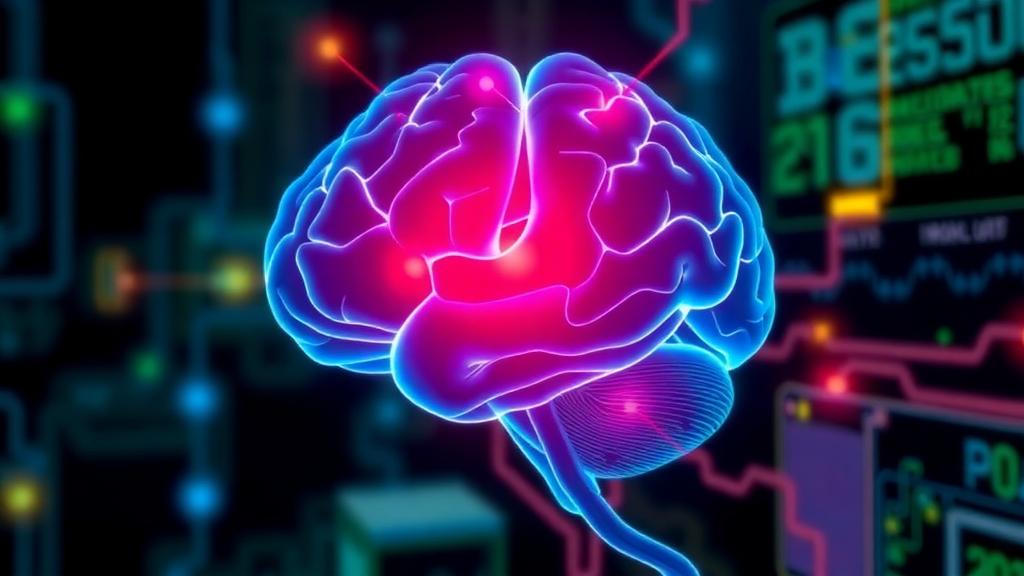
For decades, one of the quiet frustrations of medicine has been the gap between the dose a doctor prescribes and the amount of drug that actually arrives at the tissue where it is needed. Blood tests drawn hours apart, interpreted through population-average pharmacokinetic models, offer only a blurry snapshot of what is happening inside a patient. A team of bioengineers and control theorists now reports a strikingly more direct solution: a feedback controller that measures drug concentrations in real time at the site of action, learns the pharmacokinetics of the individual patient on the fly, and autonomously adjusts infusion rates to hold drug levels precisely on target. Writing in Bioengineering & Translational Medicine, the researchers demonstrate the system by controlling anesthetic concentrations inside the brains of live, freely moving rats, achieving roughly twofold improvements in both speed and precision over their earlier population-based approach.
The foundation of the technology is a class of devices called electrochemical aptamer-based, or EAB, sensors. Each sensor consists of a short strand of DNA or RNA, selected in vitro to bind a specific molecular target, that is modified with a redox reporter and covalently attached to an interrogating electrode. When the target molecule binds, the aptamer changes shape, altering the transfer of electrons between the reporter and the electrode and producing a measurable electrochemical signal. Because this mechanism depends on binding-induced conformational change rather than on the chemical or enzymatic reactivity of the target, EAB sensors are reagentless, single-step, rapidly reversible, and readily adaptable to new molecules. Crucially, they are selective enough to operate in situ in the living body, where they have been used to measure dozens of targets at second-scale resolution in blood plasma, in the cerebrospinal fluid of the brain, and in the interstitial fluid of tumors, muscle, and subcutaneous tissue.
Continuous molecular measurements of this kind open the door to closed-loop drug delivery, analogous to the artificial pancreas systems that combine continuous glucose monitoring with insulin pumps. The team had previously shown that a simple proportional-integral-derivative (PID) controller, informed by EAB sensor readings, could maintain constant plasma levels of the antibiotics tobramycin and vancomycin in rats, and could even make plasma concentrations follow predefined, time-varying profiles that mimic human pharmacokinetics. But plasma is not where most drugs act. The true site of action is usually a solid tissue, and controlling drug concentrations there introduces a formidable complication: the slow transport of drug molecules between the compartment where the drug is delivered, typically the bloodstream, and the compartment where it is measured, such as the brain.
That transport lag proved to be the Achilles heel of PID control. In their earlier demonstration of in-brain control, the researchers used a sensor placed in the lateral ventricle of a rat to regulate intracranial levels of the anesthetic procaine delivered intravenously. Because procaine must cross the blood-brain barrier, delays between dosing and measurable effect are significant, and overshooting the target concentration could have lethal consequences. To be safe, the team tuned a conservative PID controller using population pharmacokinetics gathered from seven training animals. Applied to an eighth animal, the controller held in-brain procaine at 100 micromolar for more than an hour and a half with a root mean squared deviation of 18 micromolar, a level of precision far beyond conventional dosing. But it took nearly an hour to reach the set point, and simulations showed that a more aggressively tuned controller would have caused dangerous overshoots in individual animals whose pharmacokinetics strayed from the population mean.
The new adaptive controller abandons population data entirely. Instead of assuming anything about how the subject will handle the drug, the algorithm learns the individual’s pharmacokinetics while simultaneously steering the drug concentration toward its target. The core of the approach is an autoregressive moving average model of order (2, 1), a compact mathematical description in which the concentration measured at each time step is predicted from a weighted combination of recent past concentrations and recent infusion rates. The team chose this model class because it is simple enough to fit rapidly at every measurement, yet rich enough to capture the single-exponential pharmacokinetics previously observed for procaine in the brain. Validated against data from the earlier PID experiment, the fitted model successfully predicted concentrations fifty time steps into the future, with approximately 78 percent of subsequent noisy measurements falling within the estimated 95 percent confidence intervals.
Control begins with a carefully designed learning phase. The controller first delivers the drug at the maximum allowed infusion rate, a limit set by equipment, physiology, or animal welfare, until the measured concentration reaches a first intermediate threshold, set here at roughly 35 percent of the final target. The infusion rate is then cut in half until a second threshold, around 60 percent of the target, is reached; if that threshold proves unreachable, the rate is gradually increased. This impulse-like profile, similar to infusion patterns previously shown to be optimal for pharmacokinetic estimation, rapidly moves the animal toward the set point while generating rich data about how the individual responds to dosing. Once the second threshold is crossed, the algorithm fits its ARMA model to the accumulated concentration and infusion history and hands control to a model predictive control scheme.
Model predictive control works by computing the optimal future infusion profile that will drive the predicted concentration to the desired set point as quickly as possible, given the identified model. Because the model is only an approximation, and because physiological rate constants governing drug transport and elimination can themselves drift over time, the controller trusts only the first value of that optimal profile. At the next measurement, the newest concentration and infusion rate are added to the data set, the oldest pair is discarded, the model is refitted, and the optimization is solved again. This receding-horizon strategy, solved using an interior point optimizer, lets the controller continuously correct its own internal picture of the patient as treatment proceeds.
The performance gains were substantial. Challenged to hold in-brain procaine at 100 micromolar for an hour, the adaptive controller completed its roughly 24-minute learning phase and then reached the target just 7.5 minutes later, about 31.5 minutes after the start of infusion, and maintained it with a root mean squared deviation of 10.2 micromolar. Both the time to set point and the control precision improved approximately twofold over the earlier PID controller, and the algorithm did so with no prior knowledge of the drug’s pharmacokinetics at either the population or individual level. Repeating the experiment with a 200 micromolar target, the controller took over at 12.4 minutes and reached the set point 9.7 minutes later, holding it with an RMSD of 11.3 micromolar. The system also tracked stair-step concentration profiles in both directions, descending from 100 to 50 micromolar and ascending from 50 to 100 micromolar, with deviations as low as 4.1 micromolar during the held phases.
The researchers are candid about the limitations of the current implementation. The ARMA (2, 1) structure proved a reliable approximation for procaine in the brain, but other drugs, other tissues, or rapidly changing physiological conditions may demand more sophisticated models, and exploring the algorithm’s sensitivity to shifting pharmacokinetics remains an open research direction. Even so, the implications reach well beyond anesthesia. The same architecture could, in principle, maintain a chemotherapeutic within a tumor or an antibiotic at a site of infection, keeping concentrations inside the therapeutic window and avoiding both undertreatment and toxicity. In preclinical drug development, the ability to emulate human pharmacokinetic time courses accurately in animal models, and to eliminate pharmacokinetic variability between animals, could sharpen the value of those models and potentially reduce the time and cost of bringing new therapies to market. By pairing continuous molecular sensing with a controller that learns each patient as it treats them, the work points toward a future in which drug dosing becomes a genuinely personalized, self-correcting process.
Subject of Research: Adaptive feedback control of in-tissue drug concentrations using real-time electrochemical aptamer-based sensors in rats
Article Title: Adaptive feedback control for the high‐precision management of in‐tissue drug concentrations
Article References: Erdal, M. K., Gerson, J., Kippin, T. E., Plaxco, K. W., & Hespanha, J. P. (2026). Adaptive feedback control for the high‐precision management of in‐tissue drug concentrations. Bioengineering & Translational Medicine, 11(5), Article e70146. https://doi.org/10.1002/btm2.70146
Image Credits: AI Generated
DOI: 10.1002/btm2.70146
Keywords: drug delivery, feedback control, EAB sensors, pharmacokinetics, model predictive control, closed-loop dosing, procaine, therapeutic drug monitoring, personalized medicine, brain drug concentrations, ARMA model, preclinical research
News Source: Cassandra Pierce. (October 7, 2026). Self-Learning Controller Keeps Drug Levels on Target in the Living Brain. Scienmag.