Seeds of the high-elevation plant Acaena macrocephala carry bacterial and fungal communities whose composition differs across an elevational gradient in the southern Andes, according to a field-based microbiome study in south-central Chile. The researchers found that bacterial diversity was lower at the lowest site than at the middle and highest sites, while fungal diversity did not differ significantly among elevations. Community composition varied along the gradient in both groups, but the effect was more pronounced for bacteria.
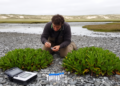
The study examined seeds collected from three locations on the Batea Mahuida Plateau in Chile’s Araucanía Region: low elevation at 1,390 metres above sea level, mid-elevation at 1,715 metres and high elevation at 1,934 metres. The researchers profiled seed-associated bacteria by amplicon sequencing of the 16S rRNA gene and fungi by sequencing the fungal internal transcribed spacer, or ITS, region. These markers were used to characterize microbial diversity and community composition at each of the three sites.
Bacterial communities at the low- and mid-elevation sites were dominated by the genus Sodalis and the families Pectobacteriaceae and Morganellaceae. In contrast, the fungal communities consistently included dominant representatives of the genera Eremothecium, Holleya and Cladosporium, as well as the family Saccharomycetaceae, across all three elevations. The results therefore revealed a stronger elevation-linked shift in the bacterial communities than in the fungal communities. They also showed that lower bacterial diversity was confined to the low-elevation collection rather than being a general feature of the plant’s seed microbiota throughout the sampled range.
The findings describe associations rather than demonstrated effects on the plant. The study did not test whether the detected microorganisms improve seed germination, growth, establishment or survival, nor did it establish that elevation directly caused the observed community differences. Instead, it characterized the bacteria and fungi associated with A. macrocephala seeds across a defined elevational gradient. The authors propose that seed-associated microbiomes may constitute a reservoir of functional microorganisms that could contribute to the plant’s adaptation and persistence in harsh high-Andean environments, but that potential role remains to be tested experimentally.
This ecological context is relevant because high mountain environments in the South American Andes are marked by intense ultraviolet radiation, large temperature fluctuations and low nutrient availability, all of which constrain plant establishment. Plants can form interactions with native microbial communities as part of their survival strategies, and the present results indicate that the microbial communities carried by A. macrocephala seeds are not distributed identically across the sampled elevations. By providing the first characterization of seed-associated microbiomes in these ecosystems, the study establishes a baseline for future work on the diversity, functions and possible effects of these microbial partners. Its conclusions remain limited to the sampled plant, locations and molecular survey, leaving the extent to which similar patterns occur elsewhere in the southern Andes unresolved.
Subject of Research: Seed-associated bacterial and fungal microbiomes of Acaena macrocephala across an Andean elevational gradient
Article Title: Revealing the seed-associated microbiomes of the high mountain plant Acaena macrocephala across an elevational gradient in the southern Andes
Article References: Villarroel-Contreras, M. J., Sagredo-Sáez, C., Alvarado-Oporto, V., Alvarado-Beltrán, R., Hernández-Forte, I., Cid-Maldonado, J., Fuentes-Ramírez, A., Fuentes-Quiroz, A., Dias, N. B., & Herrera, H. (2026). Revealing the seed-associated microbiomes of the high mountain plant Acaena macrocephala across an elevational gradient in the southern Andes. BMC Plant Biology. https://doi.org/10.1186/s12870-026-09799-7
Image Credits: AI Generated
DOI: 10.1186/s12870-026-09799-7
Keywords: Acaena macrocephala, seed microbiomes, plant-associated microbes, bacterial diversity, fungal diversity, elevational gradient, southern Andes, amplicon sequencing, Batea Mahuida Plateau, high-altitude plants, Revealing, seed-associated
News Source: Alan Morgan. (October 26, 2026). Seed microbiomes vary across elevations in high-Andean Acaena macrocephala. Scienmag.