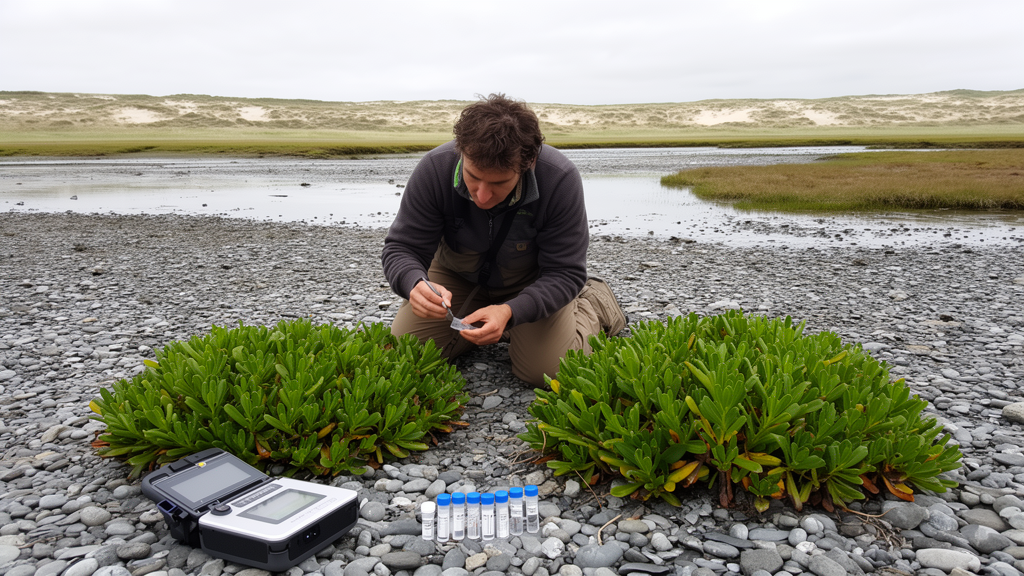
Whole-genome resequencing of 170 individuals from 17 wild populations across the natural distribution range of the recretohalophyte Limonium sinense identified two major genetic lineages, northern and southern, separated by a clear genetic boundary. The study found that geographic isolation was the core factor associated with the divergence, while Holocene climatic oscillations, anthropogenic disturbance and habitat fragmentation helped shape current patterns of genetic diversity, population structure and lineage distribution. The findings were reported in BMC Plant Biology .
Southern populations had higher mean observed heterozygosity, 0.330, and expected heterozygosity, 0.296, with an excess of heterozygotes. Northern populations showed lower mean observed heterozygosity, 0.221, and expected heterozygosity, 0.258. The authors described the northern pattern as indicating a potential risk of inbreeding depression.
Population structure analyses separated the 17 populations into northern and southern lineages, with southern populations displaying a relatively complex ancestral composition and northern populations remaining comparatively homogeneous. Differentiation among populations, evaluated together with an isolation-by-distance model, indicated restricted contemporary gene flow among northern populations. Southern populations showed relatively weak differentiation and more frequent gene exchange.
A Treemix historical gene-flow model detected no large-scale cross-regional gene-flow events between the two lineages. It did identify a high-intensity historical gene-flow event within the northern lineage, reflecting past connectivity, whereas only weak genetic introgression was detected within the southern lineage. Demographic reconstruction, genome-wide neutrality tests using Tajima’s D and Fu’s Fs, and a folded site-frequency spectrum consistently supported the same phased demographic trajectory for the sampled populations.
The sequence consisted of prolonged stability, contraction associated with Holocene climatic oscillations, and synchronous rapid recovery. Southern populations exhibited a greater recovery magnitude than northern populations. Together, the analyses suggest that present-day population differences reflect both contemporary geographic separation and historical demographic events rather than one isolated pressure.
L. sinense inhabits coastal saline-alkali zones and has ecological and economic value. The study notes that coastal development and habitat fragmentation have sharply reduced the size of its wild populations in recent years, making population genetic and evolutionary information relevant to conservation planning. Because northern populations have lower observed genetic diversity and restricted contemporary exchange, while southern populations retain higher diversity and more complex ancestry, the authors proposed region-specific targeted conservation strategies.
Their overall interpretation is that current diversity, genetic structure and lineage distribution are shaped by the combined effects of geographic isolation, climatic oscillations and anthropogenic disturbance associated with habitat fragmentation. The research provides a representative case for studying adaptive evolution in coastal halophytes and for informing germplasm conservation and the sustainable use of the species.
Subject of Research: Population genomics of north–south genetic divergence in the recretohalophyte Limonium sinense
Article Title: Geographic isolation and holocene climatic oscillations drive north–south genetic divergence in the recretohalophyte Limonium sinense
Article References: Zhang, F., Liu, D., Lu, Y., Ma, Y., Zang, D., Zang, F., & Wu, Q. (2026). Geographic isolation and holocene climatic oscillations drive north–south genetic divergence in the recretohalophyte Limonium sinense. BMC Plant Biology. https://doi.org/10.1186/s12870-026-09861-4
Image Credits: AI Generated
DOI: 10.1186/s12870-026-09861-4
Keywords: Limonium sinense, population genomics, whole-genome resequencing, genetic diversity, genetic divergence, coastal halophytes, Holocene climate change, habitat fragmentation, gene flow, inbreeding, Geographic, isolation
News Source: Juliet Wilcox. (October 26, 2026). Genome study reveals north–south genetic divergence in coastal halophyte. Scienmag.