• HOME
  • NEWS
  • EXPLORE
    • CAREER
      • Companies
      • Jobs
    • EVENTS
    • iGEM
      • News
      • Team
    • PHOTOS
    • VIDEO
    • WIKI
  • BLOG
  • COMMUNITY
    • FACEBOOK
    • INSTAGRAM
    • TWITTER
Friday, June 26, 2026
BIOENGINEER.ORG
No Result
View All Result
  • Login
  • HOME
  • NEWS
  • EXPLORE
    • CAREER
      • Companies
      • Jobs
        • Lecturer
        • PhD Studentship
        • Postdoc
        • Research Assistant
    • EVENTS
    • iGEM
      • News
      • Team
    • PHOTOS
    • VIDEO
    • WIKI
  • BLOG
  • COMMUNITY
    • FACEBOOK
    • INSTAGRAM
    • TWITTER
  • HOME
  • NEWS
  • EXPLORE
    • CAREER
      • Companies
      • Jobs
        • Lecturer
        • PhD Studentship
        • Postdoc
        • Research Assistant
    • EVENTS
    • iGEM
      • News
      • Team
    • PHOTOS
    • VIDEO
    • WIKI
  • BLOG
  • COMMUNITY
    • FACEBOOK
    • INSTAGRAM
    • TWITTER
No Result
View All Result
Bioengineer.org
No Result
View All Result
Home NEWS Science News Chemistry

Scientists studied color change from green to red in the fluorescent protein

Bioengineer by Bioengineer
September 16, 2020
in Chemistry
Reading Time: 2 mins read
0
IMAGE
Share on FacebookShare on TwitterShare on LinkedinShare on RedditShare on Telegram

IMAGE

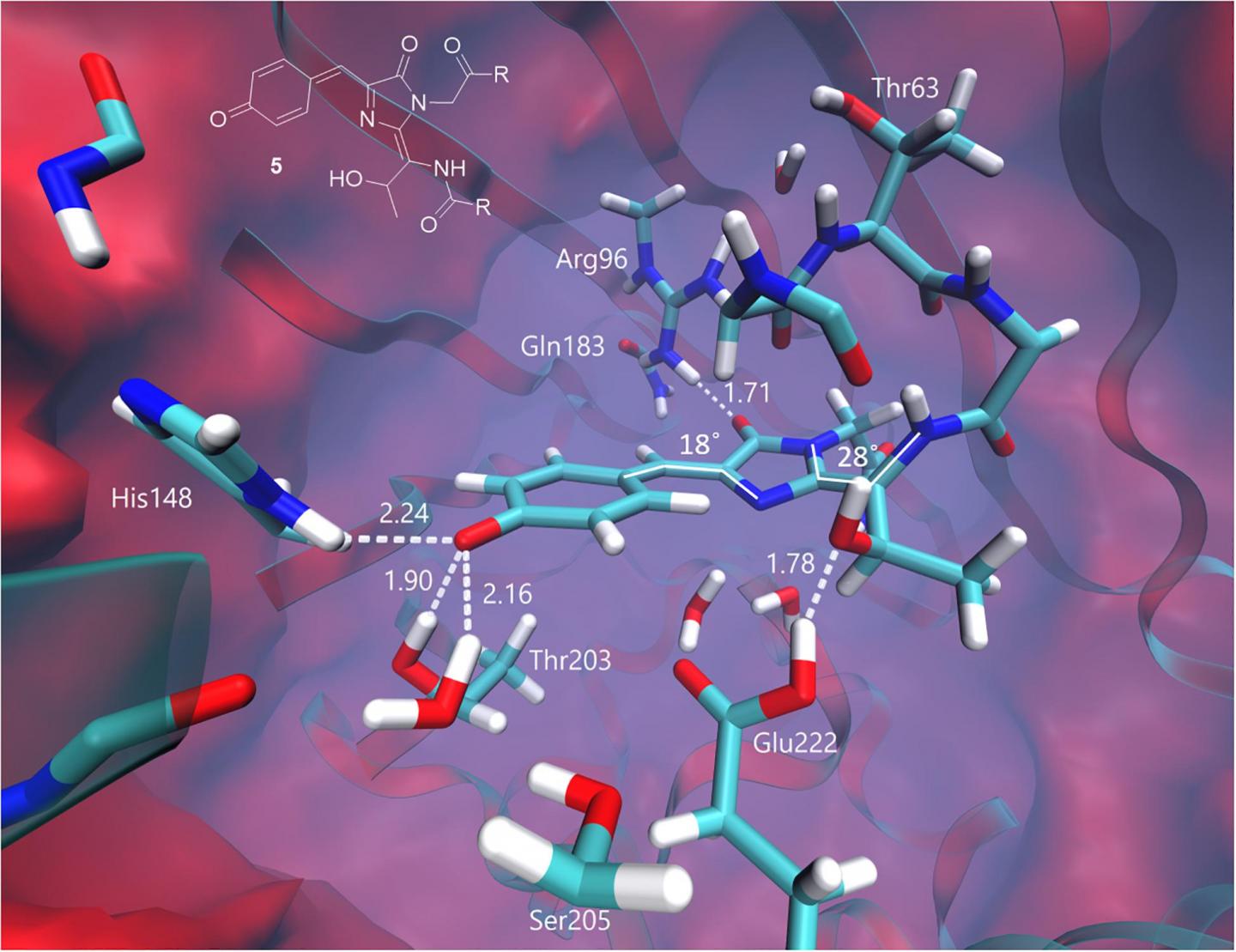
Credit: Dmitry A. Gorbachev et al/Frontiers in Molecular Biosciences

Scientists from the Skolkovo Institute of Science and Technology (Skoltech), the Institute of Bioorganic Chemistry (IBCh RAS) and Lomonosov Moscow State University (MSU) undertook a detailed study on green-to-red photoconversion (light-induced conversion) of the Green Fluorescent Protein (GFP). Their research was published in Frontiers of Molecular Biosciences.

Initially found in jellyfish, GFP sparked off a technological revolution in biology and was the first genetically encoded tag making a wealth of cellular processes available for analysis and visualization. In 1997, GFP was noted to turn from green to red if exposed to light in an oxygen-free environment, offering the first evidence of its red fluorescence capability. However, the photoconversion mechanism remained poorly understood for a long while, as the conversion products were too unstable for researchers to apply standard structure identification methods, such as X-ray structural analysis.

In their recent study, a group of scientists from Skoltech, IBCh RAS and MSU defined intermediate spectral forms appearing in the course of GFP green-to-red photoconversion. Computational studies enabled the researchers to propose the structures of the corresponding states of the chromophore (a part of the molecule responsible for its color) and, for the first time ever, describe the molecular mechanism of photoconversion in detail.

According to Konstantin Lukyanov, Professor at the Skoltech Center for Life Sciences (CLS), photoconversion research has various practical implications: “First, redox photoconversions are to blame for fast photobleaching of GFP in microscopy, an effect strongly limiting the practical use of GFP. Second, photoconversion intensity can be indicative of the cell’s oxygen saturation and oxidative stress caused by excessive reactive oxygen species. Finally, photoconversion research may be the key to understanding the primary functions of ancestral GFP-like proteins. As they emerged very early in the evolutionary process in the animal kingdom, no one around had eyes to detect fluorescence, which suggests that “ancient” fluorescent proteins performed other “basic” functions, such as protection from too much sunlight or transfer of electrons.”

###

Skoltech is a private international university located in Russia. Established in 2011 in collaboration with the Massachusetts Institute of Technology (MIT), Skoltech is cultivating a new generation of leaders in the fields of science, technology and business, is conducting research in breakthrough fields, and is promoting technological innovation with the goal of solving critical problems that face Russia and the world. Skoltech is focusing on six priority areas: data science and artificial intelligence, life sciences, advanced materials and modern design methods, energy efficiency, photonics and quantum technologies, and advanced research. Web: https://www.skoltech.ru/.

Media Contact
Ilyana Zolotareva
[email protected]

Original Source

https://www.skoltech.ru/en/2020/09/scientists-studied-color-change-from-green-to-red-in-the-fluorescent-protein/

Related Journal Article

http://dx.doi.org/10.3389/fmolb.2020.00176

Tags: BiochemistryBiologyBiomedical/Environmental/Chemical EngineeringBiotechnologyCell BiologyMolecular BiologyResearch/Development
Share12Tweet8Share2ShareShareShare2

Related Posts

AI and Physics Collaborate to Design Advanced Hydrogen Storage Materials

June 25, 2026

International Team Including Dresden Scientists Develops Novel Designer Proteins for Advanced Study of Living Tissue

June 25, 2026

New Study Uncovers Key Factors Driving Water Chemistry in Nanoscale Environments

June 25, 2026

Plasma Technology Extends Catalyst Lifespan in Hydrogen Production

June 24, 2026
Please login to join discussion

POPULAR NEWS

  • Saying Goodbye to PGY-6: Pediatric Fellowship Realities

    103 shares
    Share 41 Tweet 26
  • Multi-Hospital Study Reveals Long Covid Burden Is Twice as High as Current Estimates

    92 shares
    Share 36 Tweet 23
  • Detection of EDCs in Breast Milk and Infant Urine Up to Six Months Highlights Early Exposure Risks

    77 shares
    Share 31 Tweet 19
  • New Drug Candidate Developed at McMaster Shows Potential for Treating Brain Cancer

    58 shares
    Share 23 Tweet 15

About

We bring you the latest biotechnology news from best research centers and universities around the world. Check our website.

Follow us

Recent News

Tracking Lanthanide-Labeled Microplastics in Plants

POSTECH Researchers Slash Cost of Reconstituted Cell-Free Systems by 95%

AI and Physics Collaborate to Design Advanced Hydrogen Storage Materials

Subscribe to Blog via Email

Success! An email was just sent to confirm your subscription. Please find the email now and click 'Confirm' to start subscribing.

Join 82 other subscribers
  • Contact Us

Bioengineer.org © Copyright 2023 All Rights Reserved.

Welcome Back!

Login to your account below

Forgotten Password?

Retrieve your password

Please enter your username or email address to reset your password.

Log In
No Result
View All Result
  • Homepages
    • Home Page 1
    • Home Page 2
  • News
  • National
  • Business
  • Health
  • Lifestyle
  • Science

Bioengineer.org © Copyright 2023 All Rights Reserved.