• HOME
  • NEWS
  • EXPLORE
    • CAREER
      • Companies
      • Jobs
    • EVENTS
    • iGEM
      • News
      • Team
    • PHOTOS
    • VIDEO
    • WIKI
  • BLOG
  • COMMUNITY
    • FACEBOOK
    • INSTAGRAM
    • TWITTER
Monday, May 11, 2026
BIOENGINEER.ORG
No Result
View All Result
  • Login
  • HOME
  • NEWS
  • EXPLORE
    • CAREER
      • Companies
      • Jobs
        • Lecturer
        • PhD Studentship
        • Postdoc
        • Research Assistant
    • EVENTS
    • iGEM
      • News
      • Team
    • PHOTOS
    • VIDEO
    • WIKI
  • BLOG
  • COMMUNITY
    • FACEBOOK
    • INSTAGRAM
    • TWITTER
  • HOME
  • NEWS
  • EXPLORE
    • CAREER
      • Companies
      • Jobs
        • Lecturer
        • PhD Studentship
        • Postdoc
        • Research Assistant
    • EVENTS
    • iGEM
      • News
      • Team
    • PHOTOS
    • VIDEO
    • WIKI
  • BLOG
  • COMMUNITY
    • FACEBOOK
    • INSTAGRAM
    • TWITTER
No Result
View All Result
Bioengineer.org
No Result
View All Result
Home NEWS Science News Chemistry

Scientists reveal reversible super-glue inspired by snail mucus

Bioengineer by Bioengineer
June 17, 2019
in Chemistry
Reading Time: 2 mins read
0
Share on FacebookShare on TwitterShare on LinkedinShare on RedditShare on Telegram

Snails secrete a mucous that acts like super-glue, allowing them to adhere to rough surfaces like rocks.

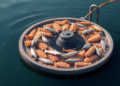
Inspired by this aspect of snail biology, scientists at University of Pennsylvania, Lehigh University and the Korea Institute of Science and Technology have created a super-glue-like material that is “intrinsically reversible.” In other words, it can easily come unglued.

Adhesives are everywhere?in daily life and in industrial applications. Achieving both strong adhesion and reversibility (or the ability to reverse the adhesion) is challenging. According to Anand Jagota, professor and founding chair of Lehigh University’s Department of Bioengineering, this is especially true of hydrogels which are 90% water.

He says that adhesives usually fall into one of two classes: strong but irreversible, like superglues, or reversible and reusable but weak.

The team has managed to overcome these limitations. They have reported their findings in a paper published today in Proceedings of the National Academy of Sciences called “Intrinsically reversible superglues via shape adaptation inspired by snail epiphragm.”

“We report a hydrogel-based, reversible, superglue-like adhesive by combining the benefits of both liquid and dry adhesives in a single material,” says Jagota.

The team reports that when hydrated, the softened gel they created conformally adapts to the target surface by low-energy deformation, which is then locked upon drying in a manner similar to the action of the epiphragm of snails. An epiphragm is a temporary structure created by snails and mollusks. Made of dried mucus it holds in moisture during periods of inactivity and enables snails to adhere to surfaces, like a rocks.

The scientists show that reversible super-strong adhesion can be achieved from a non-structured material when the criterion of shape adaption is met, with minimal residual strain energy stored in the system. According to the researchers, the new material can be applied to both flat and rough target surfaces.

“We demonstrate that in this system adhesion strength is based on the material’s intrinsic, especially near-surface, properties and not on any near surface structure, providing reversibility and ease of scaling up for practical applications,” adds Shu Yang, Professor of Materials Science and Engineering and Chemical and Biomolecular Engineering at the University of Pennsylvania and lead author.

###

Media Contact
Lori Friedman
[email protected]
http://dx.doi.org/10.1073/pnas.1818534116/-/DCSupplemental

Tags: BiologyBiomedical/Environmental/Chemical EngineeringBiotechnologyChemistry/Physics/Materials SciencesMaterialsPolymer ChemistryResearch/DevelopmentTechnology/Engineering/Computer Science
Share12Tweet8Share2ShareShareShare2

Related Posts

Miniature Sensor Uses Light to Detect Touch — Chemistry

Miniature Sensor Uses Light to Detect Touch

May 8, 2026
Iron Minerals Determine Whether Dissolved Organic Matter Fuels Microbes or Becomes Long-Term Carbon Storage — Chemistry

Iron Minerals Determine Whether Dissolved Organic Matter Fuels Microbes or Becomes Long-Term Carbon Storage

May 8, 2026

Kate Evans Appointed Associate Lab Director for Biological and Environmental Systems Science at ORNL

May 8, 2026

Advancing Multiscale Modeling and Overcoming Operational Challenges in Autothermal COâ‚‚-to-Methanol Reactors

May 8, 2026
Please login to join discussion

POPULAR NEWS

  • Research Indicates Potential Connection Between Prenatal Medication Exposure and Elevated Autism Risk

    840 shares
    Share 336 Tweet 210
  • New Study Reveals Plants Can Detect the Sound of Rain

    727 shares
    Share 290 Tweet 181
  • Salmonella Haem Blocks Macrophages, Boosts Infection

    61 shares
    Share 24 Tweet 15
  • Breastmilk Balances E. coli and Beneficial Bacteria in Infant Gut Microbiomes

    57 shares
    Share 23 Tweet 14

About

We bring you the latest biotechnology news from best research centers and universities around the world. Check our website.

Follow us

Recent News

New Post-Hoc Analysis Explores Daily Oral Orforglipron Use in Adults Over 65 with Obesity, Regardless of Diabetes Status

Evaluating Digoxin Use in Patients with Symptomatic Rheumatic Heart Disease

Evaluating the Effectiveness and Safety of Digitalis Glycosides in Treating Heart Failure

Subscribe to Blog via Email

Enter your email address to subscribe to this blog and receive notifications of new posts by email.

Join 82 other subscribers
  • Contact Us

Bioengineer.org © Copyright 2023 All Rights Reserved.

Welcome Back!

Login to your account below

Forgotten Password?

Retrieve your password

Please enter your username or email address to reset your password.

Log In
No Result
View All Result
  • Homepages
    • Home Page 1
    • Home Page 2
  • News
  • National
  • Business
  • Health
  • Lifestyle
  • Science

Bioengineer.org © Copyright 2023 All Rights Reserved.