


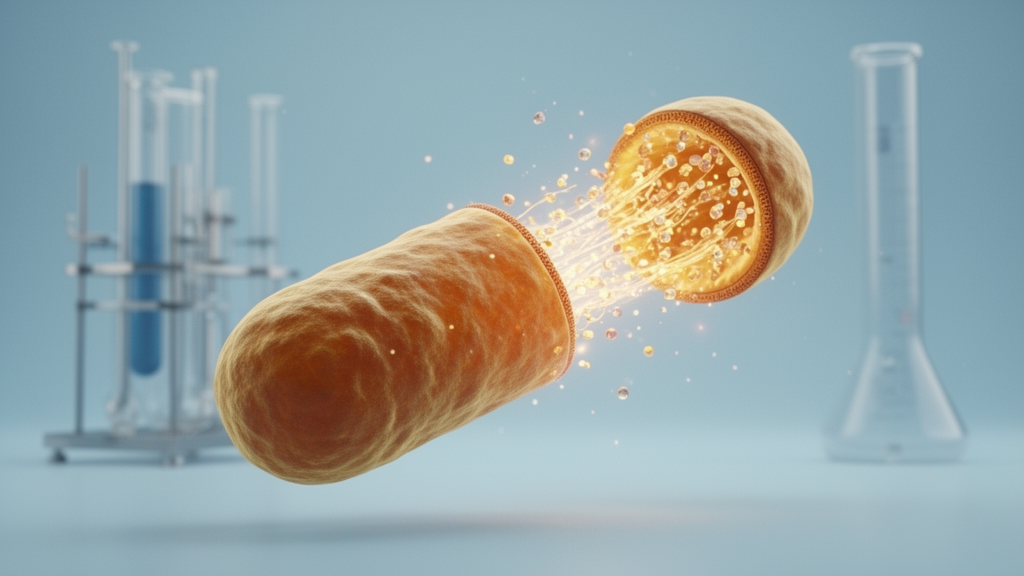
A new review in Frontiers in Bioengineering and Biotechnology examines whether Klebsiella quasipneumoniae, a bacterium better known as an opportunistic pathogen, could be retooled into an industrial chassis that pumps valuable molecules out of its cells. The authors argue that efficient extracellular secretion remains a major bottleneck for microbial cell factories, and that this recently delineated member of the Klebsiella pneumoniae species complex carries an unusually rich toolkit of transport systems worth investigating.
According to the review, K. quasipneumoniae encodes several secretion-related machineries, including RND-type efflux pumps, type II and type VI secretion systems, outer membrane vesicle pathways, and export machinery for capsular polysaccharide. In clinical settings these systems contribute to opportunistic pathogenicity, antimicrobial resistance, and host adaptation. The review proposes that, in a biotechnology context, they could serve as transport modules that are detoxified and redirected toward extracellular production of useful compounds.
The authors map out what such reprogramming would involve. They summarize the molecular architecture, substrate-recognition logic, and regulatory networks of the major secretion pathways, then discuss CRISPR-Cas-based removal of virulence and resistance determinants, biocontainment measures, and synthetic-biology strategies for reallocating secretory capacity. Candidate applications surveyed include bulk chemicals, human milk oligosaccharides, recombinant proteins, and industrial enzymes.
The review is careful to flag substantial barriers before any industrial translation. These include energetic trade-offs between growth and secretion, protein misfolding in the periplasm, endotoxin-related complications in downstream processing, heterogeneity of outer membrane vesicles, robustness at scale-up, and the need for quantitative safety validation. The authors also call for evidence-tiered strain selection, quantitative measurement of secretion capacity, regulatory decoupling of resistance-associated pumps, and a One Health-aligned safety assessment.
Importantly, the authors state that direct evidence in K. quasipneumoniae remains limited. The review therefore distinguishes direct observations in this species from studies in other members of the K. pneumoniae species complex or in K. oxytoca, evidence from non-Klebsiella hosts, and forward-looking proposals. It also treats outer membrane vesicle yield separately from lipid A and endotoxin-related properties. In short, the paper presents a research agenda rather than a demonstrated industrial platform, outlining what would need to be proven before a pathogen-derived secretion chassis could become reality.
Subject of Research: Reprogramming the secretion systems of Klebsiella quasipneumoniae for use as an industrial secretion chassis
Article Title: Reprogramming secretion systems in Klebsiella quasipneumoniae: from pathogenic functions to candidate industrial secretion chassis
Article References: Li, Y., Liu, L., Zhang, J., Wei, G., Zhang, L., Lu, Y., Qin, P., & Liu, Z. (2026). Reprogramming secretion systems in Klebsiella quasipneumoniae: from pathogenic functions to candidate industrial secretion chassis. Frontiers in Bioengineering and Biotechnology, 14, Article 1940225. https://doi.org/10.3389/fbioe.2026.1940225
Image Credits: AI Generated
DOI: 10.3389/fbioe.2026.1940225
Keywords: Klebsiella quasipneumoniae, secretion systems, microbial cell factories, synthetic biology, CRISPR-Cas, efflux pumps, outer membrane vesicles, biocontainment, endotoxin, industrial biotechnology, Reprogramming, secretion
News Source: Gregory Coleman. (October 29, 2026). Scientists propose turning pathogenic Klebsiella into an industrial secretion factory. Scienmag.



