• HOME
  • NEWS
  • EXPLORE
    • CAREER
      • Companies
      • Jobs
    • EVENTS
    • iGEM
      • News
      • Team
    • PHOTOS
    • VIDEO
    • WIKI
  • BLOG
  • COMMUNITY
    • FACEBOOK
    • INSTAGRAM
    • TWITTER
Tuesday, July 7, 2026
BIOENGINEER.ORG
No Result
View All Result
  • Login
  • HOME
  • NEWS
  • EXPLORE
    • CAREER
      • Companies
      • Jobs
        • Lecturer
        • PhD Studentship
        • Postdoc
        • Research Assistant
    • EVENTS
    • iGEM
      • News
      • Team
    • PHOTOS
    • VIDEO
    • WIKI
  • BLOG
  • COMMUNITY
    • FACEBOOK
    • INSTAGRAM
    • TWITTER
  • HOME
  • NEWS
  • EXPLORE
    • CAREER
      • Companies
      • Jobs
        • Lecturer
        • PhD Studentship
        • Postdoc
        • Research Assistant
    • EVENTS
    • iGEM
      • News
      • Team
    • PHOTOS
    • VIDEO
    • WIKI
  • BLOG
  • COMMUNITY
    • FACEBOOK
    • INSTAGRAM
    • TWITTER
No Result
View All Result
Bioengineer.org
No Result
View All Result
Home NEWS Science News Biology

Scientists ‘pin the tail’ on world-first IVF treatment for donkeys

Bioengineer by Bioengineer
November 15, 2022
in Biology
Reading Time: 3 mins read
0
Argentinian donkeys
Share on FacebookShare on TwitterShare on LinkedinShare on RedditShare on Telegram

A University of Queensland-led research group has created the world’s first successful donkey embryo using in-vitro fertilisation (IVF), which could save dozens of endangered donkey species.
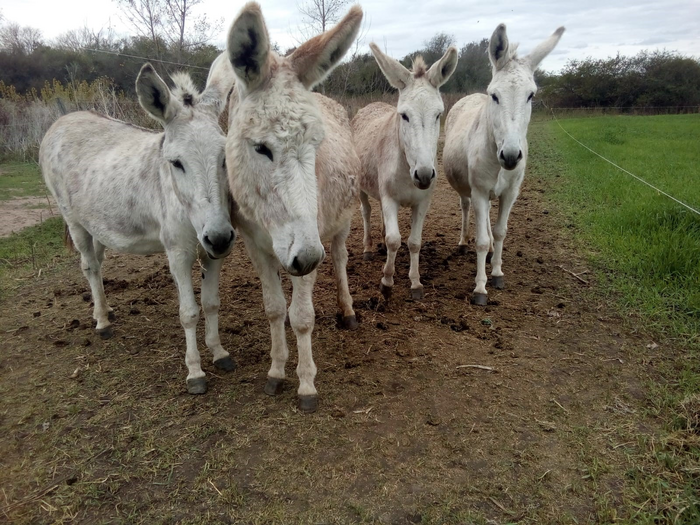
Argentinian donkeys

Credit: The University of Queensland

A University of Queensland-led research group has created the world’s first successful donkey embryo using in-vitro fertilisation (IVF), which could save dozens of endangered donkey species.

Creating a viable donkey embryo has been challenging, but UQ’s Dr Andres Gambini, in collaboration with Argentinian and Spanish researchers, made it happen using a specialist IVF process known as intracytoplasmic sperm injection (ICSI).

The world-first donkey embryo, which is from an endangered European breed, is currently frozen in liquid nitrogen while researchers search for a suitable female for implantation.

Dr Gambini said the success opened up the possibility of helping donkeys – and other vulnerable species – by creating a ‘frozen zoo’ or genetic bank of embryos.

“With this new tool to produce embryos in the laboratory, we can help to repopulate a species if we need to,” he said.

“There are many problems associated with inbreeding when trying to increase a species’ population, but this IVF technique means we can essentially combine semen and eggs from donkeys with a different genetic background and create viable embryos.”

Dr Gambini, who worked with National University of Río Cuarto PhD student Ana Flores Bragulat on this project, said donkey populations are more endangered than people realise.

“Seven of the 28 European domestic breeds are in critical status and 20 are endangered, while wild donkey species are also in trouble,” Dr Gambini said.

“The reasons for this include theft, illegal slaughtering, decreasing grazing land and people using them less.

“There are also concerns about wild donkeys around the world being killed for ‘ejiao’, a key ingredient in traditional Chinese remedies produced from collagen in donkeys’ skin.”

Dr Gambini has been working on this project for about three years and has previously worked with horses and zebras.

His team currently has 10 frozen zebra embryos in storage, including clones.

“Throughout my research career, I’ve been exploring assisted reproductive technologies to improve the genetic progress in all sorts of domestic animals,” he said.

“In 2020, we reported the first zebra embryo and now the first donkey embryo – who’s to say what’s next?”

Dr Gambini said donkey embryos were much more difficult to work with, with a success rate of five to 10 per cent, compared to horses which are about 30 per cent.

“I wish I knew why donkey embryos were not produced easily!” he said.

“Each species is completely different and through our research, we’re trying to understand more.

“We hope this research will lead to a more integrated donkey conservation program.

“We also hope to discover how to make IVF processes work for a wide range of endangered species.

“It’s just one weapon in our conservation ass-enal, so to speak.”

Researchers hope to create more viable embryos and find suitable female donkeys for implantation before the breeding season ends next year.

The world-first embryo is currently frozen in a lab in Spain, and was created using donkey semen and an egg from different areas of the country.

The research is published in Theriogenology.

The project combined knowledge of semen preservation, embryo production, and egg collection from the National University of Río Cuarto, Buenos Aires’ National Council for Scientific and Technical Research, the University of Cordoba, the Autonomous University of Barcelona and UQ’s School of Agriculture and Food Sciences.


Journal

Theriogenology

DOI

10.1016/j.theriogenology.2022.10.030

Share12Tweet8Share2ShareShareShare2

Related Posts

Here are a few rewritten headlines for a science magazine post, each with a slightly different tone: Intriguing & poetic: How do organs sculpt themselves? Sea stars hold the secret Direct & research-focused: Sea stars reveal the hidden rules of organ formation Metaphorical & inviting: Tiny architects beneath the waves: What sea stars teach us about building organs Short & punchy: Star-shaped clues to how our organs take shape Question-led: Could a sea star show us how organs form? Elegant & feature-style: The body’s blueprint, glimpsed in a sea star’s arm

July 6, 2026
Bacteria evolve faster with unconventional gene copies — Biology

Bacteria evolve faster with unconventional gene copies

July 6, 2026

Neighbours rewire soil feedback via root microbiome shifts

July 6, 2026

Evolution-Inspired Biosensors Revolutionize Lipid Tracking in Real Time

July 2, 2026

POPULAR NEWS

  • Detection of EDCs in Breast Milk and Infant Urine Up to Six Months Highlights Early Exposure Risks

    77 shares
    Share 31 Tweet 19
  • New Drug Candidate Developed at McMaster Shows Potential for Treating Brain Cancer

    58 shares
    Share 23 Tweet 15
  • Saying Goodbye to PGY-6: Pediatric Fellowship Realities

    103 shares
    Share 41 Tweet 26
  • KTU Researchers Explore Ultrasound’s Role in Enhancing Blood Flow Beyond Diagnostics

    53 shares
    Share 21 Tweet 13

About

We bring you the latest biotechnology news from best research centers and universities around the world. Check our website.

Follow us

Recent News

Flame retardant BDE-209 targets molecularly linked to ulcerative colitis

Ultra-high frequency particle impacts mimic rockbursts to shatter hard rock

Kidney transplant outcomes in older adults studied by German researchers

Subscribe to Blog via Email

Enter your email address to subscribe to this blog and receive notifications of new posts by email.

Join 83 other subscribers
  • Contact Us

Bioengineer.org © Copyright 2023 All Rights Reserved.

Welcome Back!

Login to your account below

Forgotten Password?

Retrieve your password

Please enter your username or email address to reset your password.

Log In
No Result
View All Result
  • Homepages
    • Home Page 1
    • Home Page 2
  • News
  • National
  • Business
  • Health
  • Lifestyle
  • Science

Bioengineer.org © Copyright 2023 All Rights Reserved.