• HOME
  • NEWS
  • EXPLORE
    • CAREER
      • Companies
      • Jobs
    • EVENTS
    • iGEM
      • News
      • Team
    • PHOTOS
    • VIDEO
    • WIKI
  • BLOG
  • COMMUNITY
    • FACEBOOK
    • INSTAGRAM
    • TWITTER
Monday, August 24, 2026
BIOENGINEER.ORG
No Result
View All Result
  • Login
  • HOME
  • NEWS
  • EXPLORE
    • CAREER
      • Companies
      • Jobs
        • Lecturer
        • PhD Studentship
        • Postdoc
        • Research Assistant
    • EVENTS
    • iGEM
      • News
      • Team
    • PHOTOS
    • VIDEO
    • WIKI
  • BLOG
  • COMMUNITY
    • FACEBOOK
    • INSTAGRAM
    • TWITTER
  • HOME
  • NEWS
  • EXPLORE
    • CAREER
      • Companies
      • Jobs
        • Lecturer
        • PhD Studentship
        • Postdoc
        • Research Assistant
    • EVENTS
    • iGEM
      • News
      • Team
    • PHOTOS
    • VIDEO
    • WIKI
  • BLOG
  • COMMUNITY
    • FACEBOOK
    • INSTAGRAM
    • TWITTER
No Result
View All Result
Bioengineer.org
No Result
View All Result
Home NEWS Science News Chemistry

Scientists identify a potential treatment candidate for early type 2 diabetic retinopathy

Bioengineer by Bioengineer
April 27, 2020
in Chemistry
Reading Time: 3 mins read
0
IMAGE
Share on FacebookShare on TwitterShare on LinkedinShare on RedditShare on Telegram

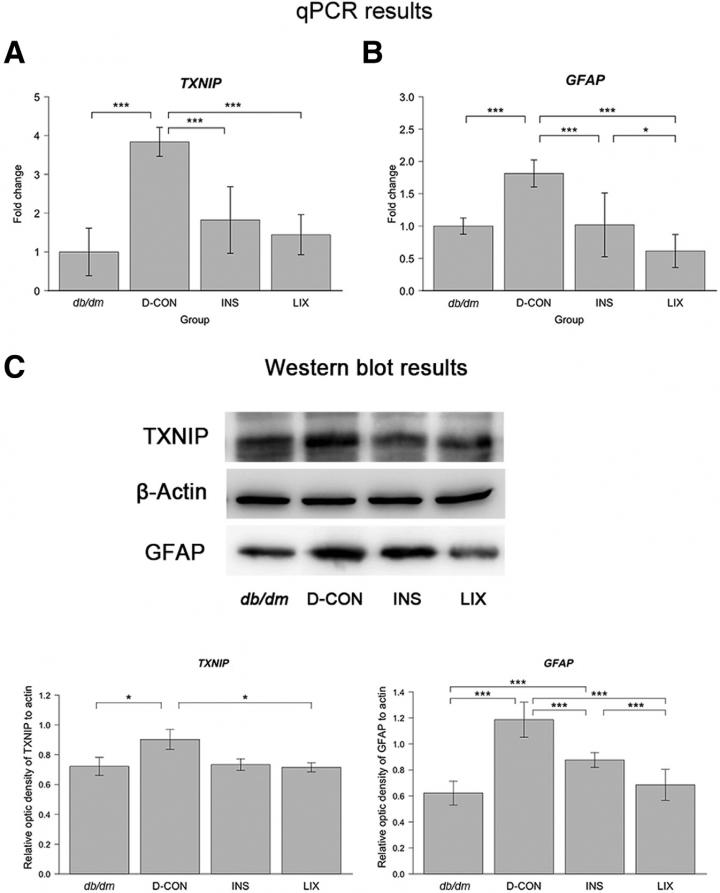
Results of a study on lixisenatide in the retina and the optic nerve head in a mouse model of type 2 diabetes show promise for treating diabetic retinopathy before its clinical manifestation, report scientists in The American Journal of Pathology
IMAGE

Credit: The American Journal of Pathology

Philadelphia, April 27, 2020 – Diabetic retinopathy is one of the main vascular complications of type 2 diabetes, and the most common cause of visual deterioration in adults. A new study in The American Journal of Pathology, published by Elsevier, reports on the efficacy of a possible treatment candidate that showed anti-inflammatory and neuroprotective effects on the retina and optic nerve head in early type 2 diabetic retinopathy using a diabetic mouse model.

Diabetic retinopathy is caused by damage to the blood vessels of the light-sensitive tissue at the back of the eye. The cause is usually attributed to high blood sugar (hyperglycemia), but several studies have shown that inflammation is also an important factor in the progression of the disorder.

“Inflammation causes neurodegeneration as well as microvascular abnormalities in the retina,” explained lead investigator Jin A. Choi, PhD, Department of Ophthalmology and Visual Science, St. Vincent’s Hospital, College of Medicine, The Catholic University of Korea, Seoul, Republic of Korea. “Diabetic retinal neurodegeneration can occur before the onset of clinical diabetic retinal microvascular abnormalities. Therefore, therapeutics for neurodegeneration may provide a novel interventional strategy in the window period between the diagnosis of type 2 diabetes and the onset of clinically manifested diabetic retinopathy.”

Investigators analyzed and compared the anti-inflammatory and neuroprotective effects of the glucagon-like peptide-1 receptor agonist (GLP-1RA) lixisenatide in the retina and the optic nerve head with those of insulin in a mouse model of type 2 diabetes. They divided diabetic mice into three groups; GLP-1RA (LIX); insulin (INS) with controlled hyperglycemia based on the glucose concentration of LIX; and a control group (D-CON). Nondiabetic control mice were also characterized for comparison.

After eight weeks of treatment, neuroinflammation caused by type 2 diabetes was significantly reduced in GLP-1RA-treated retinas and optic nerve heads compared with untreated or even insulin-treated retinas of early type 2 diabetic mice, showing that the outcomes are independent of the glucose-lowering effect of GLP-1RA.

“This study can provide a possible therapeutic strategy to prevent visual deterioration by using GLP-1RA in early type 2 diabetic retinopathy,” noted first author Yeon Woong Chung, MD, Department of Ophthalmology and Visual Science, St. Vincent’s Hospital, College of Medicine, The Catholic University of Korea, Seoul, Republic of Korea. “GLP-1RA significantly suppressed neuroinflammation in the early diabetic retinopathy, whereas insulin had little or no suppressive effect in this study.”

“Retinal ganglion cells start to die even before clinical changes such as hemorrhages in diabetic retinopathy occur,” commented Dr. Choi. “Thus, for better visual prognosis, we need to focus on the treatment of the retina in early type 2 diabetes before the clinical onset of diabetic retinopathy. The diabetic mouse group in our study who were treated with GLP-1RA showed significantly decreased cell death compared to those with insulin treatment.”

###

Media Contact
Eileen Leahy
[email protected]

Related Journal Article

http://dx.doi.org/10.1016/j.ajpath.2020.01.011

Tags: DiabetesMedicine/HealthMolecular BiologyOphthalmologyPharmaceutical Science
Share12Tweet8Share2ShareShareShare2

Related Posts

KAIST discovers pathway to faster-charging, longer-lasting electric vehicle batteries

KAIST discovers pathway to faster-charging, longer-lasting electric vehicle batteries

August 24, 2026
Scientists uncover design rules for high-performance thermoelectric materials

Scientists uncover design rules for high-performance thermoelectric materials

August 22, 2026

Bringing Optical Fibre Materials to Photonic Chips

August 22, 2026

Nanoscience and Liquid Crystals Unite in Functional Hybrids With Transformative Applications

August 22, 2026
Please login to join discussion

POPULAR NEWS

  • Study reveals surge in type 2 diabetes among people under 20

    29 shares
    Share 12 Tweet 7
  • KAIST discovers pathway to faster-charging, longer-lasting electric vehicle batteries

    29 shares
    Share 12 Tweet 7
  • Blocking glucosylceramide production kills cancer cells via lysosomal dysfunction, not ceramide buildup

    29 shares
    Share 12 Tweet 7
  • ZCCHC4 boosts replication-dependent histone mRNA translation by interacting with eIF3

    29 shares
    Share 12 Tweet 7

About

We bring you the latest biotechnology news from best research centers and universities around the world. Check our website.

Follow us

Recent News

Study reveals surge in type 2 diabetes among people under 20

KAIST discovers pathway to faster-charging, longer-lasting electric vehicle batteries

Blocking glucosylceramide production kills cancer cells via lysosomal dysfunction, not ceramide buildup

Subscribe to Blog via Email

Enter your email address to subscribe to this blog and receive notifications of new posts by email.

Join 85 other subscribers
  • Contact Us

Bioengineer.org © Copyright 2023 All Rights Reserved.

Welcome Back!

Login to your account below

Forgotten Password?

Retrieve your password

Please enter your username or email address to reset your password.

Log In
No Result
View All Result
  • Homepages
    • Home Page 1
    • Home Page 2
  • News
  • National
  • Business
  • Health
  • Lifestyle
  • Science

Bioengineer.org © Copyright 2023 All Rights Reserved.