• HOME
  • NEWS
  • EXPLORE
    • CAREER
      • Companies
      • Jobs
    • EVENTS
    • iGEM
      • News
      • Team
    • PHOTOS
    • VIDEO
    • WIKI
  • BLOG
  • COMMUNITY
    • FACEBOOK
    • INSTAGRAM
    • TWITTER
Monday, May 11, 2026
BIOENGINEER.ORG
No Result
View All Result
  • Login
  • HOME
  • NEWS
  • EXPLORE
    • CAREER
      • Companies
      • Jobs
        • Lecturer
        • PhD Studentship
        • Postdoc
        • Research Assistant
    • EVENTS
    • iGEM
      • News
      • Team
    • PHOTOS
    • VIDEO
    • WIKI
  • BLOG
  • COMMUNITY
    • FACEBOOK
    • INSTAGRAM
    • TWITTER
  • HOME
  • NEWS
  • EXPLORE
    • CAREER
      • Companies
      • Jobs
        • Lecturer
        • PhD Studentship
        • Postdoc
        • Research Assistant
    • EVENTS
    • iGEM
      • News
      • Team
    • PHOTOS
    • VIDEO
    • WIKI
  • BLOG
  • COMMUNITY
    • FACEBOOK
    • INSTAGRAM
    • TWITTER
No Result
View All Result
Bioengineer.org
No Result
View All Result
Home NEWS Science News Chemistry

Scientists developed key principles for creating an artificial vessel

Bioengineer by Bioengineer
October 8, 2020
in Chemistry
Reading Time: 3 mins read
0
IMAGE
Share on FacebookShare on TwitterShare on LinkedinShare on RedditShare on Telegram

Researchers implanted a polymer scaffold as a vascular prosthesis into the rat abdominal aorta and monitored the process of its bioresobtion for 16 months.
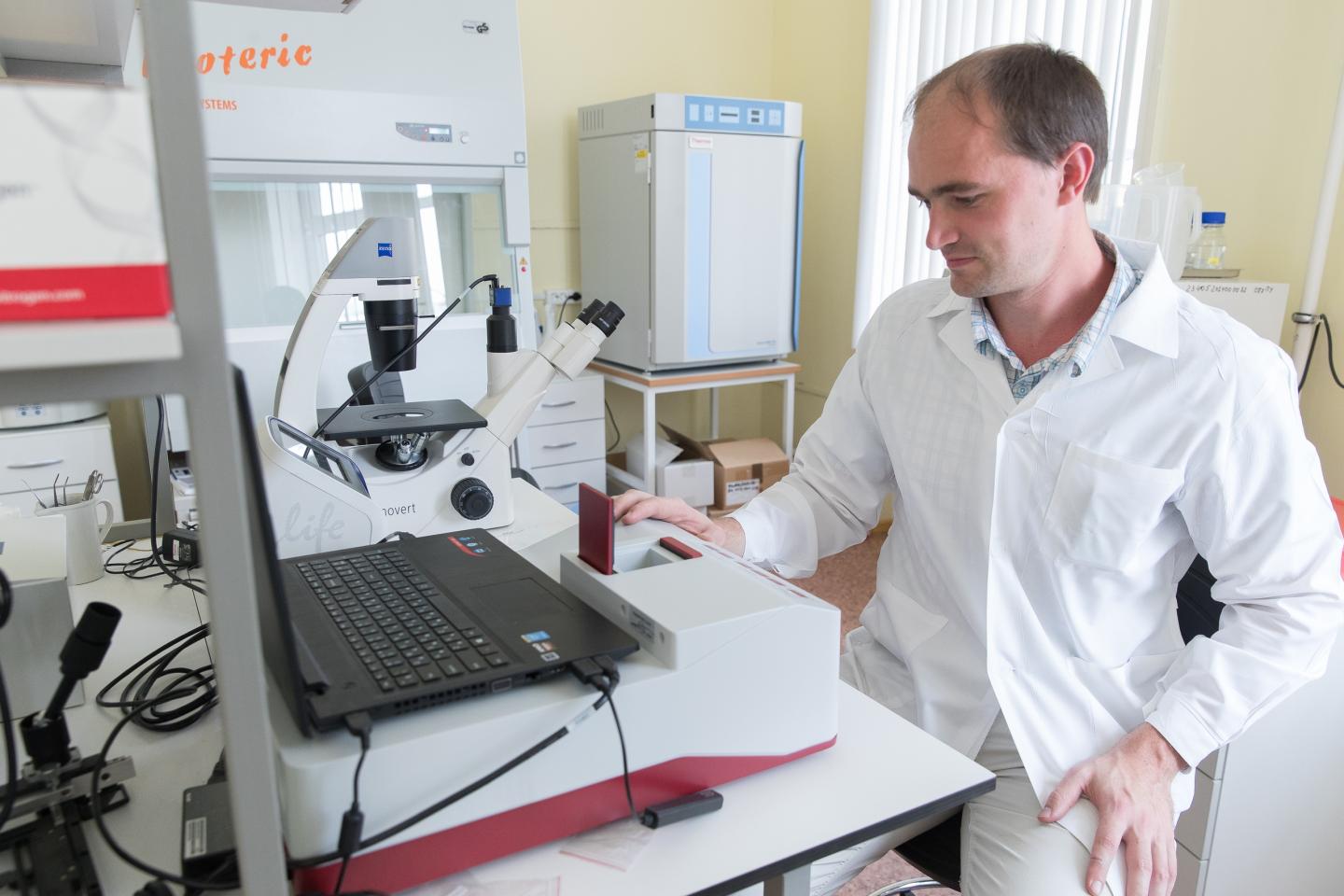
IMAGE

Credit: Peter the Great St.Petersburg Polytechnic University

Researchers from St. Petersburg provided a unique experiment. They implanted a polymer scaffold as a vascular prosthesis into the rat abdominal aorta and monitored the process of its bioresobtion for 16 months. An artificial vessel was formed where the scaffold was located. It posess similar characteristics as a natural vessel. The scaffold itself showed high patency, biocompatibility and non-toxicity. The results were published in the Cell and Tissue Biology journal. This study brings scientists closer to the creation of an artificial tissue-engineered vascular graft.

The study was conducted by multidisciplinary team from Peter the Great St.Petersburg Polytechnic University (SPbPU), Pavlov First Saint Petersburg State Medical University and Institute of Macromolecular Compounds.

Coronary and peripheral artery bypass grafting is commonly used to relieve the symptoms of angina and other vascular deficiencies. Synthetic vascular prostheses perform reasonably satisfactorily in high-flow, low-resistance conditions such as the large peripheral arteries, but they are not as suitable for small calibre arterial reconstructions (e.g., coronary or lower leg circulation). They are prone to thrombus induction, embolism and occlusion.

Therefore it is desirable to develop a low-cost artificial blood vessel with no biocompatibility problems in order to overcome these problems.

“Synthetic prosthesis does not undergo remodeling in the child’s body, that’s why reoperations will be required. These is one of the reasons for creation of artificial vessels”, – said Vladimir Yudin, head of the Department “Polymeric materials for tissue engineering and transplantation” SPbPU.

The researchers developed the synthetic tubular scaffold from a biodegradable polymer – polylactic acid, which is normally found in the human body. It is also approved by the FDA (Food & Drug Association) for medical use. The scaffold gradually dissolves in the body, and a vessel appears in its place.

“The scaffold consists of nano- and microfibers, which are very similar to the fibrous structure of the natural vessel. Host cells successfully proliferate on such graft. We studied its mechanical strength, porosity, hydrophobicity. The scaffold is safe”, – added Pavel Popryadukhin, researcher of that department.

Surgical experiments were carried out at the Pavlov University. The scaffold was sewn into the rat aorta using microsurgical techniques. After 16 months the scaffold was completely dissolved. The artificial vessel looked very similar to the natural one. However, aneurysm formation in the reconstruction zone was noted.

“We also obtained positive results: scaffold safety was proved during the long-term experiments. The possibility of new tissues formation on the scaffold was also shown. The scaffold has been proven to be non-toxic with high patency rates – 93%. This is very high value, which suggests that while a new vessel is being formed, the scaffold will be patent, ” – mentioned Guriy Popov, cardiovascular surgeon of the Pavlov University.

The next step is to seed and cultivate cells, which is responsible for strength, on the scaffold prior operation. This will help to solve the problem of aneurysms at the implantation site.

###

Media Contact
Raisa Bestugina
[email protected]

Related Journal Article

http://dx.doi.org/10.1134/S1990519X20040082

Tags: CardiologyClinical TrialsMedicine/HealthMolecular PhysicsNanotechnology/MicromachinesPolymer ChemistrySurgeryTransplantation
Share12Tweet8Share2ShareShareShare2

Related Posts

Miniature Sensor Uses Light to Detect Touch — Chemistry

Miniature Sensor Uses Light to Detect Touch

May 8, 2026
Iron Minerals Determine Whether Dissolved Organic Matter Fuels Microbes or Becomes Long-Term Carbon Storage — Chemistry

Iron Minerals Determine Whether Dissolved Organic Matter Fuels Microbes or Becomes Long-Term Carbon Storage

May 8, 2026

Kate Evans Appointed Associate Lab Director for Biological and Environmental Systems Science at ORNL

May 8, 2026

Advancing Multiscale Modeling and Overcoming Operational Challenges in Autothermal COâ‚‚-to-Methanol Reactors

May 8, 2026
Please login to join discussion

POPULAR NEWS

  • Research Indicates Potential Connection Between Prenatal Medication Exposure and Elevated Autism Risk

    840 shares
    Share 336 Tweet 210
  • New Study Reveals Plants Can Detect the Sound of Rain

    727 shares
    Share 290 Tweet 181
  • Salmonella Haem Blocks Macrophages, Boosts Infection

    61 shares
    Share 24 Tweet 15
  • Breastmilk Balances E. coli and Beneficial Bacteria in Infant Gut Microbiomes

    57 shares
    Share 23 Tweet 14

About

We bring you the latest biotechnology news from best research centers and universities around the world. Check our website.

Follow us

Recent News

New Post-Hoc Analysis Explores Daily Oral Orforglipron Use in Adults Over 65 with Obesity, Regardless of Diabetes Status

Evaluating Digoxin Use in Patients with Symptomatic Rheumatic Heart Disease

Evaluating the Effectiveness and Safety of Digitalis Glycosides in Treating Heart Failure

Subscribe to Blog via Email

Enter your email address to subscribe to this blog and receive notifications of new posts by email.

Join 82 other subscribers
  • Contact Us

Bioengineer.org © Copyright 2023 All Rights Reserved.

Welcome Back!

Login to your account below

Forgotten Password?

Retrieve your password

Please enter your username or email address to reset your password.

Log In
No Result
View All Result
  • Homepages
    • Home Page 1
    • Home Page 2
  • News
  • National
  • Business
  • Health
  • Lifestyle
  • Science

Bioengineer.org © Copyright 2023 All Rights Reserved.