• HOME
  • NEWS
  • EXPLORE
    • CAREER
      • Companies
      • Jobs
    • EVENTS
    • iGEM
      • News
      • Team
    • PHOTOS
    • VIDEO
    • WIKI
  • BLOG
  • COMMUNITY
    • FACEBOOK
    • INSTAGRAM
    • TWITTER
Monday, May 18, 2026
BIOENGINEER.ORG
No Result
View All Result
  • Login
  • HOME
  • NEWS
  • EXPLORE
    • CAREER
      • Companies
      • Jobs
        • Lecturer
        • PhD Studentship
        • Postdoc
        • Research Assistant
    • EVENTS
    • iGEM
      • News
      • Team
    • PHOTOS
    • VIDEO
    • WIKI
  • BLOG
  • COMMUNITY
    • FACEBOOK
    • INSTAGRAM
    • TWITTER
  • HOME
  • NEWS
  • EXPLORE
    • CAREER
      • Companies
      • Jobs
        • Lecturer
        • PhD Studentship
        • Postdoc
        • Research Assistant
    • EVENTS
    • iGEM
      • News
      • Team
    • PHOTOS
    • VIDEO
    • WIKI
  • BLOG
  • COMMUNITY
    • FACEBOOK
    • INSTAGRAM
    • TWITTER
No Result
View All Result
Bioengineer.org
No Result
View All Result
Home NEWS Science News Biology

Scale is a key ingredient when tracking biodiversity, researchers say

Bioengineer by Bioengineer
July 2, 2018
in Biology
Reading Time: 2 mins read
0
Share on FacebookShare on TwitterShare on LinkedinShare on RedditShare on Telegram
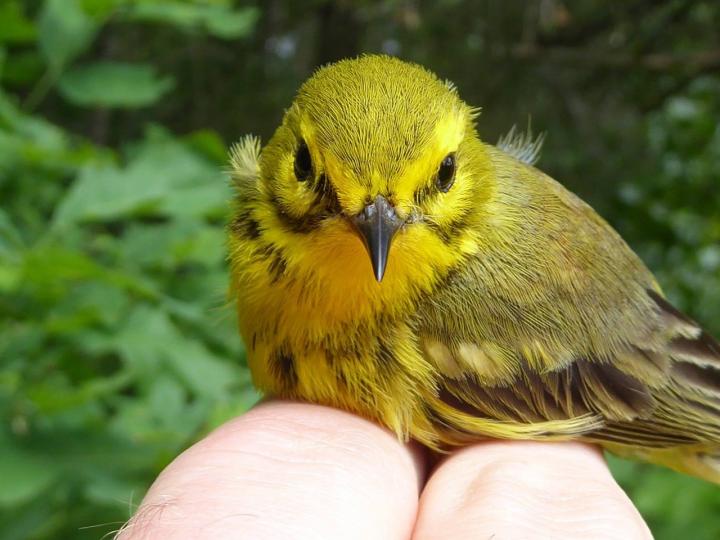
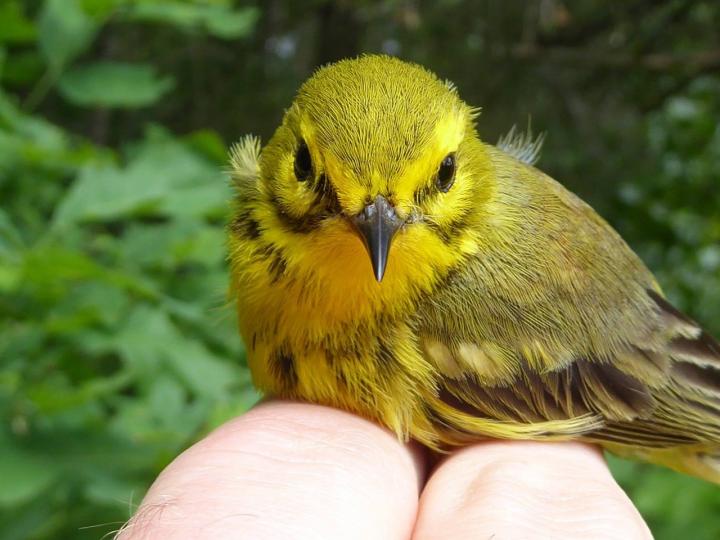
IMAGE

Credit: Julie Hart

New Haven, Conn. – To fully understand biodiversity and how it is changing, you need to look near, far, and in-between, according to a new study.

Researchers at Yale University studied 50 years of data about nesting birds in North America and tracked biodiversity changes on a local, regional, and continental scale. They found significant differences in how much change had occurred, based upon how wide a geographic net they cast.

The findings have implications for how to assess biodiversity in a rapidly changing world, as well as how biodiversity information should be presented. The study appears July 2 in the journal Nature Communications.

"Biodiversity is changing all around us and worldwide. Local species disappear and sometimes other species invade," said co-author Walter Jetz, professor of ecology and evolutionary biology and co-director of the Max Planck-Yale Center for Biodiversity Movement and Global Change. "Studying birds in the U.S. and worldwide, we show that patterns and implications of this ongoing change vary strongly with the scale."

This means a minor loss or gain of species richness or functional diversity at the local or county level can look like a major gain at the state or national level, and yet be a net loss when viewed at a global scale.

"Any reporting and interpretation of biodiversity change thus needs scale as a key qualifier," said Marta Jarzyna, the study's first author and a postdoctoral researcher at Yale. "Better yet, researchers and practitioners of biodiversity science should adopt a multi-scale framework and consider all geographic scales simultaneously."

###

Grants from the Yale Climate and Energy Institute, the National Science Foundation, and NASA supported the research. The researchers also acknowledged thousands of volunteers who participated in the North American Breeding Bird Survey from 1969 to 2013.

Media Contact

Jim Shelton
[email protected]
203-432-3881
@yale

http://www.yale.edu

Share12Tweet8Share2ShareShareShare2

Related Posts

Uncovering C. elegans Immunity via Genetic Screens — Biology

Uncovering C. elegans Immunity via Genetic Screens

May 16, 2026
Single mother must adapt swiftly — the survival of her colony depends on it — Biology

Single mother must adapt swiftly — the survival of her colony depends on it

May 15, 2026

Why Are Nearly Everyone Right-Handed? It Might Be Linked to How We Learned to Walk

May 15, 2026

Excessive Neuronal Activity Initiates Severe Autoimmune Brain Disorder

May 15, 2026
Please login to join discussion

POPULAR NEWS

  • Research Indicates Potential Connection Between Prenatal Medication Exposure and Elevated Autism Risk

    844 shares
    Share 338 Tweet 211
  • New Study Reveals Plants Can Detect the Sound of Rain

    730 shares
    Share 291 Tweet 182
  • Salmonella Haem Blocks Macrophages, Boosts Infection

    62 shares
    Share 25 Tweet 16
  • Breastmilk Balances E. coli and Beneficial Bacteria in Infant Gut Microbiomes

    58 shares
    Share 23 Tweet 15

About

We bring you the latest biotechnology news from best research centers and universities around the world. Check our website.

Follow us

Recent News

AI Tool in Radiotherapy Advances Global Fight to Eradicate Cervical Cancer

Detecting Illicit Bitcoin Transactions with Temporal Graph Learning

New Study Reveals the Massive Economic Impact of Tuberculosis

Subscribe to Blog via Email

Enter your email address to subscribe to this blog and receive notifications of new posts by email.

Join 82 other subscribers
  • Contact Us

Bioengineer.org © Copyright 2023 All Rights Reserved.

Welcome Back!

Login to your account below

Forgotten Password?

Retrieve your password

Please enter your username or email address to reset your password.

Log In
No Result
View All Result
  • Homepages
    • Home Page 1
    • Home Page 2
  • News
  • National
  • Business
  • Health
  • Lifestyle
  • Science

Bioengineer.org © Copyright 2023 All Rights Reserved.