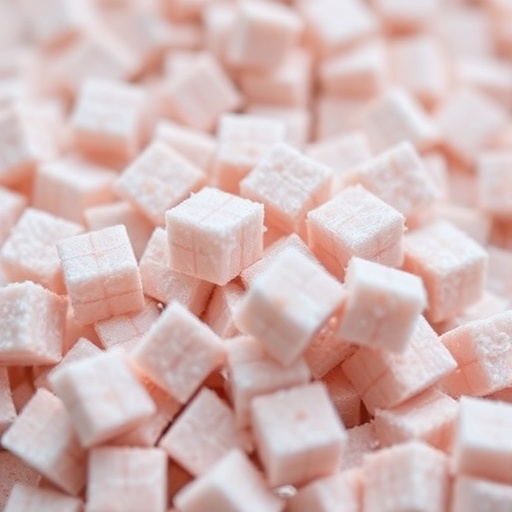
Researchers have unveiled a highly efficient adsorbent derived from sawdust that holds promise for advancing wastewater treatment technologies. Published in the journal Sustainable Carbon Materials, the study introduces a novel bimetallic activated hydrochar material, termed MAHC, synthesized through a combination of hydrothermal carbonization, potassium hydroxide activation, and functionalization with iron and copper. This material is poised to transform low-value wood waste into an effective solution for industrial dye and contaminant removal.
The research focused on methylene blue, a common synthetic dye prevalent in textiles, cosmetics, and medicine, as well as real wastewater from a potato processing plant. MAHC’s performance was evaluated in both batch adsorption tests and continuous fixed bed column setups, reflecting practical wastewater treatment scenarios. Notably, the fixed bed experiments revealed breakthrough times of 165 minutes for methylene blue solutions and 360 minutes for actual wastewater, underscoring its potential for real-world applications.
At the core of MAHC’s superior adsorption capacity — reaching a remarkable 1,635.28 mg per gram under optimal batch conditions — lies its engineered porous structure and active metal sites. Characterization showed a high specific surface area of 1,266.1 m²/g and a predominantly microporous architecture. The intricately designed iron and copper sites on the carbon matrix facilitate multiple pollutant interactions, including π–π bonding with dye molecules and pore-filling mechanisms.
Adsorption kinetics adhered to a pseudo second-order model, indicating adsorption occurred through chemisorption involving complex surface reactions rather than mere physical attachment. Furthermore, the observed Freundlich isotherm suggested multilayer adsorption on heterogeneous surfaces, which contrasts with simple monolayer adsorption typically seen in activated carbon adsorbents. Electrostatic forces played only a minor role in the uptake process, highlighting the significance of chemical interactions facilitated by the metal functionalities.
Corresponding authors Dr. Yulin Hu and Dr. Quan Sophia He remarked on the synergy between the metallic active sites and carbon framework, emphasizing this cooperation as a key driver for the material’s performance. This combinatory effect enables MAHC not only to trap contaminants physically but also to engage in chemical binding, presenting an advanced approach to pollutant removal from complex wastewater streams.
While these findings mark a significant stride towards sustainable water remediation, the team advises further research to benchmark MAHC against commercial activated carbons, explore other biomass precursors, and evaluate the material’s durability through repeated adsorption-desorption cycles. Additionally, since the optimal performance was observed at elevated temperatures around 44 °C, enhancing efficacy near ambient conditions remains a critical step for industrial feasibility.
This study exemplifies a promising circular economy strategy by valorizing wood waste and simultaneously addressing water pollution challenges. The integration of biomass recycling with wastewater treatment could pave the way for more eco-friendly and cost-effective purification technologies, potentially benefiting agriculture, public health, and environmental ecosystems.
Subject of Research: Experimental study on bimetallic activated hydrochar for wastewater treatment
Article Title: Adsorption of methylene blue dye and potato processing wastewater using bimetallic activated hydrochar: batch and fixed bed column experiments
News Publication Date: April 8, 2026
Web References: https://doi.org/10.48130/scm-0026-0014
References: Jalilian M, Nawazish B, Taborda R, He QS, Hu YL. 2026. Sustainable Carbon Materials 2: e019
Image Credits: Milad Jalilian, Bisma Nawazish, Regiane Taborda, Quan Sophia He, & Yulin Hu
Keywords: Adsorption, Activated Hydrochar, Bimetallic Adsorbent, Wastewater Treatment, Methylene Blue, Porous Carbon, Surface Science
Tags: bimetallic activated hydrocharfixed bed column wastewater treatmentfood processing wastewater treatmentindustrial dye removallow-cost adsorbent for dye contaminantsmetal-functionalized carbon adsorbentmethylene blue adsorption capacityporous hydrochar structureremoval of synthetic dyes from industrial effluentsrenewable wood waste for environmental cleanupSawdust-based wastewater adsorbentsustainable carbon materials