Research team awarded $200,000 to develop treatment for multi-organ failure due to sepsis
Credit: Southwest Research Institute
SAN ANTONIO — Feb. 4, 2020 — Leaders of the newly-established San Antonio Partnership for Precision Therapeutics (SA PPT) have awarded the partnership’s first research grant. A seven-person team researching sepsis-induced organ failure will receive $200,000 in funding over two years. The award’s purpose is to advance research and breakthroughs in precision therapeutics, which is the development of drug therapies for specific populations based on genetics, lifestyle and environment.
The team, led by Principal Investigator Dr. Madesh Muniswamy of UT Heath San Antonio, is studying the cause, prevention and treatment of multi-organ failure during sepsis. Sepsis occurs when an infection spreads to a patient’s blood or tissues causing a high risk of organ failure and death. According to the World Health Organization, an estimated 30 million people worldwide are affected by sepsis every year.
“Despite good antimicrobial therapies currently in use, some sepsis patients do not survive. Those that do survive often suffer compromised organ function and premature death,” Muniswamy said. “The goal of our research is to identify why some patients are more likely to die from sepsis and to develop a treatment that reduces organ dysfunction and damage after a sepsis diagnosis.”
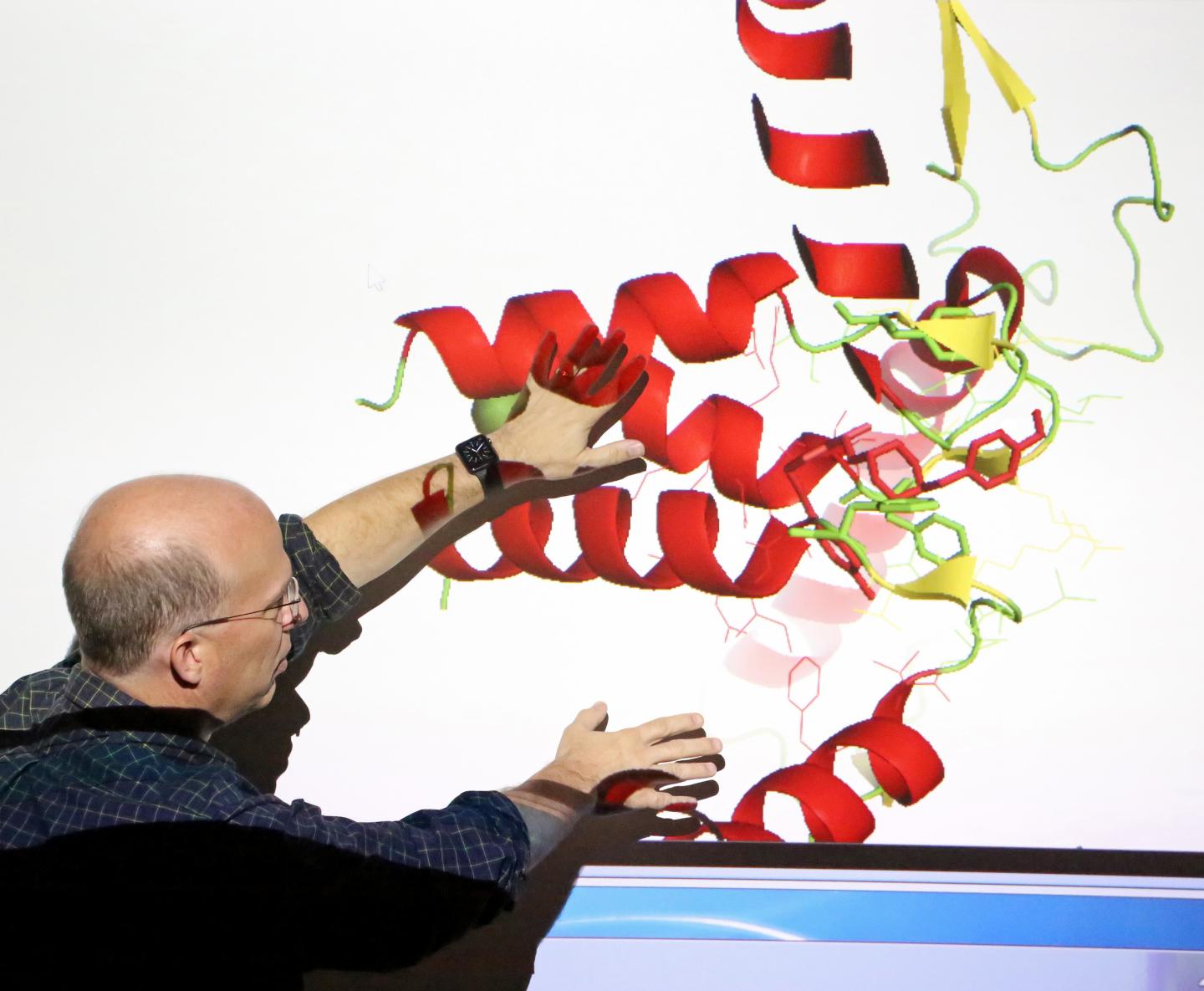
The team is closely examining the mitochondrial calcium uniporter (MCU) channel that carries calcium to cells. In some sepsis patients, an overflow of calcium floods the channel, bombarding and killing healthy cells. When cells die, organs fail. The team aims to develop a drug therapy that controls the flow of calcium through the channel, allowing only necessary amounts of the element to reach cells.
The research project advances precision therapeutics by focusing on why some patients are more likely to experience MCU channel dysfunction and death. The team aims to uncover better treatment options for these patients. The long-term plan includes studying particular populations, such as Hispanic patients, who are at greater risk of sepsis complications.
“This is where precision therapeutics is key,” Muniswamy said. “Each patient is different. Some patients may require antibiotics only. Others may require combination therapies to recover. By administering multiple treatments at once, a sepsis patient may have a better chance of surviving and restoring organ function.”
The SA PPT received 12 research project submissions vying for funding. External reviewers unaffiliated with the SA PPT scored the six proposals that made it to the final round. The winning team’s proposal, Small Molecule Regulation of Mitochondrial Ca2+ Uniporter (MCU) Channel for Treatment of Multi-Organ Failure, received the top score. The presidents of the four institutions that make up the SA PPT — Southwest Research Institute (SwRI), Texas Biomedical Research Institute (TX Biomed), The University of Texas at San Antonio (UTSA) and UT Health San Antonio — made the final selection. The team includes researchers from all four institutions.
“The presidents wanted to direct funding to a research project that displayed strong collaboration among the four SA PPT institutions, as well as one that demonstrated a commitment to advancing precision therapeutics,” said Liz Tullis, SA PPT interim program director. “This team is using the knowledge and resources available at these leading institutions to address a gap in sepsis treatment. We look forward to the potentially life-saving results of their research.”
###
SA PPT leaders will be funding more research projects that support precision therapeutics and demonstrate collaboration among SwRI, TX Biomed, UT Health San Antonio and UTSA researchers in 2020. For more information on the partnership, visit sappt.org.
To learn about the SA PPT’s four institutions, visit swri.org, txbiomed.org, utsa.edu and uthscsa.edu.
Release url: https:/
Media Contact
Lisa M. Pena
[email protected]
210-522-2046
Original Source
https:/