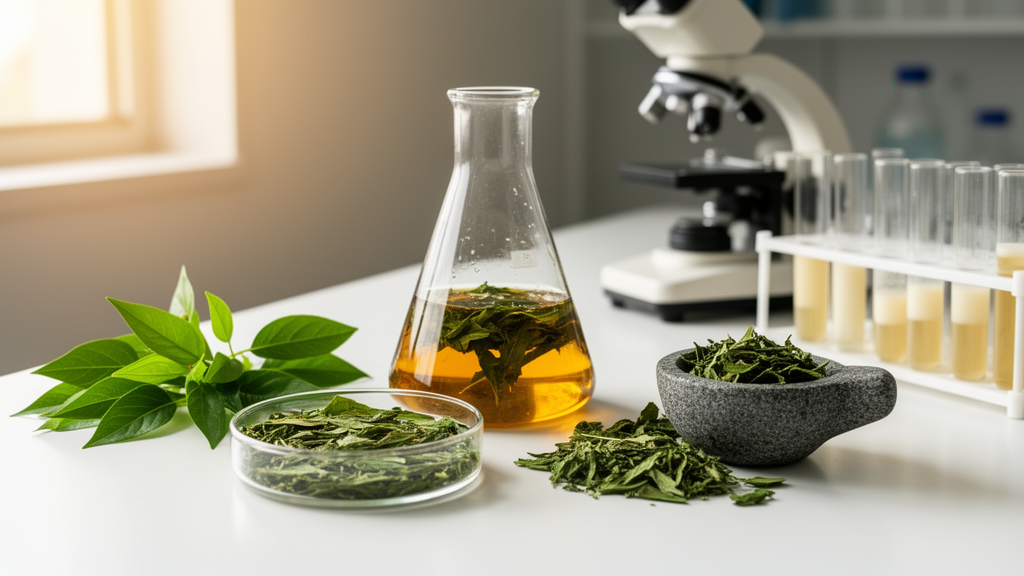
Researchers have isolated an aqueous extract from the plant Sabia parviflora, designated SPAE, and tested its potential bioactivities in laboratory assays. The work, published in Chemical and Biological Technologies in Agriculture, was motivated by the broader significance of exploring and developing herbal medicine resources for human health and development.
In preliminary disk diffusion screening, SPAE produced inhibition zones of 11.5 ± 0.3 mm against Escherichia coli and 11.7 ± 0.5 mm against Staphylococcus aureus, both measured at a concentration of 100 μg per disc.
The extract also displayed broad antioxidant behaviour in vitro. It scavenged four different reactive species: the DPPH radical, the ABTS radical, superoxide anion and hydroxyl radicals.
Protection against oxidative damage was further examined in RAW 264.7 cells, a mouse macrophage cell line. When the cells were stimulated with hydrogen peroxide to induce oxidative damage, SPAE treatment repaired that damage. The effect was linked to regulation of the enzyme activities of superoxide dismutase, glutathione peroxidase and catalase, as well as changes in the level of malondialdehyde, a marker of lipid peroxidation.
Beyond its antioxidant effects, SPAE showed immunostimulatory activity in the same macrophage model. The extract increased phagocytic activity, meaning the cells took up more material, and enhanced the secretion of nitric oxide, tumour necrosis factor-alpha, interleukin-6 and interleukin-1β.
The authors note an important limitation of the study: the specific bioactive components in SPAE were not identified, and neither the antibacterial, antioxidant nor immunostimulatory mechanisms were determined. The findings therefore describe what the extract does in vitro, not how it works at a molecular level.
On the basis of the combined results, the researchers speculate that SPAE has potential to be used as an ingredient in the food, cosmetics and medicine fields. This remains a speculative conclusion, since the study was conducted entirely in vitro and did not test the extract in animals or humans.
As an early-access, peer-reviewed accepted article, the paper is citable and carries a permanent DOI, with a final version of record to follow.
Subject of Research: In vitro antibacterial, antioxidant and immunostimulatory activities of a Sabia parviflora aqueous extract
Article Title: In vitro antibacterial, antioxidant and immunostimulatory activities of Sabia parviflora aqueous extract
Article References: Xie, M., Hu, R., Wang, Q., Feng, Y., & Chen, Z. (2026). In vitro antibacterial, antioxidant and immunostimulatory activities of Sabia parviflora aqueous extract. Chemical and Biological Technologies in Agriculture. https://doi.org/10.1186/s40538-026-01131-7
Image Credits: AI Generated
DOI: 10.1186/s40538-026-01131-7
Keywords: Sabia parviflora, aqueous extract, antibacterial, antioxidant, immunostimulatory, DPPH, ABTS, RAW 264.7 macrophages, nitric oxide, herbal medicine, in vitro, food ingredients
News Source: Gregory Coleman. (October 29, 2026). Sabia parviflora aqueous extract shows antibacterial, antioxidant and immunostimulatory activity in vitro. Scienmag.