• HOME
  • NEWS
  • EXPLORE
    • CAREER
      • Companies
      • Jobs
    • EVENTS
    • iGEM
      • News
      • Team
    • PHOTOS
    • VIDEO
    • WIKI
  • BLOG
  • COMMUNITY
    • FACEBOOK
    • INSTAGRAM
    • TWITTER
Sunday, June 28, 2026
BIOENGINEER.ORG
No Result
View All Result
  • Login
  • HOME
  • NEWS
  • EXPLORE
    • CAREER
      • Companies
      • Jobs
        • Lecturer
        • PhD Studentship
        • Postdoc
        • Research Assistant
    • EVENTS
    • iGEM
      • News
      • Team
    • PHOTOS
    • VIDEO
    • WIKI
  • BLOG
  • COMMUNITY
    • FACEBOOK
    • INSTAGRAM
    • TWITTER
  • HOME
  • NEWS
  • EXPLORE
    • CAREER
      • Companies
      • Jobs
        • Lecturer
        • PhD Studentship
        • Postdoc
        • Research Assistant
    • EVENTS
    • iGEM
      • News
      • Team
    • PHOTOS
    • VIDEO
    • WIKI
  • BLOG
  • COMMUNITY
    • FACEBOOK
    • INSTAGRAM
    • TWITTER
No Result
View All Result
Bioengineer.org
No Result
View All Result
Home NEWS Science News Health

Russian scientists improved the way of treatment of phenylketonuria

Bioengineer by Bioengineer
May 21, 2020
in Health
Reading Time: 2 mins read
0
IMAGE
Share on FacebookShare on TwitterShare on LinkedinShare on RedditShare on Telegram

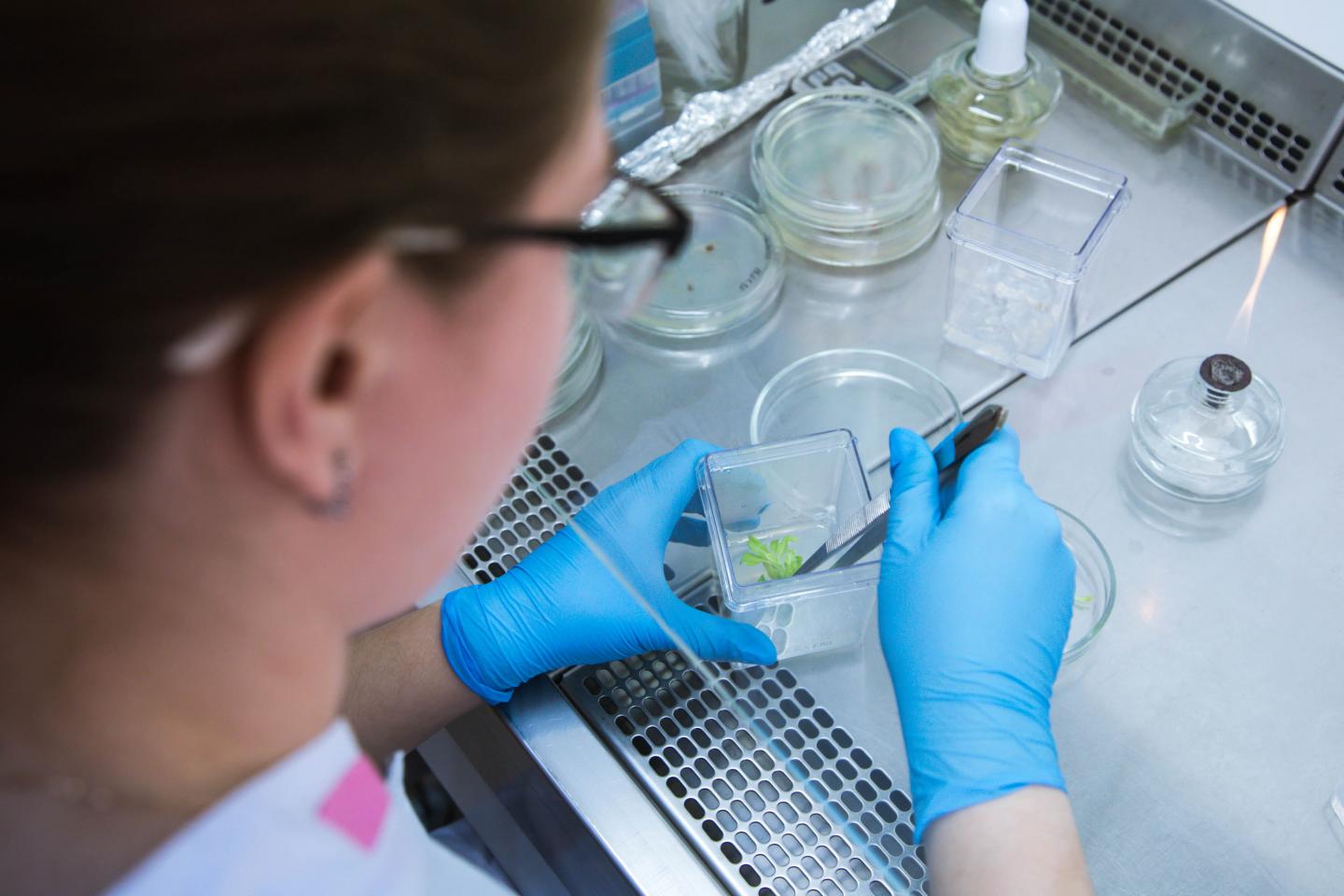
The inherited disease of phenylketonuria is expressed in the inability of the body to absorb certain amino acids, mainly phenylalanine
IMAGE

Credit: Elena Buderkina

The inherited disease of phenylketonuria is expressed in the inability of the body to absorb certain amino acids, mainly phenylalanine.

A person affected by this disease has to follow a low-protein diet all his life. Otherwise, phenylalanine will accumulate in the body and can lead to severe damage to the central nervous system.

Recently, the scientific journal Pharmaceuticals published an article written by researchers of the Institute of Living Systems of the IKBFU and Kemerovo State University, which offers an effective way to treat this disease.

Olga Babich, Director of the Institute of Living Systems:

– The most promising medicine here is L-phenylalanine ammonium-liasis (PAL). However, this enzyme is unstable, it quickly dissolves in the acidic environment of the stomach before having had time to produce a positive effect.

Therefore, scientists have developed a stable capsule shell for PAL, which is broken down mainly in the upper parts of the intestine, which allows the enzyme to work as efficiently as possible.

Natural polysaccharides are proposed to create such a shell: agar-agar, carrageenan, carboxy-methylcellulose.

Experiments were conducted over a three-year period. The main difficulty was the correct interpretation of the results obtained using model biological fluids, since the behavior of the enzyme preparation in vitro (i.e. in a test tube) and in vivo can vary significantly.

According to Olga Babich, the obtained results will find application not only in the treatment of phenylketonuria, but also in the development of new methods for the treatment of other hereditary diseases associated with defects of amino acid metabolism.

It should be noted that the team of authors of the scientific article has good experience in implementing joint projects. In particular, it is the creation of food for children suffering from phenylketonuria and histidynemia, a hereditary disease caused by impaired histidine metabolism.

Besides, there have been implemented projects on the development of capsules for pharmaceutical preparations based on plant components (alternative to gelatin capsules). Thus, the development of the capsule form of L-phenylalanine-ammonium-liazyase is a part of complex research in the field of health saving conducted by a consortium of scientific organizations from Kaliningrad and the Siberian Federal District.

###

Media Contact
Denis Zhigulin
[email protected]

Original Source

http://eng.kantiana.ru/news/261393/

Related Journal Article

http://dx.doi.org/10.3390/ph13040063

Tags: Clinical TrialsCritical Care/Emergency MedicineDiagnosticsDiet/Body WeightMedicine/Health
Share12Tweet8Share2ShareShareShare2

Related Posts

Tracking Lanthanide-Labeled Microplastics in Plants

June 25, 2026

Neural Design Enables Zero-Shot Drug-Binding Proteins

June 25, 2026

Genomic Insights into Human Skin Fungi Diversity

June 25, 2026

Chiral Laser Gyroscopes Surpass Lock-In Limit

June 25, 2026
Please login to join discussion

POPULAR NEWS

  • Saying Goodbye to PGY-6: Pediatric Fellowship Realities

    103 shares
    Share 41 Tweet 26
  • Multi-Hospital Study Reveals Long Covid Burden Is Twice as High as Current Estimates

    92 shares
    Share 36 Tweet 23
  • Detection of EDCs in Breast Milk and Infant Urine Up to Six Months Highlights Early Exposure Risks

    77 shares
    Share 31 Tweet 19
  • New Drug Candidate Developed at McMaster Shows Potential for Treating Brain Cancer

    58 shares
    Share 23 Tweet 15

About

We bring you the latest biotechnology news from best research centers and universities around the world. Check our website.

Follow us

Recent News

Tracking Lanthanide-Labeled Microplastics in Plants

POSTECH Researchers Slash Cost of Reconstituted Cell-Free Systems by 95%

AI and Physics Collaborate to Design Advanced Hydrogen Storage Materials

Subscribe to Blog via Email

Success! An email was just sent to confirm your subscription. Please find the email now and click 'Confirm' to start subscribing.

Join 82 other subscribers
  • Contact Us

Bioengineer.org © Copyright 2023 All Rights Reserved.

Welcome Back!

Login to your account below

Forgotten Password?

Retrieve your password

Please enter your username or email address to reset your password.

Log In
No Result
View All Result
  • Homepages
    • Home Page 1
    • Home Page 2
  • News
  • National
  • Business
  • Health
  • Lifestyle
  • Science

Bioengineer.org © Copyright 2023 All Rights Reserved.