Credit: Tatiana Borisova
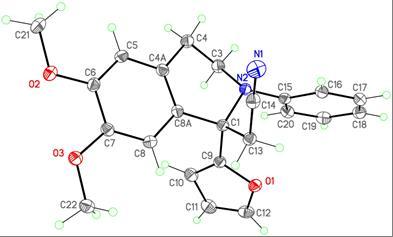
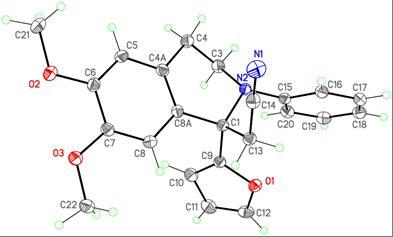
RUDN University chemists synthesized new isoquinoline derivatives. Due to their biological activity, these compounds may be applicable in new drugs, from antispasmodics to bactericidal agents. In addition, in the future they may show effectiveness in the treatment of Alzheimer's disease. The scientists presented the results of their experiments in Mendeleev Communications.
"Our study belongs to a fundamental science in which the study of a new reaction and a new reagent, even without an immediate "release" to industry, is an important task itself. However, the substances we worked with, isoquinolines, are actively used in pharmaceuticals (including widely known drotaverine and papaverine)", co-author of the article, Associate Professor, Department of Organic Chemistry, RUDN University Tatyana Borisova reported.
RUDN University chemists synthesized new isoquinoline derivatives, which potentially can have a wide spectrum of biological activity, from bactericidal to antileukemic, from cytotoxicity to antispasmodic properties. In their latest work, they studied the reaction of isoquinolines with dehydrobenzene. The novelty of the study lies precisely in the use of the latter intermediate compound that has recently attracted the attention of scientists around the world. An important advantage of this hard-to-synthesize and short-lived (rapidly decaying) compound is its high reactivity. To obtain the maximum yield of 1-cyanomethyl-substituted isoquinolines, optimal reaction conditions were determined and a new method for isolating its products was developed.
The scientists started with mixing reagents that allow the synthesis of dehydrobenzol in situ, and then added isoquinoline. In order to follow the reaction and see how much it has been realized, a thin-layer chromatography method (plates with alumina or silica gel applied) was used. When the complete conversion of the starting reagents occurs, the reaction is terminated. Then, to isolate the desired compound, a column chromatography method was used. It lies in the following: glass tubes are filled with the carrier (silica gel), and then the substance is introduced there and everything is washed with the solvent until get a pure substance. Finally, the scientists remove the solvent, crystallize the solid, filter the crystals and measure their melting point, and then the substance is identified by NMR spectroscopy and mass spectrometry.
The biological activity of the new substance is yet to be investigated. This is complicated and requires significant funding, therefore at the moment the primary bioscreening of the obtained compounds in done: affect of the new compounds on cells and ferments is established.
"At our department, one can find out whether the compound is an inhibitor of acetyl- or butyrylcholinoestearases. If so, it could potentially help in the fight against Alzheimer's disease," Borisova noted.
In the future, the team of researchers of the Department of Organic Chemistry, RUDN University, plans to undertake further research on reactions of nitrogen-containing heterocyclic compounds, including isoquinolines with alkynes and alkenes, in order to synthesize potentially biologically active compounds.
###
Media Contact
Valeriya V. Antonova
[email protected]
http://eng.rudn.ru/
Related Journal Article
http://dx.doi.org/10.1016/j.mencom.2017.09.026