Obese patients previously considered ‘ineligible’ for transplant
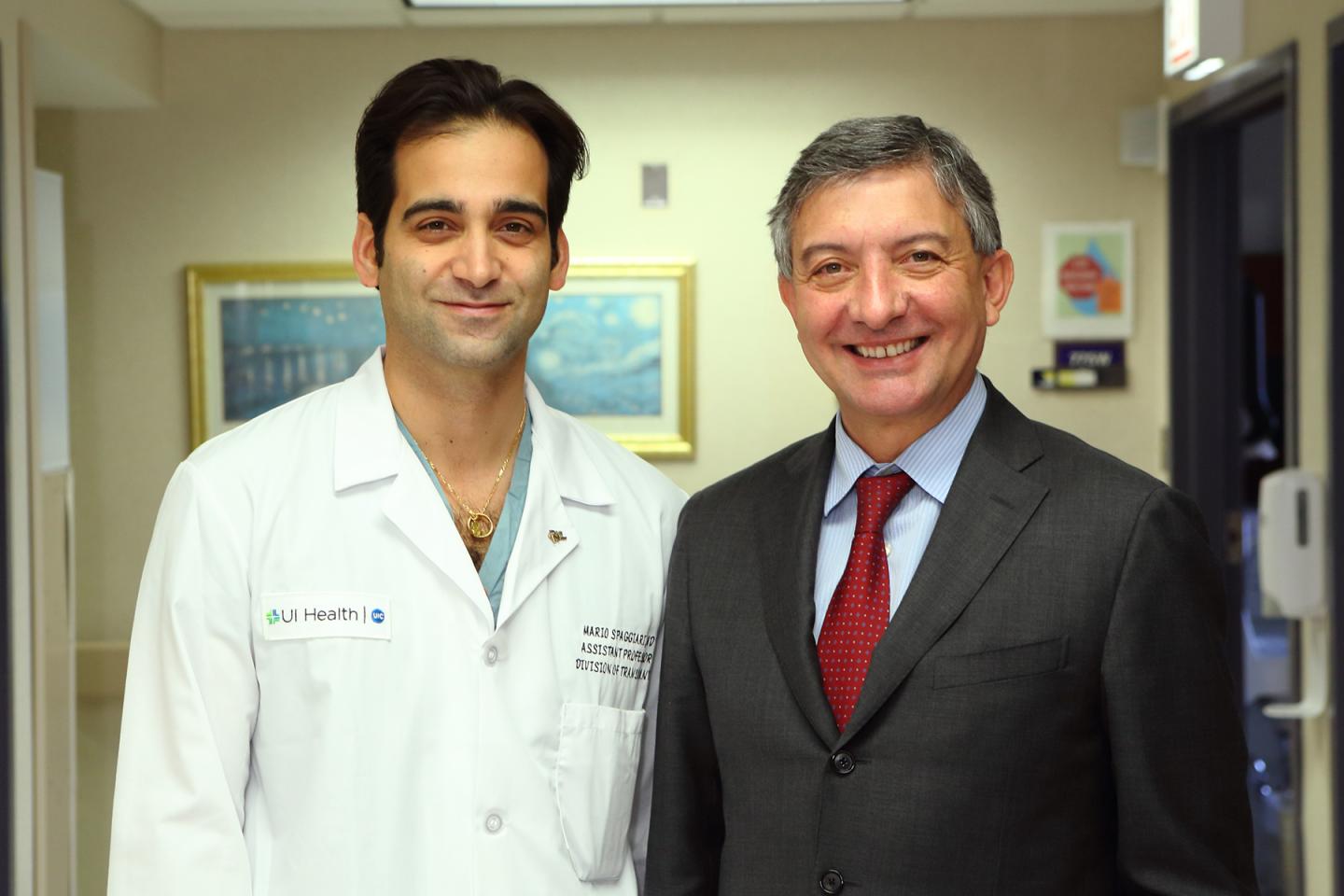
Credit: UIC/ Jenny Fontaine
Researchers at the University of Illinois at Chicago report that among patients with obesity, robotic kidney transplants produce survival outcomes comparable to those seen among nonobese patients.
Their study, published in the American Journal of Transplantation, includes data collected over 10 years from more than 230 robotic-assisted kidney transplants in patients with obesity.
“Patients with obesity, a risk factor for poor surgical outcomes, have traditionally been considered ineligible for kidney transplants,” said Dr. Mario Spaggiari, UIC assistant professor of surgery at the College of Medicine. “But advances in surgical care, including increasing proficiency and acceptance of robotic surgery, are making kidney transplants a safe option for more people.”
Spaggiari said that robotic surgery helps to ameliorate adverse surgical events associated with obesity in open transplants, achieving a dramatic reduction of the risk of post-surgery wound infections, a critical factor in long-term success of the transplant.
In 2009, surgeons at UI Health, UIC’s hospital and clinical health network, were among the first to offer robotic kidney transplants to patients with obesity.
“Our surgical program is focused on advancing care for everyone, including members of vulnerable communities who experience increased rates of various comorbidities, including obesity,” said Dr. Enrico Benedetti, professor and Warren H. Cole Chair of Surgery. “Ten years of transplant experience shows us that obesity does not have to be a disqualifying factor in kidney transplants.”
In the study, Spaggiari and Benedetti report one- and three-year patient survival rates of 98% and 95%, respectively, among patients with obesity. Only 17 of 239 patients (7.1%) developed graft failures and returned to dialysis, resulting in 93% three-year kidney graft survival.
Patients in the study cohort were a median age of 48 years with a median body mass index, or BMI, of 41. The majority of patients were black (53.1%) and Latino (24.7%).
Wound complications occurred in only nine patients (3.8%) and a surgical site infection occurred in only one patient (0.4%). While 88 patients (37.2%) were readmitted to the hospital within 30 days, only 10 (4.2%) of these readmissions were due to surgical complications.
These results are similar to those seen in nonobese patients across the U.S. when compared with a national database — the United Network for Organ Sharing — of transplants from the same period, January 2009 to December 2018.
“To our knowledge, this is the largest cohort to date of robotic kidney transplants and these findings tell us that kidney transplantation is a viable option for many people with obesity,” Benedetti said.
“The patients who received transplants spent more than three-and-a-half years on dialysis before undergoing surgery, and that is just the median number,” Spaggiari said. “Without surgery, these people would have had no choice but to remain on dialysis — which can itself be a barrier to achieving an ‘ideal’ weight for transplant — and accept the limitations it places on their quality of life. With surgery, they can get back to normal life, which is most important. They can also have increased chances of achieving other health-promoting behaviors, like exercise or weight loss.”
###
Co-authors on the study, which was supported by a grant from the Health Resources and Services Administration (234200537011C), are Dr. Ivo Tzvetanov, Dr. Kiara Tulla, Dr. Caterina Di Bella, Dr. Obi Okoye, Dr. Pierpaola Di Cocco and Dr. Pier Cristoforo Giulianotti of UIC, Dr. Joonbae Jeon of Tulane University and Dr. Jose Oberholzer of the University of Virginia.
Media Contact
Jackie Carey
[email protected]
312-996-8277
Original Source
https:/
Related Journal Article
http://dx.