


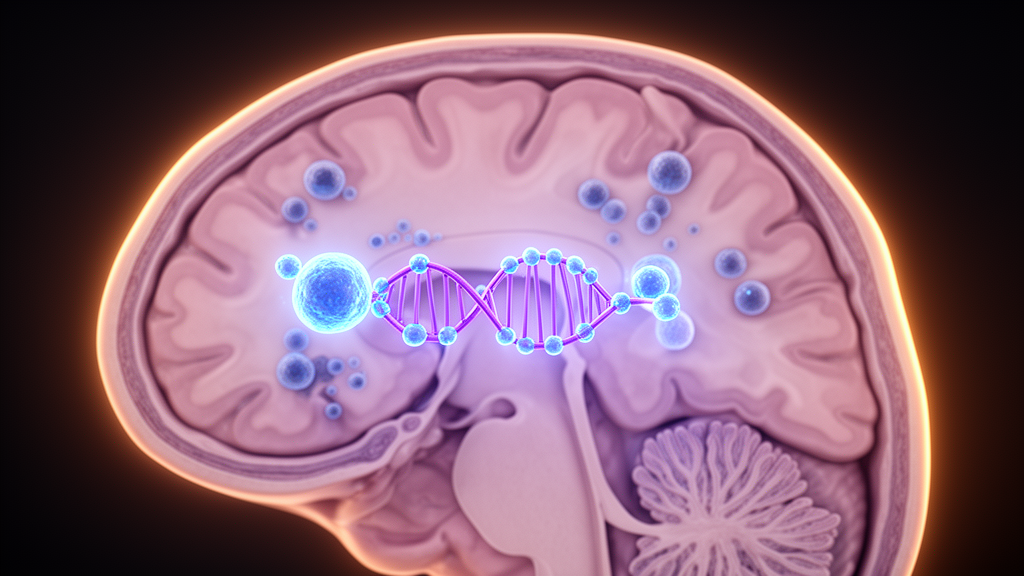
Deleting a single RNA-binding protein from neural progenitors is enough to leave mice with a severely underdeveloped cerebellum, according to a study published in Cellular and Molecular Life Sciences. The protein, hnRNPC, appears to act through a precise RNA-processing step: it prevents the inclusion of a cryptic exon in transcripts of the gene Mtf2, thereby maintaining production of the functional MTF2 protein that developing cerebellar cells depend on.
In the study, researchers conditionally deleted Hnrnpc in neural progenitors and observed cerebellar hypoplasia marked by two cellular defects: impaired proliferation of granule cell progenitors and increased apoptosis. The team identified Mtf2 as a critical downstream target. Mechanistically, hnRNPC suppresses the inclusion of a cryptic exon in Mtf2 transcripts, and loss of hnRNPC disrupted Mtf2 splicing and reduced MTF2 expression both in vivo and in primary granule cell progenitor cultures. MTF2, in turn, promotes the developmental gene expression required for cerebellar progenitor expansion, positioning it as a link between post-transcriptional RNA processing and the gene expression programs that drive cerebellar growth.
The researchers then tested whether restoring MTF2 could counteract the effects of losing hnRNPC. In their experiments, overexpression of MTF2 partially restored proliferation and reduced apoptosis following hnRNPC depletion, which the authors describe as establishing MTF2 as a critical downstream effector of hnRNPC.
To confirm the mechanism’s physiological relevance, the team deleted Hnrnpc specifically in granule cell progenitors. This more targeted deletion recapitulated the developmental and molecular defects seen in the neural progenitor-specific knockout mice and resulted in motor coordination deficits, further supporting the hnRNPC–MTF2 regulatory axis as a functional requirement in cerebellar development. The study, published as an open-access original article on 23 October 2026, was shared ahead of the final version of record, so the text remains subject to further edits. The findings demonstrate that hnRNPC-dependent alternative splicing of Mtf2 connects RNA processing to developmental gene expression during cerebellar formation, and they identify a specific splicing event whose disruption is sufficient to impair progenitor expansion and produce motor deficits in mice.
Subject of Research: The role of hnRNPC-dependent alternative splicing of Mtf2 in cerebellar development
Article Title: hnRNPC regulates cerebellar development via Mtf2 alternative splicing
Article References: Wu, Q., Chen, Y., Fu, Y., Yang, L., Li, Y., Liu, S., Ma, C., Ye, C., Zhu, W., Lv, A., Li, Q., Liu, C., Gao, J., Tong, W.-M., & Niu, Y. (2026). hnRNPC regulates cerebellar development via Mtf2 alternative splicing. Cellular and Molecular Life Sciences. https://doi.org/10.1007/s00018-026-06497-3
Image Credits: AI Generated
DOI: 10.1007/s00018-026-06497-3
Keywords: hnRNPC, MTF2, alternative splicing, cerebellar development, granule cell progenitors, neural progenitors, cerebellar hypoplasia, RNA-binding protein, apoptosis, motor coordination, mouse model, regulates
News Source: Cassandra Pierce. (October 28, 2026). RNA-Binding Protein hnRNPC Drives Cerebellar Growth by Guarding Mtf2 Splicing. Scienmag.



