


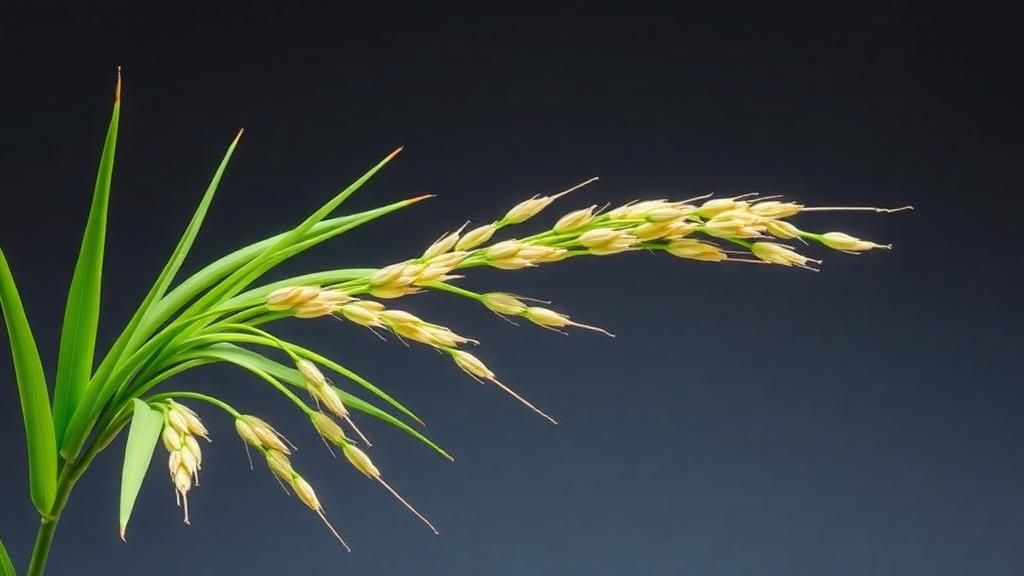
Rice breeders in India have reported the successful stacking of up to seven resistance genes into single breeding lines that withstand three of the crop’s most damaging biotic threats at once: blast disease, bacterial leaf blight and the brown planthopper. Writing in the journal Biological Research, the team describes how multi-parent hybridization combined with marker-assisted selection and careful phenotyping produced advanced lines that carry resistance loci for all three stresses while retaining usable agronomic performance. The work, published on 5 August 2026, addresses a persistent weakness of modern crop protection: varieties built on a single resistance gene tend to lose their protection as pathogens and insects evolve to overcome it.
The rationale for stacking genes rests on the biology of the three targets. Rice blast, caused by the fungus Magnaporthe oryzae, infects leaves, necks and nodes, and severe infections can cut yields by more than 90 percent. Bacterial leaf blight, driven by Xanthomonas oryzae pv. oryzae, was first reported in Japan in 1884 and can cause yield losses of up to 80 percent under severe infection, damaging the plant by reducing photosynthesis, blocking water transport and raising transpiration. The brown planthopper, considered the most destructive insect pest of rice worldwide, pierces phloem tissue with its stylet and sucks sap, producing the familiar “hopper burn” symptom; the authors cite yield losses of roughly 20 to 80 percent and annual economic losses of around 252 crore rupees across Asia. More than 70 diseases and some 800 insect species have been documented attacking rice in field and storage conditions.
Against this backdrop, the research group led by Muthukumarasamy Sriram and Ramalingam Suresh assembled seven parental lines, each contributing resistance to a different threat. APD 19026, an improved version of Samba Mahsuri, donated blast resistance; AD (Bio) 09518 and AD (Bio) 13,066 carried bacterial leaf blight resistance; and PTB 33, a classic donor against planthopper biotype 4 that dominates the Indian subcontinent, supplied insect resistance. Through a sequence of biparental crosses and intermating, the team generated two multi-cross populations designated x21301 and x21302. True F1 plants carrying the target genes were identified by molecular analysis, and from roughly 2,200 F2 plants, about 270 phenotypically superior individuals were advanced without genotyping through the F3 and F4 generations to form the screening material.
The screening pipeline was deliberately demanding. All 270 F4 lines were sown at the Hybrid Rice Evaluation Centre in Gudalur, a natural blast hotspot, with the susceptible check CO 39 planted in border rows and after every fifth row to ensure disease pressure. Three lines emerged as highly resistant with a disease score of 1.0 and no lesions, eight were resistant with minute non-sporulating spots, and 67 were moderately resistant. The 51 blast-resistant or moderately resistant lines were then shuttled to the Paddy Breeding Station in Coimbatore for artificial bacterial leaf blight screening, in which leaves were clipped with scissors smeared with the pathogen at a concentration of 1 × 10⁸ CFU per millilitre. Ten genotypes proved highly resistant. The same lines underwent seedling-stage seed box tests for planthopper resistance, followed by a modified seed box test to confirm reactions.
Molecular validation with gene-specific SSR markers then revealed the genetic payoff. Four lines—x21301-1, x21301-2, x21301-47 and x21301-59—carried seven resistance genes in different combinations spanning blast resistance gene Pi54, bacterial blight genes xa5, xa13 and Xa21, and planthopper genes bph1, Bph2 and Bph17. Six further lines carried unique six-gene combinations, and most of the 51 screened lines carried four or five resistance genes. One line, x21301-2, held an extra copy of Xa21 in a heterozygous state, illustrating how marker analysis can distinguish homozygous from heterozygous carriers—something conventional phenotyping alone cannot do reliably, particularly for recessive resistance genes such as xa5 and xa13.
Confirmatory screening at the F5 generation tested whether resistance persisted across generations and environments. Four lines—x21301-38, x21302-151, x21302-240 and x21302-241—validated as highly blast resistant, while eleven more remained resistant. Against bacterial blight, ten lines retained high resistance and twelve remained resistant. For the planthopper, only one line, x21302-239, held a fully resistant reaction in the modified seed box test, with five others showing moderate resistance. Crucially, x21302-239 proved consistent against all three stresses across both generations, and genotyping showed it carried Pi54, xa5, xa13, bph1, Bph2 and Bph17. The authors report that this line combines resistance to blast, bacterial blight and planthopper with a single-plant yield of about 33 grams—modest agronomically, but sufficient to make it a valuable donor parent for crossing into elite cultivars.
The team also probed the biochemical machinery underlying blast resistance. Ten resistant lines and appropriate checks were assayed for three defense enzymes at intervals up to 15 days after pathogen inoculation. Phenylalanine ammonia-lyase activity, part of the phytoalexin and lignin biosynthesis pathway that stiffens cell walls against fungal penetration, rose by roughly 1.9 to 2.1 folds in the resistant lines, approaching the level of the resistant check. Peroxidase activity increased between about 8 and 11.5 folds, with line x21302-241 reaching 11.533 folds, nearly matching the resistant check APD 19026. Ascorbate peroxidase climbed more than 3.7 folds in all ten test entries, peaking at 4.528 folds in x21302-252. These enzyme responses align with the known behavior of Pi54, a major blast resistance gene whose activation is associated with callose deposition that physically blocks fungal penetration through papillae formation.
Planthopper resistance was corroborated by a honeydew excretion test, which measures how much sap the insects extract while feeding. Filter papers placed under feeding insects were treated with ninhydrin, and the area of purple staining revealed feeding intensity. The resistant check PTB 33 produced a honeydew area of 19.441 square centimetres against 45.449 square centimetres for the susceptible check TN1. Three test lines—x21302-270, x21302-239 and x21301-52—showed lower honeydew deposition than even the resistant check, indicating strong antixenosis or antibiosis effects that discourage feeding. Effect size analysis added a quantitative note: genotype accounted for an eta-squared value of 0.38 for blast resistance and 0.39 for bacterial blight resistance, indicating strong genetic control, but only 0.14 for planthopper resistance, suggesting a more moderate genotypic contribution to that trait.
Agronomic evaluation in an augmented block design showed that resistance stacking did not automatically cost yield. Line x21302-241, highly resistant to both diseases, recorded a panicle length of 33.2 centimetres, 30 productive tillers and a single-plant yield of 59.99 grams, exceeding the parental lines. Its sibling x21302-240, by contrast, yielded only 24.40 grams, a reminder that gene combinations interact differently with genetic backgrounds and that unfavorable linkage drag remains a real constraint. The authors note that x21302-239 carries short, bold grains with hard gel consistency and an intermediate amylose content of 21.06 percent, making it unsuitable for slender-grain varieties but well matched to bold-grain breeding programs. Correlation and principal component analyses across the F5 population found single-plant yield positively associated with days to flowering, plant height and productive tiller number, with the first four principal components explaining 93.6 percent of trait variance.
The study’s broader argument concerns durability. The authors contend that homozygous genetic backgrounds favor rapid epidemic outbreaks, whereas populations built from multiple parental lines disrupt the pathogen’s infectious cycle, extending the useful life of resistance. They position the multi-resistant lines as pre-breeding material for future programs rather than finished varieties, and they are explicit that multi-environment validation trials will be needed to assess long-term resistance durability and yield stability. Functional genomic work on how pyramided genes regulate one another, and further optimization of gene combinations to minimize agronomic trade-offs, are flagged as the next steps. For now, the demonstration that seven resistance genes can be tracked, stacked and validated within a single rice line offers a template for breeding crops that stay ahead of evolving pests and pathogens rather than perpetually chasing them.
Subject of Research: Marker-assisted pyramiding of multiple biotic stress resistance genes in rice breeding lines
Article Title: A successful stacking of multiple biotic stress resistance in rice facilitated by genes and precision breeding tools
Article References: Sriram, M., Amudha, K., Manonmani, S., Gopalakrishnan, C., Sheela, V., Antony, J. J. B., Vignesh, S., & Suresh, R. (2026). A successful stacking of multiple biotic stress resistance in rice facilitated by genes and precision breeding tools. Biological Research, 59(1), Article 48. https://doi.org/10.1186/s40659-026-00710-0
Image Credits: AI Generated
DOI: 10.1186/s40659-026-00710-0
Keywords: rice, gene pyramiding, marker-assisted selection, blast resistance, bacterial leaf blight, brown planthopper, plant breeding, Pi54, Xa21, disease resistance, food security, agronomy
News Source: Alan Morgan. (October 29, 2026). Rice Breeders Stack Seven Disease and Pest Resistance Genes in One Line. Scienmag.



