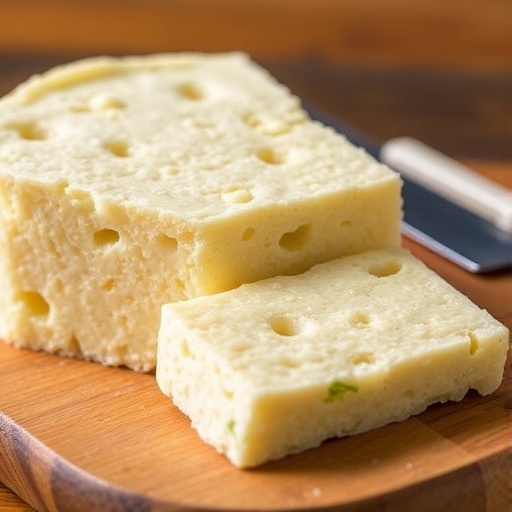
In a groundbreaking advancement for both vegan and allergy-sensitive communities, researchers at the University of Arkansas have unveiled the remarkable potential of rice proteins as a hypoallergenic base for alternative cheese production. This pioneering work addresses a long-standing challenge in plant-based dairy alternatives: achieving desirable texture and meltability without compromising nutritional value or excluding consumers with common food allergies. The research spearheaded by Mahfuzur Rahman, assistant professor of food science, delves deeply into the molecular and functional characteristics of proteins derived from different fractions of a single rice cultivar, offering insights that could revolutionize the plant-based cheese industry.
Rice, an abundant crop with significant agricultural and economic importance—especially in Arkansas, the leading U.S. rice producer—has been traditionally underutilized beyond direct consumption of white rice grains. By exploring the proteins found not only in the edible white rice but also in the byproducts such as brown rice and rice bran, Rahman and his team have demonstrated that these components provide a spectrum of functional properties essential to the manufacture of plant-based cheese. Notably, this approach valorizes otherwise discarded or lower-value milling byproducts like broken kernels and bran, positioning the technology as a model for circular economy principles in agricultural processing.
The research methodology involved rigorous extraction of proteins from the three main components—brown rice, white rice, and bran—utilizing chemical processes optimized for protein isolation. Each protein fraction was then characterized to identify its subunit profile, molecular structure, and physicochemical behaviors relevant to food emulsification, foaming, solubility, and texture formation. These parameters directly affect the capacity of proteins to mimic the functional role of milk proteins in cheese, particularly in providing firmness, meltability, and emulsification in a fat-protein matrix.
Among the identified rice protein subunits, four major groups were highlighted: albumin, globulin, glutelin, and prolamin. Glutelin, the dominant subunit in brown rice and broken kernel proteins, exhibited properties conducive to texture development and melting behavior essential for cheese analogs. Conversely, rice bran protein was found rich in albumin and demonstrated unique surface hydrophobicity, enhancing water retention and reducing oil separation—a key factor in creating plant-based cheese with a pleasing mouthfeel and stability. This nuanced differentiation in protein composition from a single rice cultivar underscores the complexity and versatility of rice proteins as functional food ingredients.
One of the more compelling aspects of this research lies in the substantial protein content achieved in the rice-based cheeses—approximately 12 percent—which contrasts with many commercial plant-based cheeses that suffer from low or negligible protein levels. The integration of rice protein not only augments the nutritional profile of alternative cheese products but also imparts physicochemical attributes typically reliant on animal-derived proteins and additives. Moreover, the demonstrated foaming and emulsifying capacities of rice proteins suggest their potential to replace critical functional roles traditionally filled by eggs and oils, signifying broader applications across food science beyond cheese analogs.
Arkansas’s prominence in rice production offers a strategic advantage for domestic supply chain development of rice proteins, presenting an economic opportunity to convert abundant milling byproducts—estimated at over 14 million tons of bran and nearly 25 million tons of broken kernels annually in the U.S.—into high-value plant proteins. This sustainable utilization aligns with circular economy goals, emphasizing the reduction of food waste and enhanced resource efficiency. It also diminishes dependency on imported rice protein ingredients, fostering growth within the U.S. plant-based protein sector and supporting local agricultural economies.
Technological innovation continues as Rahman explores non-chemical methods of protein extraction to enhance nutritional value and minimize environmental impact. One such method utilizes ultrasound to separate proteins, aiming to preserve functional and nutritional attributes more effectively than conventional solvent-based extraction. Complementary to rice protein studies, ongoing work on electrically charged plates for gluten extraction indicates a broader research thrust toward eco-friendly and efficient protein isolation techniques in plant-based food science.
Future investigations are poised to refine rice protein-based cheese formulations further by optimizing sensory profiles, texture stability, flavor, and shelf life. Such enhancements are critical to consumer acceptance and commercialization. Understanding how variations in protein subunit composition influence these parameters will facilitate tailored products catering to diverse dietary preferences and restrictions, thereby expanding the appeal and market penetration of hypoallergenic, vegan cheeses.
The breakthrough presented by the University of Arkansas team exemplifies a convergence of food science, agricultural sustainability, and human health considerations. By unlocking the multifaceted potentials of rice proteins derived from a singular cultivar, this research charts a new course in plant-based product innovation that may redefine the dairy alternative landscape while supporting agricultural circularity and economic resilience.
In sum, rice proteins extracted from bran, brown rice, and broken kernels provide a triad of functional and nutritional properties that collectively enable the production of hypoallergenic, nutrient-rich, and texturally appealing plant-based cheeses. This research not only broadens the scientific understanding of rice protein fractions but also opens pathways for sustainable food manufacturing and expanded utilization of an underexplored resource within the American agricultural context.
Subject of Research:
Plant protein functionality and application in hypoallergenic alternative cheesemaking from rice protein fractions.
Article Title:
Three shades of plant protein from a single rice cultivar: Insights into subunit profiles, molecular structures, functional and nutritional properties, and cheesemaking performance.
News Publication Date:
2024
Web References:
University of Arkansas Division of Agriculture—https://aaes.uada.edu/
Future Foods Journal Link: http://dx.doi.org/10.1016/j.fufo.2025.100875
References:
Rahman, M., & Galib, R. M. (2025). Three shades of plant protein from a single rice cultivar: Insights into subunit profiles, molecular structures, functional and nutritional properties, and cheesemaking performance. Future Foods. https://doi.org/10.1016/j.fufo.2025.100875
Image Credits:
UADA photo (University of Arkansas Division of Agriculture)
Keywords:
Plant-based cheese, rice protein, hypoallergenic food, food science, protein extraction, circular economy, plant protein functionality, alternative dairy, glutelin, albumin, emulsifying properties, plant-based nutrition.
Tags: allergy-friendly dairy substitutesalternative cheese texture and meltabilitycircular economy in agriculturehypoallergenic plant-based cheeseplant-based dairy innovationrice bran in food productsrice byproducts valorizationrice protein functional propertiesrice-based cheese alternativessustainable rice product developmentUniversity of Arkansas food science researchvegan cheese from rice protein