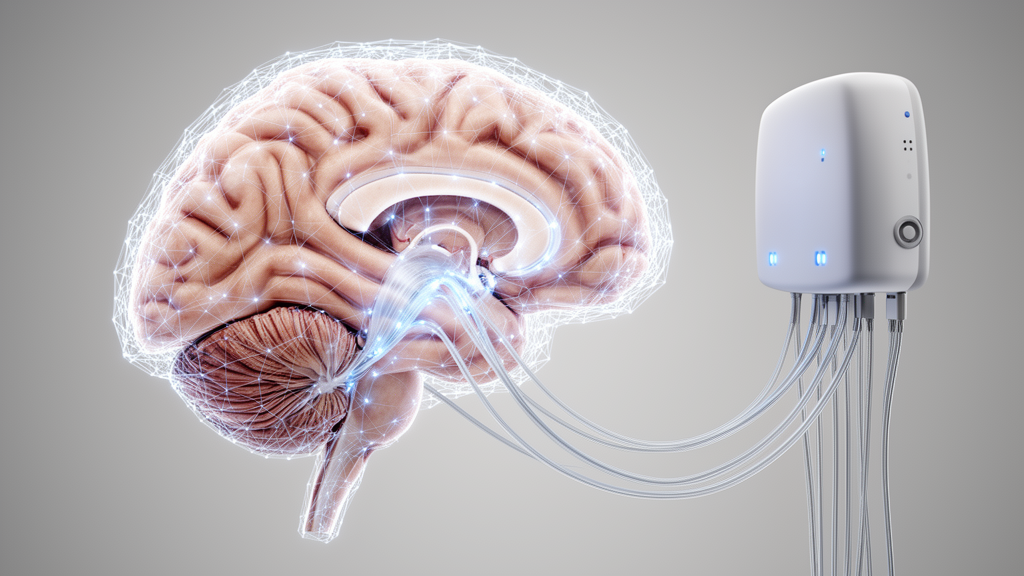
A new review published in Alzheimer’s Research & Therapy proposes a conceptual framework for using artificial intelligence-driven brain-computer interfaces to address the limitations of current Alzheimer’s disease assessment and treatment. The study, led by Sang Sun Han and colleagues, synthesizes recent progress in neurotechnology to outline how multimodal neural data can be integrated and computationally analyzed. The authors argue that this approach could support personalized diagnostic and therapeutic decision-making across the entire continuum of the disease, from early detection to longitudinal monitoring and circuit-level intervention.
The review highlights that early diagnosis and timely intervention are critical in Alzheimer’s disease, yet conventional assessments often fail to capture the longitudinal neural dynamics necessary for accurate tracking. While traditional biomarker frameworks provide essential pathological insights, the authors note that these methods remain constrained by high costs and restricted accessibility. The proposed neurotechnology framework aims to overcome these barriers by integrating neural decoding with state-dependent modulation of neural activity, offering a potential pathway to more accessible and comprehensive care.
Central to the proposed system is the integration of multimodal neural data, which is computationally analyzed to estimate individual disease status. This conceptual BCI system is designed to support both diagnostic and therapeutic decision-making. The review first examines current neurophysiological approaches for the early detection of Alzheimer’s disease, discussing their potential as enabling technologies for future BCI systems.
In the therapeutic domain, the authors examine BCI strategies based on neurofeedback and neuromodulation. A key aspect of the review is the careful distinction between evidence demonstrated directly in Alzheimer’s disease and proof-of-concept findings derived from other neurological disorders.
The role of artificial intelligence within this framework is discussed in terms of enhancing neural decoding, adaptive control, and personalized intervention.
Despite the potential benefits, the review critically evaluates major methodological and translational challenges that must be addressed before clinical implementation. These challenges include data scarcity, disease heterogeneity, limited model interpretability, and the complexities of closed-loop implementation.
To guide future research, the review outlines priorities for the clinical translation of AI-enhanced BCI systems. These priorities include the establishment of standardized multimodal Alzheimer’s disease cohorts, the development of biologically grounded explainable AI, regulatory-aligned system integration, and rigorous prospective clinical validation.
The review concludes by positioning AI-driven BCIs as a conceptual foundation for the future development and responsible clinical translation of neurotechnology in Alzheimer’s disease. By linking early detection, longitudinal monitoring, and circuit-level intervention, the proposed framework offers a comprehensive approach to managing the disease. The authors suggest that while significant challenges remain, the integration of current evidence on neurophysiological diagnostics, therapeutic strategies, and AI-assisted decoding provides a clear roadmap for advancing the field.
Subject of Research: AI-driven brain-computer interfaces for Alzheimer's disease diagnosis and therapy
Article Title: Exploring the potential of AI-driven brain–computer interfaces for Alzheimer’s disease: an integrated framework for diagnosis and therapeutic intervention
Article References: Han, S. S., Kim, H.-C., Lee, H.-J., Choi, W., Lee, D.-H., Masmoudi, I., Song, J.-H., Jang, J., Yoo, S.-H., Kim, S.-P., Im, C.-H., & Hoe, H.-S. (2026). Exploring the potential of AI-driven brain–computer interfaces for Alzheimer’s disease: an integrated framework for diagnosis and therapeutic intervention. Alzheimer's Research & Therapy. https://doi.org/10.1186/s13195-026-02190-6
Image Credits: AI Generated
DOI: 10.1186/s13195-026-02190-6
Keywords: Alzheimer's disease, brain-computer interface, artificial intelligence, neurotechnology, neurofeedback, neuromodulation, diagnostic framework, clinical translation, Exploring, potential, AI-driven, brain
News Source: Cassandra Pierce. (November 8, 2026). Review proposes AI-driven BCI framework for Alzheimer’s care. Scienmag.