


Microglia may benefit, not damage, photoreceptors
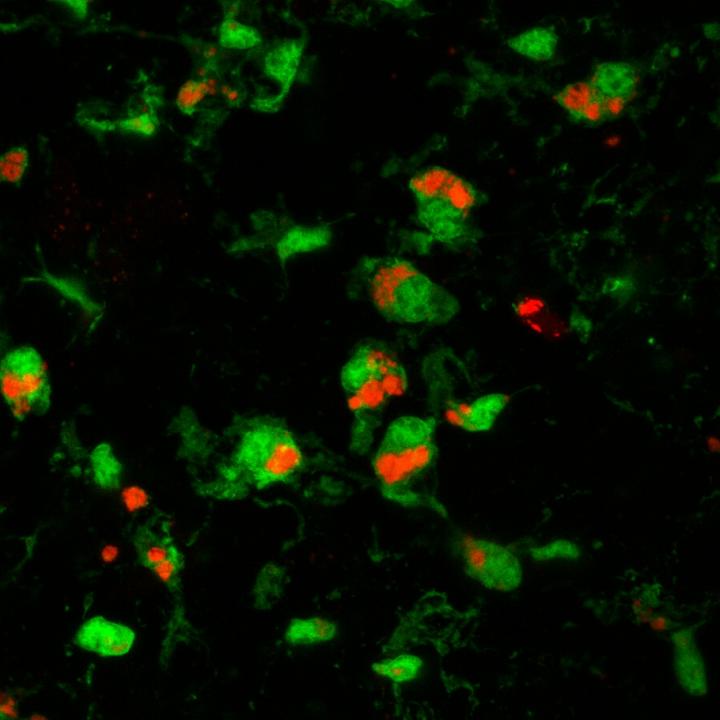
Credit: James. F. Striebel/NIAID
WHAT:
National Institutes of Health scientists studying the progression of inherited and infectious eye diseases that can cause blindness have found that microglia, a type of nervous system cell suspected to cause retinal damage, surprisingly had no damaging role during prion disease in mice. In contrast, the study findings indicated that microglia might delay disease progression.
The discovery could apply to studies of inherited photoreceptor degeneration diseases in people, known as retinitis pigmentosa. In retinitis pigmentosa cases, scientists find an influx of microglia near the photoreceptors, which led to the belief that microglia contribute to retina damage.
These inherited diseases appear to damage the retina similarly to prion diseases. Prion diseases are slow degenerative diseases of the central nervous system that occur in people and various other mammals. No vaccines or treatments are available, and the diseases are almost always fatal. Prion diseases primarily involve the brain but also can affect the retina and other tissues.
Expanding on work published in 2018, scientists at NIH’s National Institute of Allergy and Infectious Diseases (NIAID) used an experimental drug to eliminate microglia in prion-infected mice. They studied prion disease progression in the retina to see if they could discover additional details that might be obscured in the more complex structure of the brain.
When the scientists examined their prion-infected study mice, they found that photoreceptor damage still occurred – even somewhat faster – despite the absence of microglia. They also observed early signs of new prion disease in the photoreceptor cells, which may provide clues as to how prions damage photoreceptors. Their work appears in Acta Neuropathologica Communications.
The NIAID scientists, located at Rocky Mountain Laboratories in Hamilton, Mont., plan to continue to study the toxic interactions between prions and photoreceptor cells to identify ways to block these damaging effects. They also plan to continue studying the role of microglia in deterring the initiation of prion disease.
###
ARTICLE:
J Striebel et al. Microglia are not required for prion-induced retinal photoreceptor degeneration. Acta Neuropathologica Communications DOI: 10.1186/s40478-019-0702-x (2019).
RELATED:
J Carroll et al. Microglia are critical in host defense against prion disease. Journal of Virology DOI: 10.1128/JVI.00549-18 (2018).
WHO:
Bruce Chesebro, M.D., chief of the NIAID Laboratory of Persistent Viral Diseases, is available to comment on this study.
CONTACT:
To schedule interviews, please contact Ken Pekoc, (301) 402-1663, [email protected].
NIAID conducts and supports research–at NIH, throughout the United States, and worldwide–to study the causes of infectious and immune-mediated diseases, and to develop better means of preventing, diagnosing and treating these illnesses. News releases, fact sheets and other NIAID-related materials are available on the NIAID website.
About the National Institutes of Health (NIH): NIH, the nation’s medical research agency, includes 27 Institutes and Centers and is a component of the U.S. Department of Health and Human Services. NIH is the primary federal agency conducting and supporting basic, clinical, and translational medical research, and is investigating the causes, treatments, and cures for both common and rare diseases. For more information about NIH and its programs, visit http://www.
NIH…Turning Discovery Into Health®
Media Contact
Ken Pekoc
[email protected]
Related Journal Article
http://dx.



