• HOME
  • NEWS
  • EXPLORE
    • CAREER
      • Companies
      • Jobs
    • EVENTS
    • iGEM
      • News
      • Team
    • PHOTOS
    • VIDEO
    • WIKI
  • BLOG
  • COMMUNITY
    • FACEBOOK
    • INSTAGRAM
    • TWITTER
Monday, June 29, 2026
BIOENGINEER.ORG
No Result
View All Result
  • Login
  • HOME
  • NEWS
  • EXPLORE
    • CAREER
      • Companies
      • Jobs
        • Lecturer
        • PhD Studentship
        • Postdoc
        • Research Assistant
    • EVENTS
    • iGEM
      • News
      • Team
    • PHOTOS
    • VIDEO
    • WIKI
  • BLOG
  • COMMUNITY
    • FACEBOOK
    • INSTAGRAM
    • TWITTER
  • HOME
  • NEWS
  • EXPLORE
    • CAREER
      • Companies
      • Jobs
        • Lecturer
        • PhD Studentship
        • Postdoc
        • Research Assistant
    • EVENTS
    • iGEM
      • News
      • Team
    • PHOTOS
    • VIDEO
    • WIKI
  • BLOG
  • COMMUNITY
    • FACEBOOK
    • INSTAGRAM
    • TWITTER
No Result
View All Result
Bioengineer.org
No Result
View All Result
Home NEWS Science News Health

Researchers use silkworm silk to model muscle tissue

Bioengineer by Bioengineer
March 10, 2021
in Health
Reading Time: 2 mins read
0
IMAGE
Share on FacebookShare on TwitterShare on LinkedinShare on RedditShare on Telegram

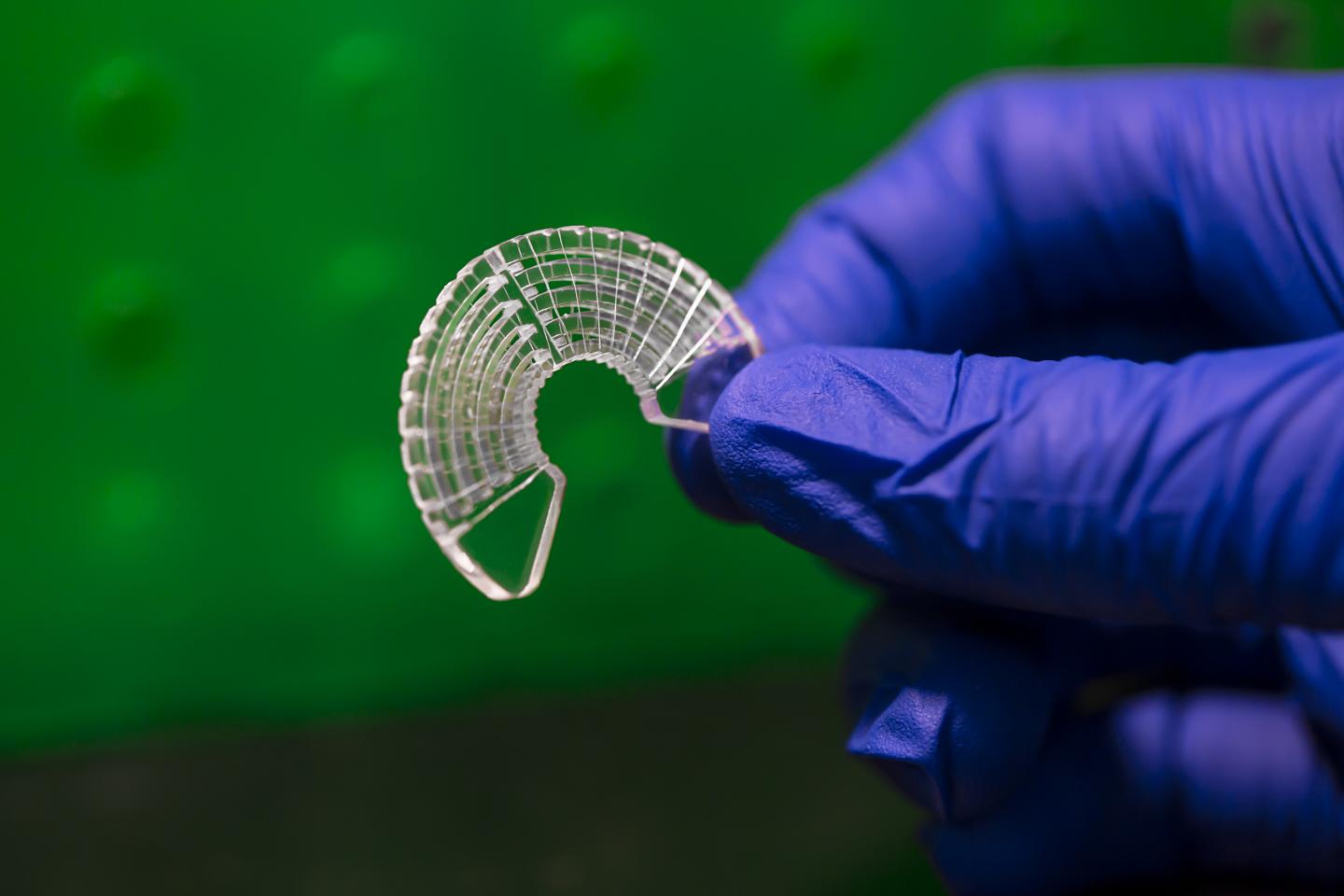
Transgenic silk proves to be effective surface for 3D muscle modeling
IMAGE

Credit: Matt Jensen

News Release — LOGAN, UT — Mar. 9, 2021 — Researchers at Utah State University are using silkworm silk to grow skeletal muscle cells, improving on traditional methods of cell culture and hopefully leading to better treatments for muscle atrophy.

When scientists are trying to understand disease and test treatments, they generally grow model cells on a flat plastic surface (think petri dish). But growing cells on a two-dimensional surface has its limitations, primarily because muscle tissue is three-dimensional. Thus, USU researchers developed a three-dimensional cell culture surface by growing cells on silk fibers that are wrapped around an acrylic chassis. The team used both native and transgenic silkworm silk, the latter produced by silkworms modified with spider silk genes.

Native silkworm silks have been used previously as three-dimensional cell culture models, but this is the first time that transgenic silkworm silk has been used for skeletal muscle modeling. Elizabeth Vargis, Matthew Clegg, and Jacob Barney of the Biological Engineering Department, and Justin Jones, Thomas Harris, and Xiaoli Zhang of the Biology Department published their findings in ACS Biomaterials Science & Engineering.

Cells grown on silkworm silk proved to more closely mimic human skeletal muscle than those grown on the usual plastic surface. These cells showed increased mechanical flexibility and increased expression of genes required for muscle contraction. Silkworm silk also encouraged proper muscle fiber alignment, a necessary element for robust muscle modeling.

Skeletal muscle is responsible for moving the skeleton, stabilizing joints, and protecting internal organs. The deterioration of these muscles can happen for myriad reasons, and it can happen swiftly. For example, after only two weeks of immobilization, a person can lose almost a quarter of their quadricep muscle strength. Understanding how muscles can atrophy so quickly must begin at a cellular level, with cells grown to better represent reality.

“The overarching goal of my research is to build better in vitro models,” said Elizabeth Vargis, associate professor of biological engineering at USU. “Researchers grow cells on these 2D platforms, which aren’t super realistic, but give us a lot of information. Based on those results, they usually transition into an animal model, then they move onto clinical trials, where a vast majority of them fail. I’m trying to add to that first step by developing more realistic in vitro models of normal and diseased tissue.”

###

Media Contact
Dr. Elizabeth Vargis
[email protected]

Original Source

https://engineering.usu.edu/news/main-feed/2021/researchers-use-silkworm-silk-to-model-muscle-tissue

Related Journal Article

http://dx.doi.org/10.1021/acsbiomaterials.0c00987

Tags: AgingBiologyBiomedical/Environmental/Chemical EngineeringCell BiologyHealth CareMedicine/Health
Share12Tweet8Share2ShareShareShare2

Related Posts

Tracking Lanthanide-Labeled Microplastics in Plants

June 25, 2026

Neural Design Enables Zero-Shot Drug-Binding Proteins

June 25, 2026

Genomic Insights into Human Skin Fungi Diversity

June 25, 2026

Chiral Laser Gyroscopes Surpass Lock-In Limit

June 25, 2026
Please login to join discussion

POPULAR NEWS

  • Saying Goodbye to PGY-6: Pediatric Fellowship Realities

    103 shares
    Share 41 Tweet 26
  • Multi-Hospital Study Reveals Long Covid Burden Is Twice as High as Current Estimates

    92 shares
    Share 36 Tweet 23
  • Detection of EDCs in Breast Milk and Infant Urine Up to Six Months Highlights Early Exposure Risks

    77 shares
    Share 31 Tweet 19
  • New Drug Candidate Developed at McMaster Shows Potential for Treating Brain Cancer

    58 shares
    Share 23 Tweet 15

About

We bring you the latest biotechnology news from best research centers and universities around the world. Check our website.

Follow us

Recent News

Tracking Lanthanide-Labeled Microplastics in Plants

POSTECH Researchers Slash Cost of Reconstituted Cell-Free Systems by 95%

AI and Physics Collaborate to Design Advanced Hydrogen Storage Materials

Subscribe to Blog via Email

Success! An email was just sent to confirm your subscription. Please find the email now and click 'Confirm' to start subscribing.

Join 82 other subscribers
  • Contact Us

Bioengineer.org © Copyright 2023 All Rights Reserved.

Welcome Back!

Login to your account below

Forgotten Password?

Retrieve your password

Please enter your username or email address to reset your password.

Log In
No Result
View All Result
  • Homepages
    • Home Page 1
    • Home Page 2
  • News
  • National
  • Business
  • Health
  • Lifestyle
  • Science

Bioengineer.org © Copyright 2023 All Rights Reserved.