The SARS-CoV-2 Delta variant that caused the third wave of COVID-19 in mid-2021 turned out to be more contagious than earlier SARS-CoV-2 variants. In addition, protein mutations in the Delta variant were found to significantly reduce the effect of acquired humoral immunity to COVID-19 from prior infection or vaccination.
Credit: 2023 Shkurnikov et al.
The SARS-CoV-2 Delta variant that caused the third wave of COVID-19 in mid-2021 turned out to be more contagious than earlier SARS-CoV-2 variants. In addition, protein mutations in the Delta variant were found to significantly reduce the effect of acquired humoral immunity to COVID-19 from prior infection or vaccination.
Acquired immunity to infections is largely provided by T lymphocytes—cells of the immune system which detect foreign antigens after infection and trigger an immune response. This is the role of T cell receptors (or TCRs), special receptors on the T cell surface.
TCRs are responsible for pathogen recognition. They can ‘remember’ specific antigens previously encountered and mount an immune response faster the next time, thus protecting the body against reinfection with the same virus.
Human leukocyte antigen class I (HLA-I) molecules help TCRs recognise pathogens. HLA-I molecules bind to pathogen molecules and present them on the infected cell’s surface, where they can be recognised by T cell receptors.
An individual’s set of HLA-I genes is unique. This is the main reason why viral infections affect people with varying degrees of severity. In particular, as HSE researchers have previously demonstrated, the individual HLA-I genotype determines predisposition to severe forms of COVID-19.
Until now, however, patient genotypes were studied only in the distinct waves of the coronavirus pandemic. Since then, both the virus and people’s susceptibility to it have changed significantly.
The researchers compared the HLA-I genotypes of COVID-19 patients in the first and third waves of the pandemic. The genomes of COVID-19 patients were analysed, including 147 patients of the first wave (between May and August 2020) and 219 patients of the third wave (between June and July 2021).
The researchers performed HLA typing by next-generation sequencing (NGS) that identifies the variant forms of genes (alleles) in a particular individual. The scientists then compared the frequency of alleles’ occurrence between the patient groups.
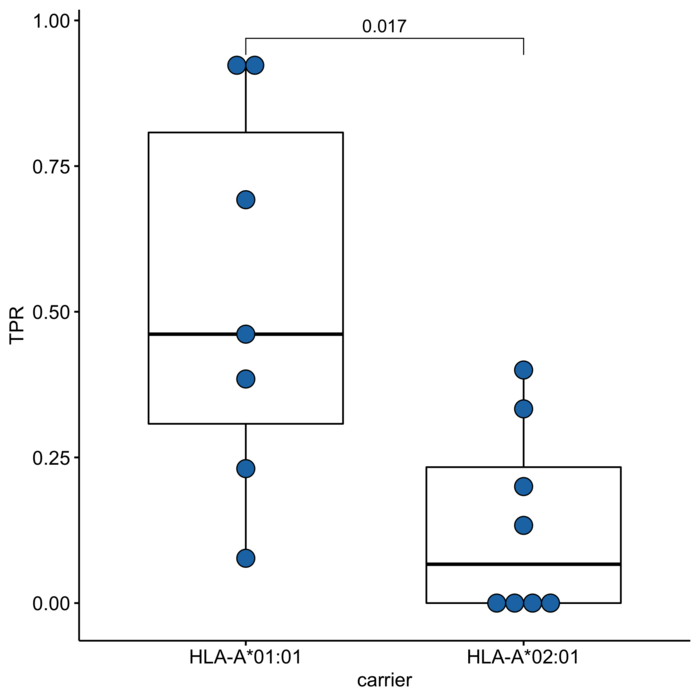
They found half as many patients with the HLA-A*01:01 allele in the third wave as in the first wave. Other variants of HLA-I genes were equally common in both groups.
Previously, the HLA-A*01:01 allele was believed to be associated with higher risks of infection and severe course of COVID-19. But now the researchers suggest that this allele might be more beneficial than previously thought. The fact that it occurs far less frequently among third-wave patients may indicate that carriers of this allele have developed robust T-cell immunity to COVID-19.
HLA-A*01:01 mainly binds to peptides that origin from the ORF1ab region of the SARS-CoV-2 genome. ORF1ab is considered a conservative part of the genome, meaning that it is less susceptible to mutations than other regions. Presumably, the immune systems of HLA-A*01:01 carriers have learned how to detect COVID-19 despite mutations.
‘Earlier, we demonstrated that HLA-A*01:01 carriers are at higher risk of severe COVID-19. However, a significant proportion of patients, including carriers of HLA-A*01:01, have a mild or even asymptomatic form of COVID-19’, explains Head of the HSE Laboratory for Research on Molecular Mechanisms of Longevity Maxim Shkurnikov. ‘The reason why we found a decrease in the number of carriers of this allele among third-wave patients may be that a large number of these patients had already been infected by the time the third wave hit and had formed a strong T cell immunity, allowing them to avoid hospitalisation this time around.’
In addition, the so-called ‘memory T cells’ predominate in former COVID-19 patients with the HLA-A*01:01 allele; these cells store information about an infection for a long time after it has been eliminated, allowing them to mount a rapid immune response upon re-exposure.
The study findings suggest that the immune systems of HLA-A*01:01 allele carriers tend to be more effective at remembering and recognising COVID-19 regardless of its mutations. This confirms the possibility of a genetic predisposition to severe COVID-19. These findings can also inform the development of effective COVID-19 vaccines targeting the ORF1ab genome region.
Journal
PeerJ
DOI
10.7717/peerj.14707
Article Title
HLA-A*01:01 allele diminishing in COVID-19 patients population associated with non-structural epitope abundance in CD8+ T-cell repertoire
Article Publication Date
17-Jan-2023