• HOME
  • NEWS
  • EXPLORE
    • CAREER
      • Companies
      • Jobs
    • EVENTS
    • iGEM
      • News
      • Team
    • PHOTOS
    • VIDEO
    • WIKI
  • BLOG
  • COMMUNITY
    • FACEBOOK
    • INSTAGRAM
    • TWITTER
Thursday, May 21, 2026
BIOENGINEER.ORG
No Result
View All Result
  • Login
  • HOME
  • NEWS
  • EXPLORE
    • CAREER
      • Companies
      • Jobs
        • Lecturer
        • PhD Studentship
        • Postdoc
        • Research Assistant
    • EVENTS
    • iGEM
      • News
      • Team
    • PHOTOS
    • VIDEO
    • WIKI
  • BLOG
  • COMMUNITY
    • FACEBOOK
    • INSTAGRAM
    • TWITTER
  • HOME
  • NEWS
  • EXPLORE
    • CAREER
      • Companies
      • Jobs
        • Lecturer
        • PhD Studentship
        • Postdoc
        • Research Assistant
    • EVENTS
    • iGEM
      • News
      • Team
    • PHOTOS
    • VIDEO
    • WIKI
  • BLOG
  • COMMUNITY
    • FACEBOOK
    • INSTAGRAM
    • TWITTER
No Result
View All Result
Bioengineer.org
No Result
View All Result
Home NEWS Science News Health

Researchers discover predictor of laser treatment success in patients with glaucoma

Bioengineer by Bioengineer
August 5, 2020
in Health
Reading Time: 2 mins read
0
IMAGE
Share on FacebookShare on TwitterShare on LinkedinShare on RedditShare on Telegram

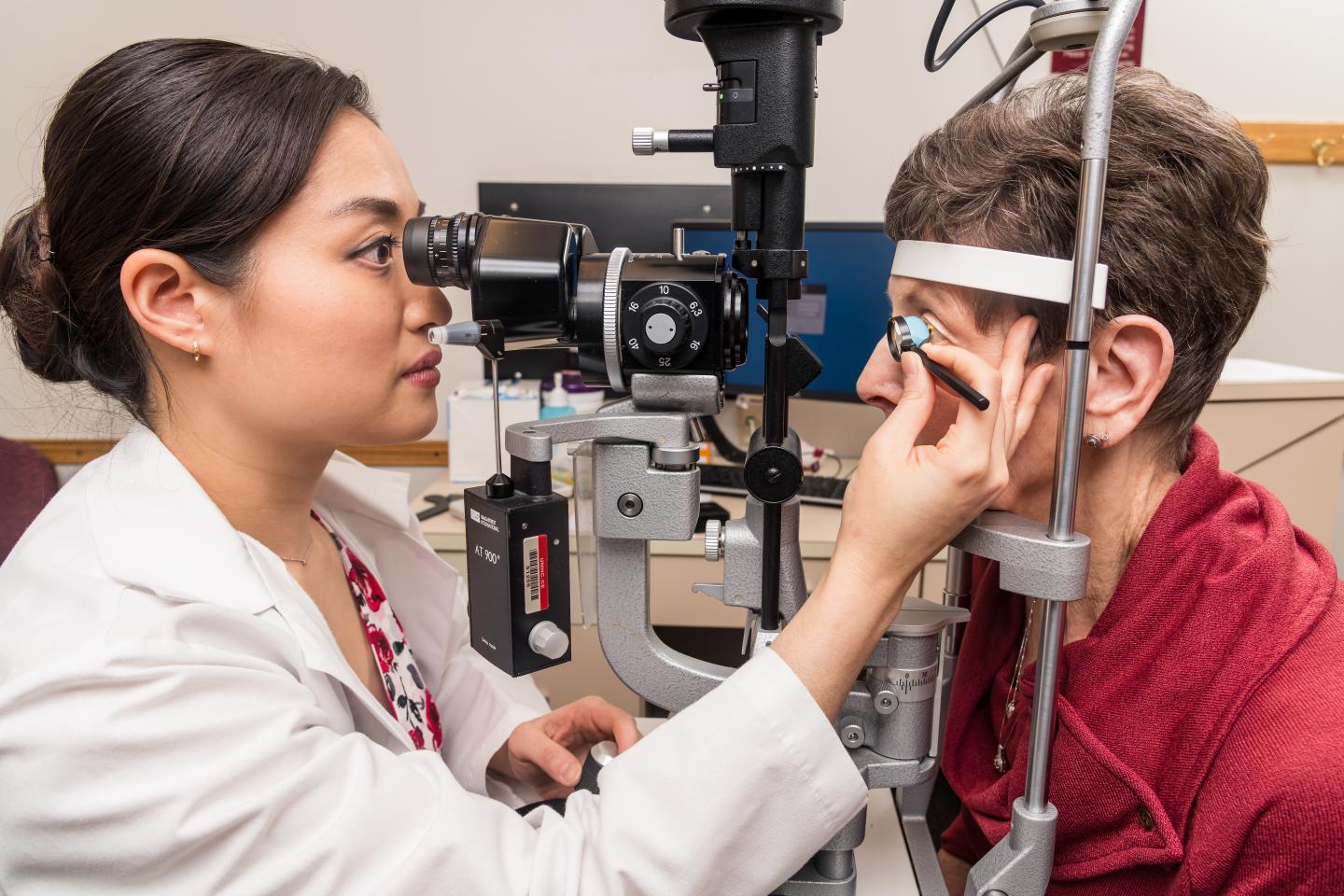
Pre-treatment eye pressure is best gauge of laser effectiveness
IMAGE

Credit: MU Health Care

More than 70 million people worldwide suffer from glaucoma, a condition that causes a build-up of fluid and pressure inside the eye and can eventually lead to blindness. Treatment options have traditionally included eye drops to reduce the fluid the eye produces or surgery to unclog the eye’s drainage. But a new study from the University of Missouri School of Medicine and MU Health Care provides insight into which patients might benefit most from a noninvasive treatment called selective laser trabeculoplasty (SLT), which relieves pressure by using a laser to alter the eye tissue, resulting in better fluid drainage.

“There’s been a lack of evidence about how well SLT works, how safe it is and the ideal candidate,” said senior author Jella An, MD, an assistant professor of ophthalmology and a fellowship-trained glaucoma specialist at MU Health Care’s Mason Eye Institute. “Because so little is known about SLT, there is a lot of apprehension among specialists about using it as a first-line treatment for glaucoma. Our research findings have helped me redefine the ideal patient for this procedure.”

An’s research team reviewed 252 SLT procedures on 198 adult patients with open-angle glaucoma to determine what percentage of these surgeries achieved a 20% or greater reduction in intraocular pressure (IOP). Two months after surgery, 33.6% of patients met success criteria. At the six-month mark, 38.5% achieved the threshold. The researchers discovered patients with a higher baseline IOP had larger reductions in pressure.

“We discovered significant improvement in patients with more severe cases, which convinced me that patients with the highest pressure will benefit the most from this laser therapy,” An said.

Age, type and severity of glaucoma did not significantly predict a successful outcome. In addition, less than 5% of patients studied experienced the most common adverse event of an IOP spike after the procedure.

“This study really increased my comfort level to offer SLT as a primary therapy,” An said. “Prior to this research, I would prescribe these patients multiple medications, creating the possibility of side effects and poor adherence, which could lead to disease progression. Now I offer this laser first if they are a good candidate because of its safety profile. If it doesn’t work, we can always move forward with other options.”

In addition to An, the study’s lead author was MU School of Medicine ophthalmology resident Matthew Hirabayashi, MD. Vikram Ponnusamy, MD, a recent graduate of MU School of Medicine, also contributed to the findings.

###

The study, “Predictive Factors for Outcomes of Selective Laser Trabeculoplasty,” was recently published by the weekly international journal Nature.

Media Contact
Eric Maze
[email protected]

Original Source

https://medicine.missouri.edu/news/researchers-discover-predictor-laser-treatment-success-patients-glaucoma

Related Journal Article

http://dx.doi.org/10.1038/s41598-020-66473-0

Tags: Medicine/HealthOphthalmology
Share12Tweet8Share2ShareShareShare2

Related Posts

Genetic Insights from 619,372 Metabolic Profiles

May 21, 2026

Bacterial STIs Hit Record Levels in Europe as Congenital Syphilis Cases Nearly Double

May 21, 2026

Oral Semaglutide Lowers Cardiometabolic Risks in Obesity

May 21, 2026

Nomogram Predicts 30-Day Mortality in Elderly HLH

May 21, 2026
Please login to join discussion

POPULAR NEWS

  • blank

    New Study Reveals Plants Can Detect the Sound of Rain

    733 shares
    Share 292 Tweet 183
  • ESMO 2025: mRNA COVID Vaccines Enhance Efficacy of Cancer Immunotherapy

    304 shares
    Share 122 Tweet 76
  • Research Indicates Potential Connection Between Prenatal Medication Exposure and Elevated Autism Risk

    846 shares
    Share 338 Tweet 212
  • Breastmilk Balances E. coli and Beneficial Bacteria in Infant Gut Microbiomes

    58 shares
    Share 23 Tweet 15

About

We bring you the latest biotechnology news from best research centers and universities around the world. Check our website.

Follow us

Recent News

Genetic Insights from 619,372 Metabolic Profiles

Bacterial STIs Hit Record Levels in Europe as Congenital Syphilis Cases Nearly Double

Embryonic Cell Migration: The Journey of Life Begins

Subscribe to Blog via Email

Enter your email address to subscribe to this blog and receive notifications of new posts by email.

Join 82 other subscribers
  • Contact Us

Bioengineer.org © Copyright 2023 All Rights Reserved.

Welcome Back!

Login to your account below

Forgotten Password?

Retrieve your password

Please enter your username or email address to reset your password.

Log In
No Result
View All Result
  • Homepages
    • Home Page 1
    • Home Page 2
  • News
  • National
  • Business
  • Health
  • Lifestyle
  • Science

Bioengineer.org © Copyright 2023 All Rights Reserved.