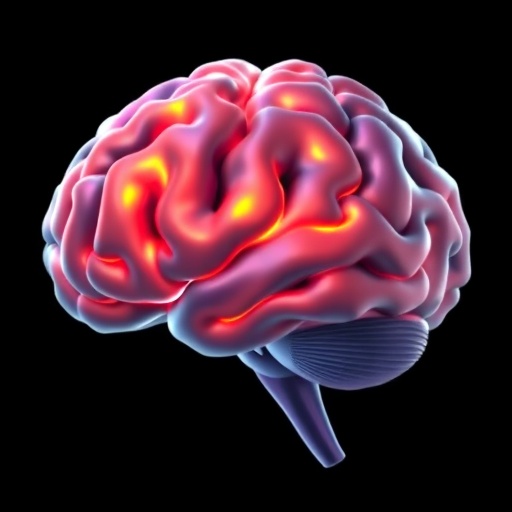
Obesity may leave a measurable signature in the brain, according to a new large-scale neuroimaging study that uses machine learning to identify the neural anatomy most strongly associated with excess body weight and impulsive decision-making. Rather than examining one brain region at a time, researchers built a two-stage analytical framework designed to detect distributed patterns across the brain and then test whether those patterns were linked to delay discounting, a behavioral measure of impulsivity. The approach offers a more comprehensive view of how brain structure and eating-related behavior may intersect in young adults.
The study, led by Xu, He, Zhao and colleagues, addresses a persistent problem in obesity neuroscience. Earlier investigations often relied on relatively small samples and univariate statistical methods, which assess each brain feature separately. Although useful for identifying individual associations, these methods can produce unstable findings when thousands of anatomical measurements are tested simultaneously. Results may also fail to replicate across populations because the brain is not organized as a collection of isolated components. Appetite, reward processing, self-control and decision-making emerge from interacting networks, making a multivariate strategy potentially better suited to the biology of obesity.
Machine learning provides a way to analyze these complex patterns. In neuroimaging, algorithms can be trained to distinguish individuals or groups based on combinations of structural features rather than on a single measurement. These features may include properties such as regional volume, cortical thickness, surface area or other indicators of neuroanatomical organization. The model does not simply ask whether one region is larger or smaller in people with obesity; it searches for a reproducible configuration of features that, taken together, carries information about the condition. This shift from isolated measurements to integrated signatures is central to the study’s design.
The researchers used a two-stage machine learning framework. In the first stage, the system identified neuroanatomical patterns capable of differentiating young adults with obesity from individuals without obesity. This stage was intended to reduce the enormous number of potential brain variables to the features that contributed most consistently to classification. In the second stage, the investigators examined the relationship between the resulting brain signatures and delay discounting impulsivity at the population level. By separating identification from behavioral association, the framework allowed the researchers to ask not only whether a brain pattern marked obesity, but also whether it was connected to the tendency to favor an immediate reward over a larger reward available later.
Delay discounting is widely used in behavioral science to quantify how people value time. Someone who strongly prefers a smaller reward today to a larger reward in the future is said to show steeper delay discounting. The measure is not limited to eating behavior, but it captures a form of impulsive choice that has been associated with difficulties in long-term self-regulation. In the context of obesity, this construct is especially relevant because maintaining health-related behavior often requires decisions whose benefits appear only after weeks, months or years, while highly rewarding foods can provide immediate reinforcement.
The study’s central contribution is the identification of critical brain regions within a broader neuroanatomical signature of obesity. The wording is important: the findings do not imply that a single “obesity center” controls body weight, nor do they establish that structural differences directly cause obesity. Instead, the results point to a network-level pattern that may reflect the combined influence of reward valuation, executive control, motivation, learning and decision-making. The association with delay discounting further suggests that at least part of the neural architecture related to obesity may overlap with systems involved in evaluating immediate versus delayed outcomes.
Because the analysis was conducted using a large-scale dataset, it may provide a more stable estimate of these relationships than earlier small-sample studies. Large datasets can improve statistical power, reduce the influence of unusual participants and make it easier to evaluate whether a machine-learning signature generalizes beyond the individuals used to discover it. Nevertheless, scale alone does not eliminate every limitation. Neuroanatomical associations can be influenced by age, sex, socioeconomic conditions, physical activity, sleep, medication, metabolic health and other factors. Machine-learning models can also identify highly predictive patterns without revealing the biological mechanism behind them.
The researchers’ framework therefore represents a step toward precision neuroscience rather than a clinical diagnostic tool. A brain-based signature could eventually help scientists divide obesity into biologically meaningful subtypes, identify individuals who may be especially vulnerable to impulsive decision-making or clarify why the same intervention works for some people but not others. For now, however, the findings should be interpreted as population-level associations. They do not mean that a brain scan can determine an individual’s willpower, predict their future body weight with certainty or justify treating obesity as a purely neurological disorder.
The broader message is that obesity is increasingly being studied as a condition involving communication between the brain, body and environment. Food availability, stress, sleep, metabolic signals, learning history and social context all shape behavior, while the brain continuously integrates these influences into decisions. By combining neuroanatomical data with machine learning and behavioral measures, the new study offers a technically advanced way to investigate that interaction. Its most striking implication is not that the brain “causes” obesity, but that reproducible patterns of brain structure may help explain why impulsive choice and weight-related outcomes become linked in some young adults. As larger datasets and more transparent validation studies emerge, such signatures could reshape how researchers understand, classify and ultimately treat obesity.
Subject of Research: Neuroanatomical signatures of obesity and their population-level associations with delay discounting impulsivity in young adults.
Article Title: Identification of critical brain regions for young adults with obesity and their relationships with impulsivity using machine learning based on neuroanatomical features.
Article References: Xu, G., He, J., Zhao, J. et al. Identification of critical brain regions for young adults with obesity and their relationships with impulsivity using machine learning based on neuroanatomical features. Int J Obes (2026). https://doi.org/10.1038/s41366-026-02184-2
Image Credits: AI Generated
DOI: https://doi.org/10.1038/s41366-026-02184-2
Keywords: obesity, neuroimaging, machine learning, brain structure, neuroanatomy, impulsivity, delay discounting, young adults, structural brain signatures, decision-making
Tags: brain regions linked to impulsivity in obesitydelay discounting and obesitydistributed brain networks associated with eating behaviorfunctional brain networks and overeatinglarge-scale neuroimaging studies of obesitymachine learning approaches in neurosciencemulti-region brain pattern analysis in neuroimagingneural signatures of impulsive decision-makingneuroanatomy of impulsivity in young adultsneuroimaging and machine learning in obesity researchobesity-related brain structural markers