• HOME
  • NEWS
  • EXPLORE
    • CAREER
      • Companies
      • Jobs
    • EVENTS
    • iGEM
      • News
      • Team
    • PHOTOS
    • VIDEO
    • WIKI
  • BLOG
  • COMMUNITY
    • FACEBOOK
    • INSTAGRAM
    • TWITTER
Thursday, May 14, 2026
BIOENGINEER.ORG
No Result
View All Result
  • Login
  • HOME
  • NEWS
  • EXPLORE
    • CAREER
      • Companies
      • Jobs
        • Lecturer
        • PhD Studentship
        • Postdoc
        • Research Assistant
    • EVENTS
    • iGEM
      • News
      • Team
    • PHOTOS
    • VIDEO
    • WIKI
  • BLOG
  • COMMUNITY
    • FACEBOOK
    • INSTAGRAM
    • TWITTER
  • HOME
  • NEWS
  • EXPLORE
    • CAREER
      • Companies
      • Jobs
        • Lecturer
        • PhD Studentship
        • Postdoc
        • Research Assistant
    • EVENTS
    • iGEM
      • News
      • Team
    • PHOTOS
    • VIDEO
    • WIKI
  • BLOG
  • COMMUNITY
    • FACEBOOK
    • INSTAGRAM
    • TWITTER
No Result
View All Result
Bioengineer.org
No Result
View All Result
Home NEWS Science News Chemistry

Researchers discover brain circuit linked to food impulsivity

Bioengineer by Bioengineer
December 11, 2019
in Chemistry
Reading Time: 3 mins read
0
IMAGE
Share on FacebookShare on TwitterShare on LinkedinShare on RedditShare on Telegram

This creates the possibility scientists can someday develop therapeutics to address overeating
IMAGE

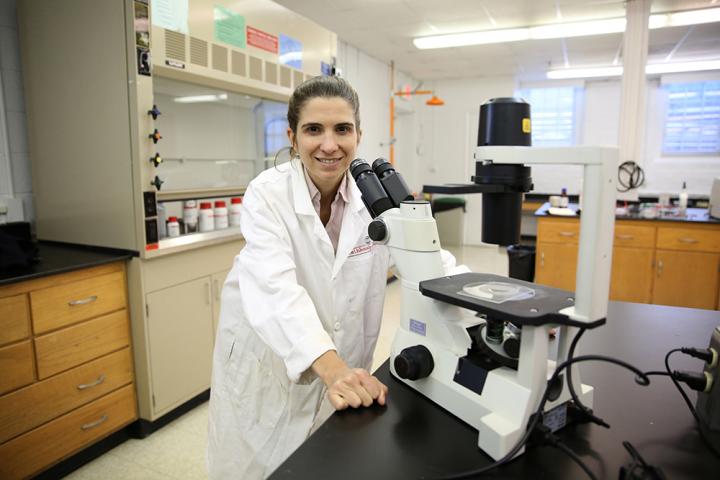
Credit: Cal Powell


You’re on a diet, but the aroma of popcorn in the movie theater lobby triggers a seemingly irresistible craving.

Within seconds, you’ve ordered a tub of the stuff and have eaten several handfuls.

Impulsivity, or responding without thinking about the consequences of an action, has been linked to excessive food intake, binge eating, weight gain and obesity, along with several psychiatric disorders including drug addiction and excessive gambling.

A team of researchers that includes a faculty member at the University of Georgia has now identified a specific circuit in the brain that alters food impulsivity, creating the possibility scientists can someday develop therapeutics to address overeating.

The team’s findings were published recently in the journal Nature Communications.

“There’s underlying physiology in your brain that is regulating your capacity to say no to (impulsive eating),” said Emily Noble, an assistant professor in the UGA College of Family and Consumer Sciences who served as lead author on the paper. “In experimental models, you can activate that circuitry and get a specific behavioral response.”

Using a rat model, researchers focused on a subset of brain cells that produce a type of transmitter in the hypothalamus called melanin concentrating hormone (MCH).

While previous research has shown that elevating MCH levels in the brain can increase food intake, this study is the first to show that MCH also plays a role in impulsive behavior, Noble said.

“We found that when we activate the cells in the brain that produce MCH, animals become more impulsive in their behavior around food,” Noble said.

To test impulsivity, researchers trained rats to press a lever to receive a “delicious, high-fat, high-sugar” pellet, Noble said. However, the rat had to wait 20 seconds between lever presses. If the rat pressed the lever too soon, it had to wait an additional 20 seconds.

Researchers then used advanced techniques to activate a specific MCH neural pathway from the hypothalamus to the hippocampus, a part of the brain involved with learning and memory function.

Results indicated MCH doesn’t affect how much the animals liked the food or how hard they were willing to work for the food. Rather, the circuit acted on the animals’ inhibitory control, or their ability to stop themselves from trying to get the food.”Activating this specific pathway of MCH neurons increased impulsive behavior without affecting normal eating for caloric need or motivation to consume delicious food,” Noble said. “Understanding that this circuit, which selectively affects food impulsivity, exists opens the door to the possibility that one day we might be able to develop therapeutics for overeating that help people stick to a diet without reducing normal appetite or making delicious foods less delicious.”

###

The paper, “Hypothalamus-hippocampus circuitry regulates impulsivity via melanin-concentrating hormone,” was published in the Oct. 29 issue of Nature Communications.

Media Contact
Emily Noble
[email protected]
651-246-0377

Original Source

https://news.uga.edu/researchers-discover-brain-circuit-linked-food-impulsivity/

Related Journal Article

http://dx.doi.org/10.1038/s41467-019-12895-y

Tags: Diet/Body WeightEating Disorders/ObesityMedicine/HealthNeurochemistry
Share12Tweet8Share2ShareShareShare2

Related Posts

Researchers Develop High-Efficiency Hydrogen Separation Membranes Using Innovative ‘Mortar-and-Brick’ Design — Chemistry

Researchers Develop High-Efficiency Hydrogen Separation Membranes Using Innovative ‘Mortar-and-Brick’ Design

May 13, 2026
Green Electrosynthesis Paves the Way for Direct Amines Production from Atmospheric Nitrogen — Chemistry

Green Electrosynthesis Paves the Way for Direct Amines Production from Atmospheric Nitrogen

May 13, 2026

Decoding Life’s Chemistry: A Revolutionary Search Engine from Molecules to Meaning

May 13, 2026

How Olympic Weightlifting Harnesses the Barbell’s ‘Whip’ for Peak Performance #ASA190

May 13, 2026
Please login to join discussion

POPULAR NEWS

  • Research Indicates Potential Connection Between Prenatal Medication Exposure and Elevated Autism Risk

    842 shares
    Share 337 Tweet 211
  • New Study Reveals Plants Can Detect the Sound of Rain

    729 shares
    Share 291 Tweet 182
  • Salmonella Haem Blocks Macrophages, Boosts Infection

    62 shares
    Share 25 Tweet 16
  • Breastmilk Balances E. coli and Beneficial Bacteria in Infant Gut Microbiomes

    57 shares
    Share 23 Tweet 14

About

We bring you the latest biotechnology news from best research centers and universities around the world. Check our website.

Follow us

Recent News

New Global Study Reveals Challenges in Combating High Blood Pressure Effectively

Ultra-Faint Primitive Galaxy Forms During Reionization

New Study Finds Significant Weight Gain More Than Doubles Risk of Certain Cancers

Subscribe to Blog via Email

Enter your email address to subscribe to this blog and receive notifications of new posts by email.

Join 82 other subscribers
  • Contact Us

Bioengineer.org © Copyright 2023 All Rights Reserved.

Welcome Back!

Login to your account below

Forgotten Password?

Retrieve your password

Please enter your username or email address to reset your password.

Log In
No Result
View All Result
  • Homepages
    • Home Page 1
    • Home Page 2
  • News
  • National
  • Business
  • Health
  • Lifestyle
  • Science

Bioengineer.org © Copyright 2023 All Rights Reserved.