• HOME
  • NEWS
  • EXPLORE
    • CAREER
      • Companies
      • Jobs
    • EVENTS
    • iGEM
      • News
      • Team
    • PHOTOS
    • VIDEO
    • WIKI
  • BLOG
  • COMMUNITY
    • FACEBOOK
    • INSTAGRAM
    • TWITTER
Sunday, June 28, 2026
BIOENGINEER.ORG
No Result
View All Result
  • Login
  • HOME
  • NEWS
  • EXPLORE
    • CAREER
      • Companies
      • Jobs
        • Lecturer
        • PhD Studentship
        • Postdoc
        • Research Assistant
    • EVENTS
    • iGEM
      • News
      • Team
    • PHOTOS
    • VIDEO
    • WIKI
  • BLOG
  • COMMUNITY
    • FACEBOOK
    • INSTAGRAM
    • TWITTER
  • HOME
  • NEWS
  • EXPLORE
    • CAREER
      • Companies
      • Jobs
        • Lecturer
        • PhD Studentship
        • Postdoc
        • Research Assistant
    • EVENTS
    • iGEM
      • News
      • Team
    • PHOTOS
    • VIDEO
    • WIKI
  • BLOG
  • COMMUNITY
    • FACEBOOK
    • INSTAGRAM
    • TWITTER
No Result
View All Result
Bioengineer.org
No Result
View All Result
Home NEWS Science News Chemistry

Researchers develop new drugs for treating polycystic hepatorena

Bioengineer by Bioengineer
May 11, 2020
in Chemistry
Reading Time: 3 mins read
0
IMAGE
Share on FacebookShare on TwitterShare on LinkedinShare on RedditShare on Telegram

The project was carried out by UPV/EHU, Biodonostia and Ikerbasque
IMAGE

Credit: UPV/EHU

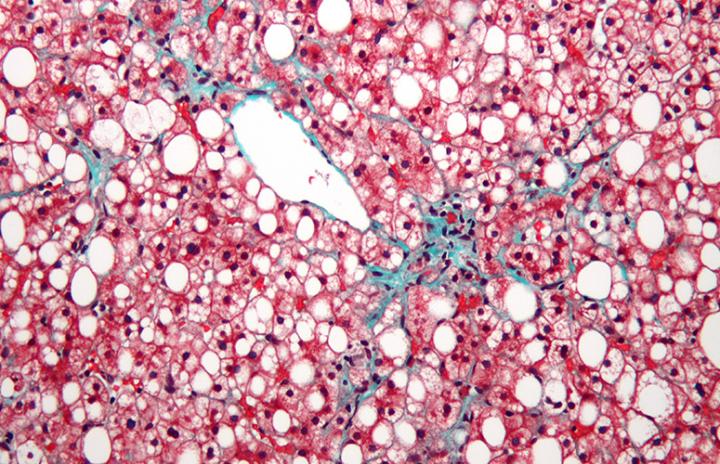
Polycystic hepatorenal diseases are hereditary, genetic disorders characterised by the progressive development of multiple symptomatic cysts in the kidneys and/or liver which may cause alterations in the function of these organs and/or complications associated with their growth. Right now, there are no effective pharmacological treatments and the only curative option is organ transplant.

Researchers at the University of the Basque Country (UPV/EHU) led by Dr Fernando Cossío, scientific director of Ikerbasque, and in the Liver Diseases Group at the Biodonostia Institute of Health Research, led by the Ikerbasque research fellow Dr Jesús M. Bañales, have collaborated on the development of new drugs that have proven to be effective in reducing the growth of hepatic and renal cysts in experimental models of this disease, which could be of huge clinical significance. Researchers at the University of Salamanca, led by Dr José J. G. Marín, at the Idibell Institute of Catalonia, led by Dr Manel Esteller, and at the Hormel Institute of Minnesota (USA), headed by Dr Sergio Gradilone, have collaborated in this multidisciplinary project led by the two Basque institutions.

The drugs developed are based on the structure of ursodeoxycholic acid (UDCA), a bile acid present in the body at a low concentration and which has protective properties for the liver. In fact, its administration is recommended for treating specific liver diseases. The researchers based themselves on the structure and properties of this molecule to design and synthesise a family of chemical derivatives geared towards inhibiting a key protein responsible for encouraging the growth of hepatorenal cysts. The results published have shown that these new drugs are capable of blocking the growth of hepatic and renal cysts in an animal model of this disease.

The promising therapeutic effects of these new drugs have managed to spark great interest in the international scientific community. So much so that the work was selected to be presented orally at the International Congress of the EASL, the European Association for the Study of the Liver, held in Vienna. It has also been published recently in the prestigious international journal Hepatology (official journal of the American Association for the Study of Liver Diseases), and has given rise to the PhD thesis by Dr Francisco J. Caballero (UPV/EHU, Biodonostia), lead author of the said work, supervised by Dr Fernando Cossío (UPV/EHU) and Dr Jesús M. Bañales (Biodonostia, Ikerbasque).

This project recently received the FIPSE national award for Innovation (Ministry of Science and Innovation) which enabled a patent for these drugs to be taken out; they have been licensed to the company ATLAS Molecular Pharma of the Basque Country so that their clinical study can be pursued. This project has also had competitive funding from the RIS3 Euskadi Programme, Ministry of Science and Innovation, the Carlos III Institute of Health (ISCIII) and Ikerbasque.

###

Media Contact
Matxalen Sotillo
[email protected]

Original Source

https://www.ehu.eus/en/web/campusa-magazine/content/-/asset_publisher/ZcG4/content/new-drugs-for-treating-polycystic-hepatorenal-diseases

Related Journal Article

http://dx.doi.org/10.1002/hep.31216

Tags: Internal MedicineLiverMedicine/HealthPharmaceutical Science
Share12Tweet8Share2ShareShareShare2

Related Posts

AI and Physics Collaborate to Design Advanced Hydrogen Storage Materials

June 25, 2026

International Team Including Dresden Scientists Develops Novel Designer Proteins for Advanced Study of Living Tissue

June 25, 2026

New Study Uncovers Key Factors Driving Water Chemistry in Nanoscale Environments

June 25, 2026

Plasma Technology Extends Catalyst Lifespan in Hydrogen Production

June 24, 2026
Please login to join discussion

POPULAR NEWS

  • Saying Goodbye to PGY-6: Pediatric Fellowship Realities

    103 shares
    Share 41 Tweet 26
  • Multi-Hospital Study Reveals Long Covid Burden Is Twice as High as Current Estimates

    92 shares
    Share 36 Tweet 23
  • Detection of EDCs in Breast Milk and Infant Urine Up to Six Months Highlights Early Exposure Risks

    77 shares
    Share 31 Tweet 19
  • New Drug Candidate Developed at McMaster Shows Potential for Treating Brain Cancer

    58 shares
    Share 23 Tweet 15

About

We bring you the latest biotechnology news from best research centers and universities around the world. Check our website.

Follow us

Recent News

Tracking Lanthanide-Labeled Microplastics in Plants

POSTECH Researchers Slash Cost of Reconstituted Cell-Free Systems by 95%

AI and Physics Collaborate to Design Advanced Hydrogen Storage Materials

Subscribe to Blog via Email

Success! An email was just sent to confirm your subscription. Please find the email now and click 'Confirm' to start subscribing.

Join 82 other subscribers
  • Contact Us

Bioengineer.org © Copyright 2023 All Rights Reserved.

Welcome Back!

Login to your account below

Forgotten Password?

Retrieve your password

Please enter your username or email address to reset your password.

Log In
No Result
View All Result
  • Homepages
    • Home Page 1
    • Home Page 2
  • News
  • National
  • Business
  • Health
  • Lifestyle
  • Science

Bioengineer.org © Copyright 2023 All Rights Reserved.