• HOME
  • NEWS
  • EXPLORE
    • CAREER
      • Companies
      • Jobs
    • EVENTS
    • iGEM
      • News
      • Team
    • PHOTOS
    • VIDEO
    • WIKI
  • BLOG
  • COMMUNITY
    • FACEBOOK
    • INSTAGRAM
    • TWITTER
Friday, May 15, 2026
BIOENGINEER.ORG
No Result
View All Result
  • Login
  • HOME
  • NEWS
  • EXPLORE
    • CAREER
      • Companies
      • Jobs
        • Lecturer
        • PhD Studentship
        • Postdoc
        • Research Assistant
    • EVENTS
    • iGEM
      • News
      • Team
    • PHOTOS
    • VIDEO
    • WIKI
  • BLOG
  • COMMUNITY
    • FACEBOOK
    • INSTAGRAM
    • TWITTER
  • HOME
  • NEWS
  • EXPLORE
    • CAREER
      • Companies
      • Jobs
        • Lecturer
        • PhD Studentship
        • Postdoc
        • Research Assistant
    • EVENTS
    • iGEM
      • News
      • Team
    • PHOTOS
    • VIDEO
    • WIKI
  • BLOG
  • COMMUNITY
    • FACEBOOK
    • INSTAGRAM
    • TWITTER
No Result
View All Result
Bioengineer.org
No Result
View All Result
Home NEWS Science News Health

Researchers develop chip that improves testing and tracing for COVID-19

Bioengineer by Bioengineer
April 30, 2021
in Health
Reading Time: 2 mins read
0
IMAGE
Share on FacebookShare on TwitterShare on LinkedinShare on RedditShare on Telegram

IMAGE

Credit: University of New Mexico

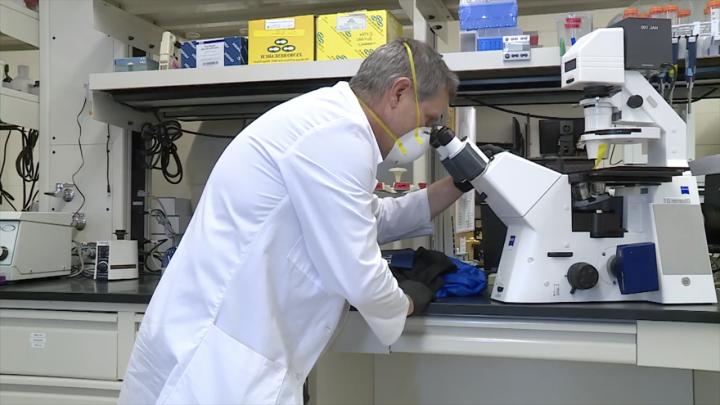
Jeremy Edwards, director of the Computational Genomics and Technology (CGaT) Laboratory at The University of New Mexico, and his colleagues at Centrillion Technologies in Palo Alto, Calif. and West Virginia University, have developed a chip that provides a simpler and more rapid method of genome sequencing for viruses like COVID-19.

Their research, titled, “Highly Accurate Chip-Based Resequencing of SARS-CoV-2 Clinical Samples” was published recently in the American Chemical Society’s Langmuir. As part of the research, scientists created a tiled genome array they developed for rapid and inexpensive full viral genome resequencing and applied their SARS-CoV-2-specific genome tiling array to rapidly and accurately resequenced the viral genome from eight clinical samples acquired from patients in Wyoming that tested positive for SARS-CoV-2. Ultimately, they were able to sequence 95 percent of the genome of each sample with greater than 99.9 percent accuracy.

“This new technology allows for faster and more accurate tracing of COVID and other respiratory viruses, including the appearance of new variants,” said Edwards, who is a professor in the UNM Department of Chemistry and Chemical Biology. “With this simple and rapid testing procedure, scientists will be able to more accurately track the progression and better prevent the onset of the next pandemic.”

With more than 142 million people worldwide having contracted the virus, vigilant testing and contact tracing are the most effective ways to slow the spread of COVID-19. Traditional methods of clinical testing often produce false positives or negatives, and traditional methods of sequencing are time-consuming and expensive. This new technology will virtually eliminate all of these barriers.

“Since the submission of the paper, the technology has further evolved with improved accuracy and sensitivity,” said Edwards. “The chip technology is the best available technology for large-scale viral genome surveillance and monitoring viral variants. This technology could not only help control this pandemic and also prevent future pandemics.”

The mission of the Computational Genomics and Technology (CGaT) Laboratory is to provide training in bioinformatics research for undergraduate, master’s and Ph.D. students, as well as postdoctoral fellows; provide collaborative research interactions to utilize bioinformatics computing tools for researchers at UNM, and to conduct state-of-the-art and innovative bioinformatics and genomics research within the center.

###

Media Contact
Jeremy Edwards
[email protected]

Original Source

https://news.unm.edu/news/researchers-develop-chip-that-improves-testing-and-tracing-for-covid-19

Related Journal Article

http://dx.doi.org/10.1021/acs.langmuir.0c02927

Tags: Chemistry/Physics/Materials SciencesDisease in the Developing WorldInfectious/Emerging DiseasesMedicine/HealthPharmaceutical SciencesPublic Health
Share12Tweet8Share2ShareShareShare2

Related Posts

Comprehensive Study Finds No Clear Association Between Common Antidepressant Use During Pregnancy and Autism or ADHD in Children

May 15, 2026

Viagra Shows Promise as Potential Treatment to Halt Peyronie’s Disease

May 15, 2026

Unraveling and Harnessing Tuberculosis Superspreading for Better Disease Control

May 15, 2026

Transitional Urology: Navigating Comprehensive Care Processes

May 15, 2026
Please login to join discussion

POPULAR NEWS

  • Research Indicates Potential Connection Between Prenatal Medication Exposure and Elevated Autism Risk

    842 shares
    Share 337 Tweet 211
  • New Study Reveals Plants Can Detect the Sound of Rain

    729 shares
    Share 291 Tweet 182
  • Salmonella Haem Blocks Macrophages, Boosts Infection

    62 shares
    Share 25 Tweet 16
  • Breastmilk Balances E. coli and Beneficial Bacteria in Infant Gut Microbiomes

    58 shares
    Share 23 Tweet 15

About

We bring you the latest biotechnology news from best research centers and universities around the world. Check our website.

Follow us

Recent News

Comprehensive Study Finds No Clear Association Between Common Antidepressant Use During Pregnancy and Autism or ADHD in Children

Viagra Shows Promise as Potential Treatment to Halt Peyronie’s Disease

Screening Leads to Moderate Reduction in Prostate Cancer Mortality

Subscribe to Blog via Email

Enter your email address to subscribe to this blog and receive notifications of new posts by email.

Join 82 other subscribers
  • Contact Us

Bioengineer.org © Copyright 2023 All Rights Reserved.

Welcome Back!

Login to your account below

Forgotten Password?

Retrieve your password

Please enter your username or email address to reset your password.

Log In
No Result
View All Result
  • Homepages
    • Home Page 1
    • Home Page 2
  • News
  • National
  • Business
  • Health
  • Lifestyle
  • Science

Bioengineer.org © Copyright 2023 All Rights Reserved.