• HOME
  • NEWS
  • EXPLORE
    • CAREER
      • Companies
      • Jobs
    • EVENTS
    • iGEM
      • News
      • Team
    • PHOTOS
    • VIDEO
    • WIKI
  • BLOG
  • COMMUNITY
    • FACEBOOK
    • INSTAGRAM
    • TWITTER
Wednesday, May 20, 2026
BIOENGINEER.ORG
No Result
View All Result
  • Login
  • HOME
  • NEWS
  • EXPLORE
    • CAREER
      • Companies
      • Jobs
        • Lecturer
        • PhD Studentship
        • Postdoc
        • Research Assistant
    • EVENTS
    • iGEM
      • News
      • Team
    • PHOTOS
    • VIDEO
    • WIKI
  • BLOG
  • COMMUNITY
    • FACEBOOK
    • INSTAGRAM
    • TWITTER
  • HOME
  • NEWS
  • EXPLORE
    • CAREER
      • Companies
      • Jobs
        • Lecturer
        • PhD Studentship
        • Postdoc
        • Research Assistant
    • EVENTS
    • iGEM
      • News
      • Team
    • PHOTOS
    • VIDEO
    • WIKI
  • BLOG
  • COMMUNITY
    • FACEBOOK
    • INSTAGRAM
    • TWITTER
No Result
View All Result
Bioengineer.org
No Result
View All Result
Home NEWS Science News Chemistry

Researchers create synthetic nanopores made from DNA

Bioengineer by Bioengineer
December 13, 2019
in Chemistry
Reading Time: 2 mins read
0
IMAGE
Share on FacebookShare on TwitterShare on LinkedinShare on RedditShare on Telegram

IMAGE

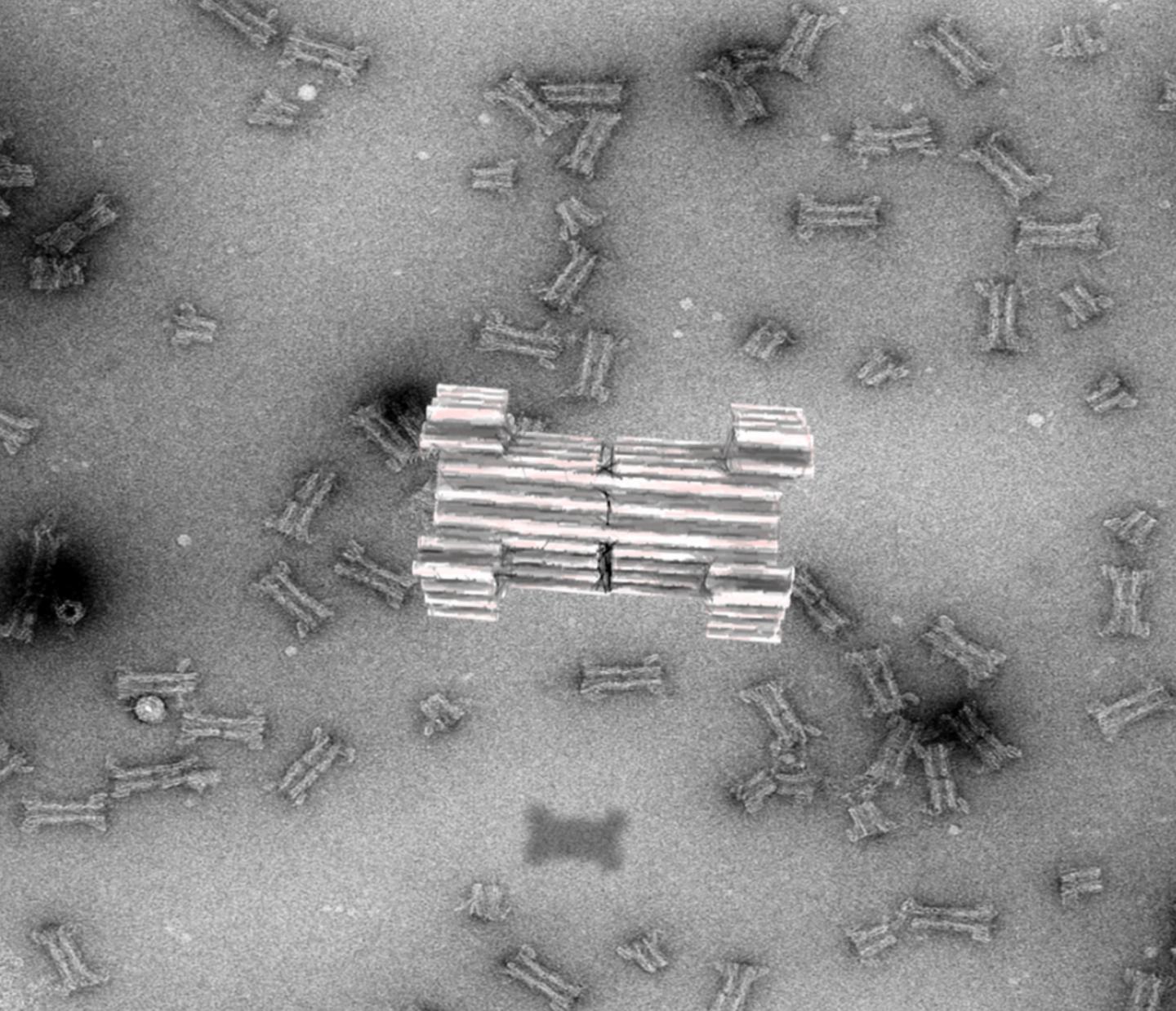
Credit: Rasmus Peter Thomsen, Aarhus University


In 2015, the first commercial nanopore DNA sequencing device was introduced by Oxford Nanopore Technologies. Based on a synthetically engineered transmembrane protein, nanopore sequencing allows long DNA strands to be channelled through the central lumen of the pore where changes in the ionic current work as a sensor of the individual bases in the DNA. This technique was a key milestone for DNA sequencing and the achievement was only made possible after decades of research.

Since then, researchers have tried to extend this principle and build larger pores to accommodate proteins for sensing purposes, but a major challenge has been the limited understanding of artificial protein design. As an alternative, a new technique based on artificial folding of DNA into complex structures, the so-called 3D-origami technique, first reported by the AU group in 2009, has emerged. Compared to proteins, DNA origami has been shown to have an unprecedented design space for constructing nanostructures that mimic and extend naturally occurring complexes.

In a new article, published in Nature Communications, the researchers now report the creation of a large synthetic nanopore made from DNA. This nanopore structure is capable of translocating large protein-sized macromolecules between compartments separated by a lipid bilayer. In addition, a functional gating system was introduced inside the pore to enable biosensing of very few molecules in solution.

With the use of powerful optical microscopes, the researchers could follow the flow of molecules through individual nanopores. By introducing a controllable plug in the pore, it was furthermore possible to size-selectively control the flow of protein-size molecules and demonstrate label-free, real time, bio-sensing of a trigger molecule.

Lastly the pore was equipped with a set of controllable flaps, allowing targeted insertion into membranes displaying particular signal molecules. In the future, this mechanism will potentially enable insertion of the sensor specifically into diseased cells and may allow diagnosis at the single cell level.

###

The results were published in Nature Communications.

Media Contact
Jørgen Kjems
[email protected]
45-87-15-54-94

Original Source

https://mbg.au.dk/en/news-and-events/news-item/artikel/researchers-create-synthetic-nanopores-made-from-dna/

Related Journal Article

http://dx.doi.org/10.1038/s41467-019-13284-1

Tags: BiochemistryBiologyBiotechnologyGeneticsMicrobiologyMolecular BiologyNanotechnology/Micromachines
Share12Tweet8Share2ShareShareShare2

Related Posts

Scientists Observe Massive Light-Conversion Effect in Chiral Carbon Nanotubes — Chemistry

Scientists Observe Massive Light-Conversion Effect in Chiral Carbon Nanotubes

May 19, 2026
TransEuroOGS Project to Connect Optical Ground Stations Across Europe — Chemistry

TransEuroOGS Project to Connect Optical Ground Stations Across Europe

May 19, 2026

Decarbonizing the Grid: The Essential First Step to Capturing Carbon from the Environment

May 19, 2026

Overcoming Mid-Infrared Interconnection Challenges: Durable Bonding Technique for High-Power Optics Using Liquid-Like Chalcogenide Glass

May 19, 2026
Please login to join discussion

POPULAR NEWS

  • blank

    New Study Reveals Plants Can Detect the Sound of Rain

    732 shares
    Share 292 Tweet 183
  • Research Indicates Potential Connection Between Prenatal Medication Exposure and Elevated Autism Risk

    846 shares
    Share 338 Tweet 212
  • ESMO 2025: mRNA COVID Vaccines Enhance Efficacy of Cancer Immunotherapy

    260 shares
    Share 104 Tweet 65
  • Breastmilk Balances E. coli and Beneficial Bacteria in Infant Gut Microbiomes

    58 shares
    Share 23 Tweet 15

About

We bring you the latest biotechnology news from best research centers and universities around the world. Check our website.

Follow us

Recent News

Trampoline Injuries: Risk, Context, and Prevention Explored

Early-Onset Sepsis: Calculator vs. Guidelines vs. Care

Stem Cell Vesicles Deliver miR-125a-5p to Heal Sepsis Kidney Injury

Subscribe to Blog via Email

Enter your email address to subscribe to this blog and receive notifications of new posts by email.

Join 82 other subscribers
  • Contact Us

Bioengineer.org © Copyright 2023 All Rights Reserved.

Welcome Back!

Login to your account below

Forgotten Password?

Retrieve your password

Please enter your username or email address to reset your password.

Log In
No Result
View All Result
  • Homepages
    • Home Page 1
    • Home Page 2
  • News
  • National
  • Business
  • Health
  • Lifestyle
  • Science

Bioengineer.org © Copyright 2023 All Rights Reserved.