• HOME
  • NEWS
  • EXPLORE
    • CAREER
      • Companies
      • Jobs
    • EVENTS
    • iGEM
      • News
      • Team
    • PHOTOS
    • VIDEO
    • WIKI
  • BLOG
  • COMMUNITY
    • FACEBOOK
    • INSTAGRAM
    • TWITTER
Saturday, February 7, 2026
BIOENGINEER.ORG
No Result
View All Result
  • Login
  • HOME
  • NEWS
  • EXPLORE
    • CAREER
      • Companies
      • Jobs
        • Lecturer
        • PhD Studentship
        • Postdoc
        • Research Assistant
    • EVENTS
    • iGEM
      • News
      • Team
    • PHOTOS
    • VIDEO
    • WIKI
  • BLOG
  • COMMUNITY
    • FACEBOOK
    • INSTAGRAM
    • TWITTER
  • HOME
  • NEWS
  • EXPLORE
    • CAREER
      • Companies
      • Jobs
        • Lecturer
        • PhD Studentship
        • Postdoc
        • Research Assistant
    • EVENTS
    • iGEM
      • News
      • Team
    • PHOTOS
    • VIDEO
    • WIKI
  • BLOG
  • COMMUNITY
    • FACEBOOK
    • INSTAGRAM
    • TWITTER
No Result
View All Result
Bioengineer.org
No Result
View All Result
Home NEWS Science News Chemistry

Researchers create ‘smart’ surfaces to help blood-vessel grafts knit better, more safely

Bioengineer by Bioengineer
November 27, 2019
in Chemistry
Reading Time: 2 mins read
0
IMAGE
Share on FacebookShare on TwitterShare on LinkedinShare on RedditShare on Telegram

IMAGE

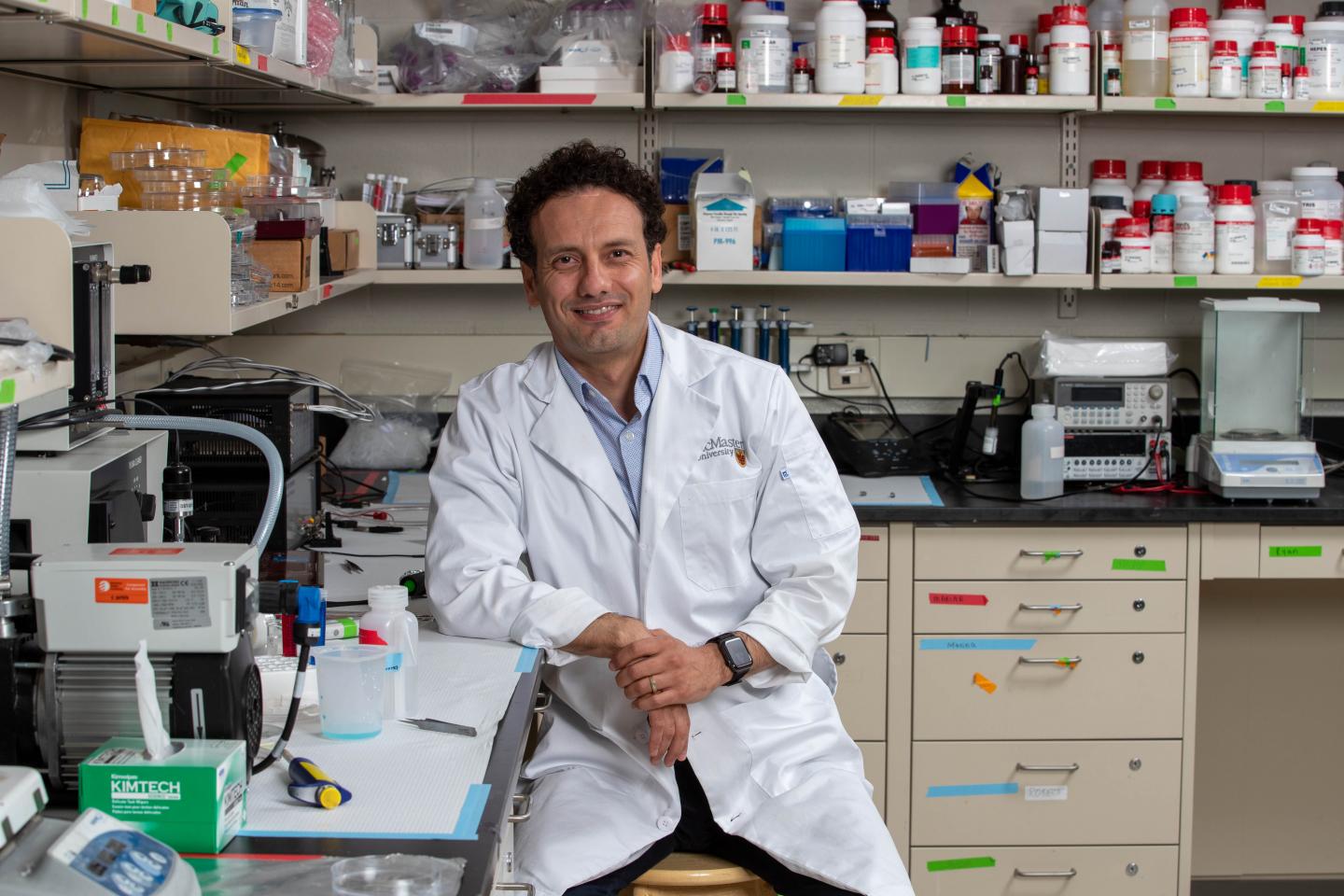
Credit: Georgia Kirkos, McMaster University


HAMILTON, ON, Nov. 27, 2019 – Researchers at McMaster University have created a new coating to prevent clotting and infection in synthetic vascular grafts, while also accelerating the body’s own process for integrating the grafted vessels.

Variants of the coating material, described in two new articles published by the journals Small (published today) and ACS Biomaterials Science and Engineering (published Nov. 8), are “smart” coatings that line the vessels and prevent clot formation and bacterial adhesion while selectively attracting targeted cells that foster the growth of natural vessel walls, promoting faster, smoother healing.

Each article verifies the success of a different formulation of the coating, one designed for Dacron grafts (Small), the other for Teflon grafts (ACS Science) – the two major materials used to make artificial vessels. The smart materials are made to coat the inner walls of new sections of replacement vessels typically deployed after injury or disease.

Synthetic materials currently used in vascular grafts can be problematic because their surface properties and texture can collect cells and initiate blood clotting, a risk which requires patients to use anti-coagulant drugs such as warfarin for long periods.

These surfaces can also accelerate the buildup of microbes that can cause infection.

“These surfaces repel non-desirable elements in the blood: infections and clotting,” says Tohid Didar, the McMaster mechanical and biomedical engineer who led the research team. “The hope is that down the road we can use less and less anti-coagulant medication on patients and at the same time that we can assure that the site remains uninfected.”

The researchers collaborated with Jeffrey Weitz of the Thrombosis and Atherosclerosis Research Institute and McMaster chemical engineer Zeinab Hosseini-Doust to test the new material in lab experiments using human tissue.

The components used in the material have already been approved for use in humans, which is expected to shorten the process for getting the new material approved for use in clinical settings.

Didar’s team had previously developed selectively repellent surfaces for other applications, but this is the first for use in blood vessels, where infection, clotting and rejection make the use of these grafts challenging.

###

Media Contact
Wade Hemsworth
[email protected]
289-925-8382

Tags: Biomedical/Environmental/Chemical EngineeringMaterialsMedicine/HealthNanotechnology/MicromachinesSurgeryTransplantation
Share12Tweet8Share2ShareShareShare2

Related Posts

blank

Breakthrough in Environmental Cleanup: Scientists Develop Solar-Activated Biochar for Faster Remediation

February 7, 2026
blank

Cutting Costs: Making Hydrogen Fuel Cells More Affordable

February 6, 2026

Scientists Develop Hand-Held “Levitating” Time Crystals

February 6, 2026

Observing a Key Green-Energy Catalyst Dissolve Atom by Atom

February 6, 2026
Please login to join discussion

POPULAR NEWS

  • Robotic Ureteral Reconstruction: A Novel Approach

    Robotic Ureteral Reconstruction: A Novel Approach

    82 shares
    Share 33 Tweet 21
  • Digital Privacy: Health Data Control in Incarceration

    63 shares
    Share 25 Tweet 16
  • Study Reveals Lipid Accumulation in ME/CFS Cells

    57 shares
    Share 23 Tweet 14
  • Breakthrough in RNA Research Accelerates Medical Innovations Timeline

    53 shares
    Share 21 Tweet 13

About

We bring you the latest biotechnology news from best research centers and universities around the world. Check our website.

Follow us

Recent News

Succinate Receptor 1 Limits Blood Cell Formation, Leukemia

Palmitoylation of Tfr1 Drives Platelet Ferroptosis and Exacerbates Liver Damage in Heat Stroke

Oxygen-Enhanced Dual-Section Microneedle Patch Improves Drug Delivery and Boosts Photodynamic and Anti-Inflammatory Treatment for Psoriasis

Subscribe to Blog via Email

Enter your email address to subscribe to this blog and receive notifications of new posts by email.

Join 73 other subscribers
  • Contact Us

Bioengineer.org © Copyright 2023 All Rights Reserved.

Welcome Back!

Login to your account below

Forgotten Password?

Retrieve your password

Please enter your username or email address to reset your password.

Log In
No Result
View All Result
  • Homepages
    • Home Page 1
    • Home Page 2
  • News
  • National
  • Business
  • Health
  • Lifestyle
  • Science

Bioengineer.org © Copyright 2023 All Rights Reserved.