• HOME
  • NEWS
  • EXPLORE
    • CAREER
      • Companies
      • Jobs
    • EVENTS
    • iGEM
      • News
      • Team
    • PHOTOS
    • VIDEO
    • WIKI
  • BLOG
  • COMMUNITY
    • FACEBOOK
    • INSTAGRAM
    • TWITTER
Monday, May 18, 2026
BIOENGINEER.ORG
No Result
View All Result
  • Login
  • HOME
  • NEWS
  • EXPLORE
    • CAREER
      • Companies
      • Jobs
        • Lecturer
        • PhD Studentship
        • Postdoc
        • Research Assistant
    • EVENTS
    • iGEM
      • News
      • Team
    • PHOTOS
    • VIDEO
    • WIKI
  • BLOG
  • COMMUNITY
    • FACEBOOK
    • INSTAGRAM
    • TWITTER
  • HOME
  • NEWS
  • EXPLORE
    • CAREER
      • Companies
      • Jobs
        • Lecturer
        • PhD Studentship
        • Postdoc
        • Research Assistant
    • EVENTS
    • iGEM
      • News
      • Team
    • PHOTOS
    • VIDEO
    • WIKI
  • BLOG
  • COMMUNITY
    • FACEBOOK
    • INSTAGRAM
    • TWITTER
No Result
View All Result
Bioengineer.org
No Result
View All Result
Home NEWS Science News Biology

Researchers assemble first comprehensive list of Panama’s trees with geographic ranges

Bioengineer by Bioengineer
August 13, 2020
in Biology
Reading Time: 3 mins read
0
IMAGE
Share on FacebookShare on TwitterShare on LinkedinShare on RedditShare on Telegram

Innovative method quantitatively assesses conservation risk with limited field data
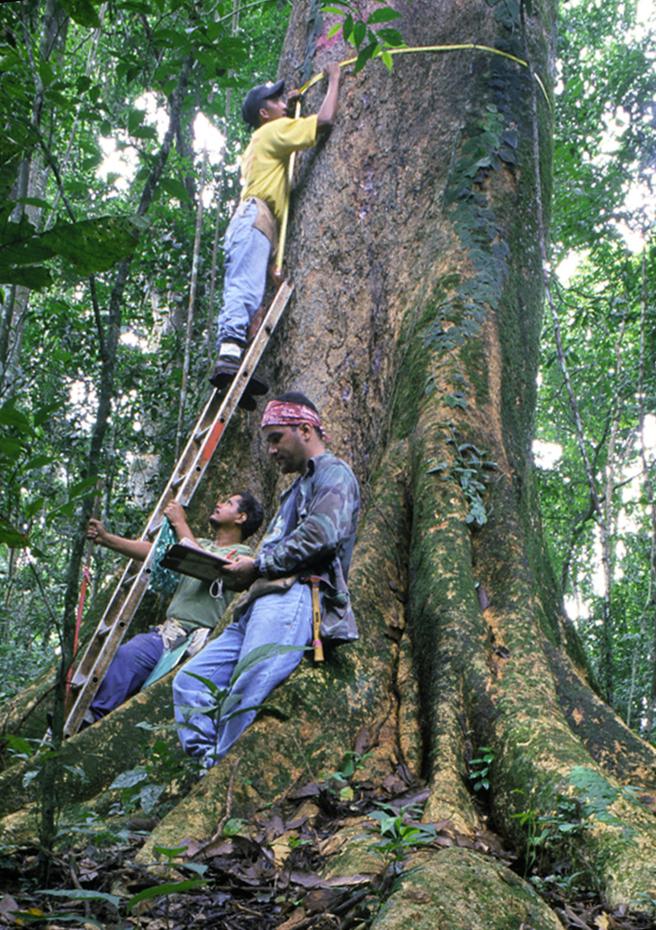
IMAGE

Credit: © The Morton Arboretum

Lisle, Ill. (August 13) — Central America is one of the most diverse floristic regions in the world, but a lack of comprehensive plant records and knowledge of its endangered, endemic tree species impedes conservation work.

In a new research paper published in Forest Ecosystems, The Morton Arboretum Center for Tree Science Research Fellow Richard Condit, PhD, provided the first comprehensive checklist to include geographic ranges by using an innovative, repeatable method for assessing extinction risk of trees in poorly studied areas. The method involves synthesizing field data with available online records to form a fully vetted list of the trees of Panama and their estimated geographic ranges. These range sizes provide a quantitative basis for assessing extinction risk of poorly studied tropical tree species, and offer a starting point for researchers to plan conservation efforts.

“A fundamental question in species conservation is, how many are left?” said Condit, who has studied the trees of Panama for 35 years. “Full geographic ranges of individual species are seldom known, and we found that the forest inventory plots being studied in the country lacked a global geographic perspective. Now that we have estimated range sizes, we can compare Panama’s ecosystem to the rest of the world, as well as plan and allocate conservation resources more effectively.”

The authors estimate that 16.2% of Panama’s 3,043 tree species had ranges less than 20,000 km2, a range that often signals a status of endangered, according to the International Union for Conservation of Nature (IUCN) standards. This percentage of narrow endemics is proportionate to that of North America. Researchers also noted that the country’s tree census plots excluded rare endemic species, noting that the network of 66 tree plots captured 27% of total tree flora in Panama, but only 7.5% of narrow endemics.

The Morton Arboretum conducted the research as part of its efforts to prevent global tree extinctions and secure threatened species in Central America and beyond.

“This was the first comprehensive effort to pull together global databases, rigorously vet all the data, and create a comprehensive distribution of species in an understudied country like Panama,” said Chuck Cannon, PhD, director of the Center for Tree Science at The Morton Arboretum. “Richard and his team have given us a strategy for finding where to go, what trees to study, and how to be more effective in the Arboretum’s efforts to conserve rare tree species around the world.”

The next step for Condit and his team is to estimate population sizes and make demographic assessments of extinction risk, starting with the potential red-listed trees located on tree census plots.

###

About The Morton Arboretum

The Morton Arboretum is an internationally recognized outdoor tree museum and tree research center in Lisle, Illinois. Its 1,700 acres include 16 miles of hiking trails, a Children’s Garden, educational exhibits, a Visitor Center and specialty tree and plant collections. The nonprofit 501(c)(3) organization serves 1.2 million visitors annually. Information about exhibitions, events, and admission is available at mortonarb.org.

Media Contact
Tyler Prich
[email protected]

Original Source

https://www.mortonarb.org/news/researchers-assemble-first-comprehensive-checklist-panama%E2%80%99s-trees-geographic-ranges

Related Journal Article

http://dx.doi.org/10.1186/s40663-020-00246-z

Tags: BiologyEcology/EnvironmentForestryPlant Sciences
Share12Tweet8Share2ShareShareShare2

Related Posts

Uncovering C. elegans Immunity via Genetic Screens — Biology

Uncovering C. elegans Immunity via Genetic Screens

May 16, 2026
Single mother must adapt swiftly — the survival of her colony depends on it — Biology

Single mother must adapt swiftly — the survival of her colony depends on it

May 15, 2026

Why Are Nearly Everyone Right-Handed? It Might Be Linked to How We Learned to Walk

May 15, 2026

Excessive Neuronal Activity Initiates Severe Autoimmune Brain Disorder

May 15, 2026
Please login to join discussion

POPULAR NEWS

  • Research Indicates Potential Connection Between Prenatal Medication Exposure and Elevated Autism Risk

    844 shares
    Share 338 Tweet 211
  • New Study Reveals Plants Can Detect the Sound of Rain

    731 shares
    Share 292 Tweet 182
  • Salmonella Haem Blocks Macrophages, Boosts Infection

    62 shares
    Share 25 Tweet 16
  • Breastmilk Balances E. coli and Beneficial Bacteria in Infant Gut Microbiomes

    58 shares
    Share 23 Tweet 15

About

We bring you the latest biotechnology news from best research centers and universities around the world. Check our website.

Follow us

Recent News

DKC1 Drives Colorectal Cancer via Sphingolipid Disruption

Health and Carbon Footprint of Barcelona’s Water Choices

Compression Spurs Tumor Spread via Malate-Microtubule Pathway

Subscribe to Blog via Email

Enter your email address to subscribe to this blog and receive notifications of new posts by email.

Join 82 other subscribers
  • Contact Us

Bioengineer.org © Copyright 2023 All Rights Reserved.

Welcome Back!

Login to your account below

Forgotten Password?

Retrieve your password

Please enter your username or email address to reset your password.

Log In
No Result
View All Result
  • Homepages
    • Home Page 1
    • Home Page 2
  • News
  • National
  • Business
  • Health
  • Lifestyle
  • Science

Bioengineer.org © Copyright 2023 All Rights Reserved.