• HOME
  • NEWS
  • EXPLORE
    • CAREER
      • Companies
      • Jobs
    • EVENTS
    • iGEM
      • News
      • Team
    • PHOTOS
    • VIDEO
    • WIKI
  • BLOG
  • COMMUNITY
    • FACEBOOK
    • INSTAGRAM
    • TWITTER
Sunday, October 4, 2026
BIOENGINEER.ORG
No Result
View All Result
  • Login
  • HOME
  • NEWS
  • EXPLORE
    • CAREER
      • Companies
      • Jobs
        • Lecturer
        • PhD Studentship
        • Postdoc
        • Research Assistant
    • EVENTS
    • iGEM
      • News
      • Team
    • PHOTOS
    • VIDEO
    • WIKI
  • BLOG
  • COMMUNITY
    • FACEBOOK
    • INSTAGRAM
    • TWITTER
  • HOME
  • NEWS
  • EXPLORE
    • CAREER
      • Companies
      • Jobs
        • Lecturer
        • PhD Studentship
        • Postdoc
        • Research Assistant
    • EVENTS
    • iGEM
      • News
      • Team
    • PHOTOS
    • VIDEO
    • WIKI
  • BLOG
  • COMMUNITY
    • FACEBOOK
    • INSTAGRAM
    • TWITTER
No Result
View All Result
Bioengineer.org
No Result
View All Result
Home NEWS Science News Chemistry

Researchers are developing potential treatment for chronic pain

Bioengineer by Bioengineer
April 30, 2020
in Chemistry
Reading Time: 2 mins read
0
IMAGE
Share on FacebookShare on TwitterShare on LinkedinShare on RedditShare on Telegram

IMAGE

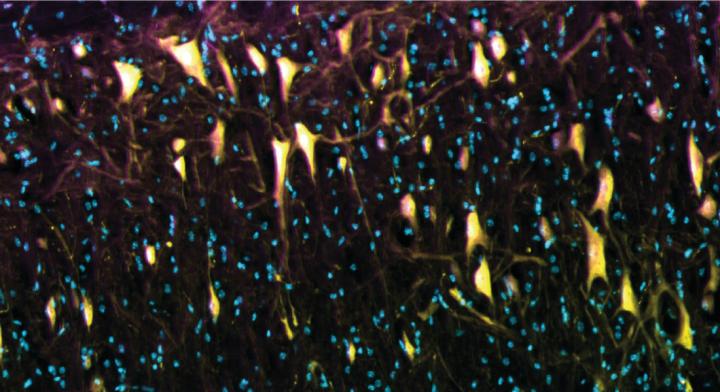
Credit: University of Copenhagen

Researchers from the University of Copenhagen have developed a new way to treat chronic pain which has been tested in mice. With a compound designed and developed by the researchers themselves, they can achieve complete pain relief.

Between seven and ten percent of the world’s population suffers from chronic pain originating from nerves that have been damaged. A disease that can be severely debilitating. Now, researchers from the University of Copenhagen have found a new way to treat the pain.

The treatment has been tested in mice, and the new results have been published in the scientific journal EMBO Molecular Medicine. For more than a decade, the researchers have been working to design, develop and test a drug that shall provide complete pain relief.

“We have developed a new way to treat chronic pain. It is a targeted treatment. That is, it does not affect the general neuronal signalling, but only affects the nerve changes that are caused by the disease,” says co-author Kenneth Lindegaard Madsen, Associate Professor at the Department of Neuroscience, University of Copenhagen.

“We have been working on this for more than ten years. We have taken the process all the way from understanding the biology, inventing and designing the compound to describing how it works in animals, affects their behaviour and removes the pain,” says Kenneth Lindegaard Madsen.

Chronic pain can occur, among other things, after surgery, in people with diabetes, after a blood clot and after an amputation in the form of phantom pain.

Clinical trials as the next step

The compound developed by the researchers is a so-called peptide named Tat-P4-(C5)2. The peptide is targeted and only affects the nerve changes that pose a problem and cause the pain.

In a previous study, the researchers have shown in an animal model that use of the peptide can also reduce addiction. Therefore, the researchers hope that the compound may potentially help pain patients who have become addicted to, for example, opioid pain relievers in particular.

“The compound works very efficiently, and we do not see any side effects. We can administer this peptide and obtain complete pain relief in the mouse model we have used, without the lethargic effect that characterises existing pain-relieving drugs,” says Kenneth Lindegaard Madsen, adding:

“Now, our next step is to work towards testing the treatment on people. The goal, for us, is to develop a drug, therefore the plan is to establish a biotech company as soon as possible so we can focus on this.”

The researchers are now working towards clinical trials in collaboration with, among others, pain researcher Nanna Brix Finnerup, Professor at Aarhus University.

###

Media Contact
Press officer Cecilie Krabbe
[email protected]

Original Source

https://healthsciences.ku.dk/newsfaculty-news/2020/04/researchers-are-developing-potential-treatment-for-chronic-pain/

Related Journal Article

http://dx.doi.org/10.15252/emmm.201911248

Tags: AddictionBiochemistryBiologyMedicine/HealthneurobiologyNeurochemistryPainPharmaceutical Science
Share12Tweet8Share2ShareShareShare2

Related Posts

Banana Peels Turn Into Catalysts That Boost Bio-Oil From Sewage Sludge

Banana Peels Turn Into Catalysts That Boost Bio-Oil From Sewage Sludge

October 4, 2026
Squeezing Polypropylene Flips Its Insulation From Rubbery to Glassy Conduction

Squeezing Polypropylene Flips Its Insulation From Rubbery to Glassy Conduction

October 4, 2026

Sulfated Seaweed Polymer Helps Gels Protect Anthocyanins Until the Gut

October 4, 2026

Nickel and Lithium Doping Face Off in Zinc Oxide Films for Supercapacitors

October 4, 2026
Please login to join discussion

POPULAR NEWS

  • Alloys That Shrink Their Own Grains: New PIX Mechanism Refines Metals With Heat Alone

    Alloys That Shrink Their Own Grains: New PIX Mechanism Refines Metals With Heat Alone

    29 shares
    Share 12 Tweet 7
  • Endurance Exercise Reshapes the Liver in Males and Females Through Distinct Molecular Routes

    29 shares
    Share 12 Tweet 7
  • Single Transcription Factor PU.1 Rapidly Converts Fibroblasts into Macrophage-Lineage Cells

    29 shares
    Share 12 Tweet 7
  • New Scale Measures How Ready Nurse Educators Really Are for the AI Era

    29 shares
    Share 12 Tweet 7

About

We bring you the latest biotechnology news from best research centers and universities around the world. Check our website.

Follow us

Recent News

Alloys That Shrink Their Own Grains: New PIX Mechanism Refines Metals With Heat Alone

Endurance Exercise Reshapes the Liver in Males and Females Through Distinct Molecular Routes

Single Transcription Factor PU.1 Rapidly Converts Fibroblasts into Macrophage-Lineage Cells

Subscribe to Blog via Email

Success! An email was just sent to confirm your subscription. Please find the email now and click 'Confirm' to start subscribing.

Join 85 other subscribers
  • Contact Us

Bioengineer.org © Copyright 2023 All Rights Reserved.

Welcome Back!

Login to your account below

Forgotten Password?

Retrieve your password

Please enter your username or email address to reset your password.

Log In
No Result
View All Result
  • Homepages
    • Home Page 1
    • Home Page 2
  • News
  • National
  • Business
  • Health
  • Lifestyle
  • Science

Bioengineer.org © Copyright 2023 All Rights Reserved.