

• HOME
  • NEWS
  • EXPLORE
    • CAREER
      • Companies
      • Jobs
    • EVENTS
    • iGEM
      • News
      • Team
    • PHOTOS
    • VIDEO
    • WIKI
  • BLOG
  • COMMUNITY
    • FACEBOOK
    • INSTAGRAM
    • TWITTER
Wednesday, June 24, 2026
BIOENGINEER.ORG
No Result
View All Result
  • Login
  • HOME
  • NEWS
  • EXPLORE
    • CAREER
      • Companies
      • Jobs
        • Lecturer
        • PhD Studentship
        • Postdoc
        • Research Assistant
    • EVENTS
    • iGEM
      • News
      • Team
    • PHOTOS
    • VIDEO
    • WIKI
  • BLOG
  • COMMUNITY
    • FACEBOOK
    • INSTAGRAM
    • TWITTER
  • HOME
  • NEWS
  • EXPLORE
    • CAREER
      • Companies
      • Jobs
        • Lecturer
        • PhD Studentship
        • Postdoc
        • Research Assistant
    • EVENTS
    • iGEM
      • News
      • Team
    • PHOTOS
    • VIDEO
    • WIKI
  • BLOG
  • COMMUNITY
    • FACEBOOK
    • INSTAGRAM
    • TWITTER
No Result
View All Result
Bioengineer.org
No Result
View All Result
Home NEWS Science News Biology

Research shows pretend porpoise sounds are helping conservation efforts

Bioengineer by Bioengineer
October 25, 2018
in Biology
Reading Time: 2 mins read
0
Share on FacebookShare on TwitterShare on LinkedinShare on RedditShare on Telegram
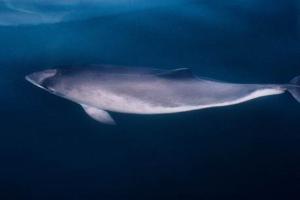
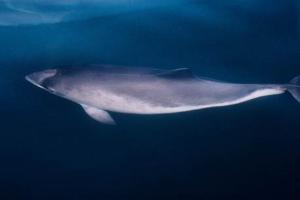
IMAGE

Credit: Hanna Nuuttila

In a first study of its kind, Dr Hanna Nuuttila, currently at Swansea University's College of Science – together with scientists from the German Oceanographic Museum, the University of St Andrews and Bangor University – revealed how playing back porpoise sounds to an acoustic logger can be used to assess the detection area of the device, a metric typically required for effective monitoring and conservation of protected species.

Harbour porpoises are best monitored using underwater acoustic dataloggers, which record the echolocation clicks used for navigation and foraging. This study looked at the most frequently used devices to record these animals and devised an experiment that allowed researchers to determine the range of loggers – something that previously hasn't been known.

This was done by playing back artificial and real, recorded harbour porpoise echolocation clicks to a number of recorders at varying distances and sound source levels.

This allowed researchers to estimate the proportion of all the sounds that were captured by the device, and assess how this was affected by distance from the sound source to the recorder.

The maximum distance the recorder captured porpoise sounds was 566m, however the mean effective detection range (EDR) of a raw signal was calculated at just under 200m and those classified as porpoises by the inbuilt algorithm was 72m. Each underwater click logger would thus provide a circular sampling station of 144m diameter, which could be used in subsequent abundance estimations.

Harbour porpoises are one of six species of porpoise, otherwise known as marine mammals, and are increasingly under threat from anthropogenic activities, such as fisheries bycatch, noise and coastal pollution. They are protected species and monitoring their presence and distribution is legally required.

Dr Hanna Nuuttila, SEACAMS2 Scientific Officer at Swansea University's College of Science said:

"Although animals can be recorded using acoustic devices, it can be very difficult to quantify the exact ranges and detection areas for acoustic dataloggers, something which is crucial if acoustic data is to be used to estimate animal abundance.

"This study describes a playback experiment and an analytical method to estimate the effective detection range and area for passive acoustic cetacean click-loggers."

###

Media Contact

Ben Donovan
[email protected]
@swanseauni

http://www.swansea.ac.uk/

Original Source

https://besjournals.onlinelibrary.wiley.com/doi/full/10.1111/2041-210X.13097 http://dx.doi.org/10.1111/2041-210X.13097


Share12Tweet8Share2ShareShareShare2

Related Posts

Reevaluating the Impact of ‘Yo-Yo Dieting’: Is It Less Harmful Than Commonly Thought? — Biology

Reevaluating the Impact of ‘Yo-Yo Dieting’: Is It Less Harmful Than Commonly Thought?

June 24, 2026
Family Dogs: Science’s Unexpected Ally in Autism Research — Biology

Family Dogs: Science’s Unexpected Ally in Autism Research

June 24, 2026

Enhanced Riboflavin Production Achieved in Bacillus subtilis through Transporter Engineering

June 24, 2026

Scientists Discover Evolving Sperm Whale Dialects in the Mediterranean Sea

June 24, 2026
Please login to join discussion

POPULAR NEWS

  • Saying Goodbye to PGY-6: Pediatric Fellowship Realities

    103 shares
    Share 41 Tweet 26
  • Multi-Hospital Study Reveals Long Covid Burden Is Twice as High as Current Estimates

    92 shares
    Share 36 Tweet 23
  • Detection of EDCs in Breast Milk and Infant Urine Up to Six Months Highlights Early Exposure Risks

    77 shares
    Share 31 Tweet 19
  • New Drug Candidate Developed at McMaster Shows Potential for Treating Brain Cancer

    58 shares
    Share 23 Tweet 15

About

We bring you the latest biotechnology news from best research centers and universities around the world. Check our website.

Follow us

Recent News

Blocking HSPA8 Eases Autoimmune Brain Inflammation

10 Months Exercise Boosts Kids’ Ketone Levels

Reevaluating the Impact of ‘Yo-Yo Dieting’: Is It Less Harmful Than Commonly Thought?

Subscribe to Blog via Email

Enter your email address to subscribe to this blog and receive notifications of new posts by email.

Join 82 other subscribers
  • Contact Us

Bioengineer.org © Copyright 2023 All Rights Reserved.

Welcome Back!

Login to your account below

Forgotten Password?

Retrieve your password

Please enter your username or email address to reset your password.

Log In
No Result
View All Result
  • Homepages
    • Home Page 1
    • Home Page 2
  • News
  • National
  • Business
  • Health
  • Lifestyle
  • Science

Bioengineer.org © Copyright 2023 All Rights Reserved.
