Stroke rarely strikes the young. Nearly 90 percent of strokes occur in people over 65, and a new review in GeroScience argues that the reason may lie in a molecular tug-of-war inside the brain’s blood vessels. Priya Bindal, Paul R. Kasher and Satoshi Ogawa propose that an underappreciated interaction between two signalling systems — the Sonic hedgehog (Shh) pathway, which protects and maintains the brain’s vasculature, and matrix metalloproteinases (MMPs), a family of zinc-dependent enzymes that degrade the scaffolding around blood vessels — could form a mechanistic bridge between the biology of ageing and the brain’s vulnerability to ischemic stroke. The authors are careful to frame this as a hypothesis-generating synthesis: much of the evidence comes from separate lines of research, and direct demonstration of coordinated Shh-MMP regulation within the aged neurovascular unit remains limited.
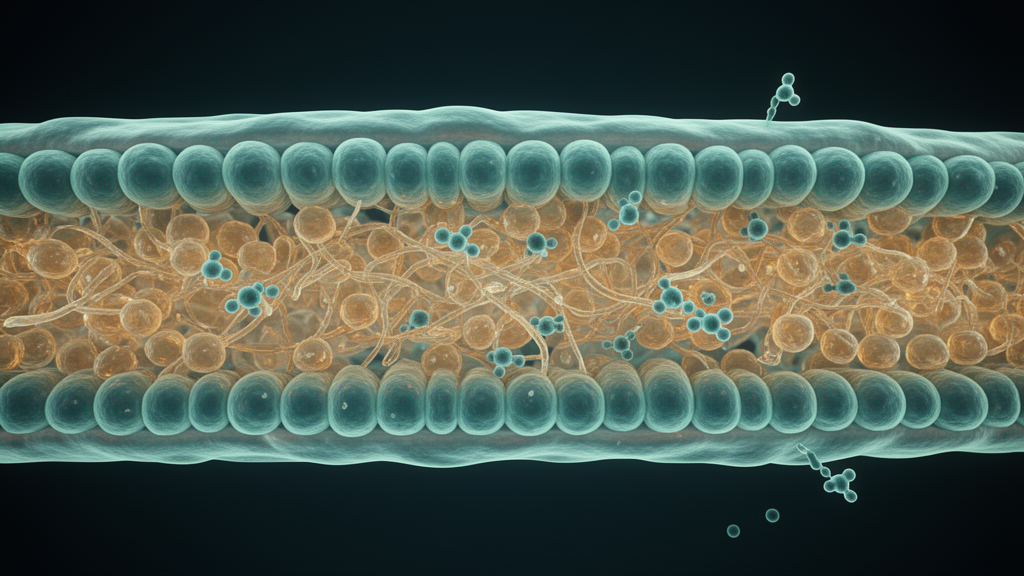
The neurovascular unit, or NVU, is the functional alliance of endothelial cells, astrocytes, pericytes, vascular smooth muscle cells and neurons that together govern cerebral blood flow, blood-brain barrier integrity and neurovascular coupling — the tight matching of local blood supply to neuronal demand. The review describes how ageing dismantles this coordination through several converging processes: oxidative stress, chronic low-grade inflammation, cellular senescence, mitochondrial dysfunction and impaired autophagy. The structural consequences are specific. Arteries stiffen as collagen accumulates, elastin fragments and basement membranes thicken, raising pulse wave velocity and transmitting pulsatile stress into the microcirculation. Smaller vessels develop increased tortuosity, reduced lumen diameter and microvascular rarefaction, diminishing capillary density and tissue perfusion.
Endothelial cells sit at the centre of this decline. Aged endothelial cells show reduced vasodilatory capacity, driven by decreased endothelial nitric oxide synthase activity and diminished nitric oxide bioavailability, a pattern observed consistently in both preclinical and clinical studies. Mitochondrial dysfunction and uncoupling of the nitric oxide synthase enzyme promote excessive reactive oxygen species generation, tipping the endothelium into redox imbalance. Pericytes, the contractile cells embedded in the capillary wall that stabilise the microcirculation, are progressively lost with age, accompanied by reduced expression of pericyte-regulated endothelial genes such as Tfrc, Lrp8 and Mfsd2a — a molecular signature of failing pericyte-endothelial communication. Under ischemic conditions, dysregulated pericyte responses can sustain capillary constriction even after the vessel recanalises, trapping pericytes in a contracted, energy-depleted state and contributing to the notorious no-reflow phenomenon that limits tissue reperfusion.
The blood-brain barrier itself weakens through degradation of basement membrane components including laminin and collagen IV, loss of astrocytic support and thinning of the endothelial glycocalyx, the sugar-rich layer that senses shear stress and restrains permeability. In aged mice, pronounced glycocalyx thinning has been observed alongside transcriptional remodeling of genes involved in mucin-type O-glycan biosynthesis and heparan sulfate metabolism. The review also highlights how neurovascular coupling deteriorates: the vasoactive mediators potassium ions, nitric oxide, purines and prostanoids that normally relax vascular smooth muscle depend on coordinated signalling between neurons, astrocytes, endothelial cells, pericytes and smooth muscle cells, and ageing reduces both the temporal precision and spatial fidelity of these vascular responses.
Against this backdrop, the review positions Shh signalling as one of the vasculature’s key protective voices. Binding of Shh to its receptor Patched-1 relieves inhibition of Smoothened, activating Gli transcription factors — chiefly Gli1 and Gli2 — which regulate programmes of cellular survival, vascular homeostasis and inflammatory control. In the adult brain, Shh signalling maintains the blood-brain barrier by stabilising endothelial tight junctions. Shh-deficient mice show reduced tight junction protein expression despite preserved vascular density, indicating a specific role in barrier maintenance rather than vessel formation. In primary human brain microvascular endothelial cells, recombinant Shh or Smoothened agonists increase transendothelial electrical resistance and decrease paracellular permeability, while pharmacological inhibition of Smoothened produces the opposite effect. Shh signalling also suppresses intercellular adhesion molecule-1 expression, limiting leukocyte transmigration across the barrier and fostering an anti-inflammatory vascular environment.
Ageing, however, progressively silences this voice. Shh pathway activity declines in the brain and other tissues with advancing age, involving reduced ligand availability, impaired Smoothened activation, attenuated Gli-mediated transcription and altered responsiveness of target cells. The consequences extend to regeneration: experimental disruption of Smoothened signalling in neural stem cells accelerates depletion of progenitor populations, and loss of Shh signalling abolishes stroke-induced neurogenesis and delays post-stroke functional recovery in mice. The cellular specificity matters — astrocytes produce Shh, while the receptors Ptch1 and Smoothened are expressed predominantly in brain microvascular endothelial cells, making astrocyte-derived Shh a paracrine guardian of endothelial health. Age-related decline in this astrocyte-endothelial dialogue may therefore compromise barrier repair after ischemic injury.
On the opposing side stand the MMPs, enzymes expressed by endothelial cells, astrocytes, microglia, neurons and infiltrating immune cells that continuously remodel the extracellular matrix. Under physiological conditions, tightly regulated MMP activity supports angiogenesis, synaptic plasticity and tissue repair. Ageing and ischemic injury disrupt this balance, sustaining activation of MMP-2 and MMP-9 in particular. In experimental ischemia-reperfusion models, MMP-2 and MMP-9 expression rises markedly within the neurovascular unit, where the proteases degrade tight junction proteins, extracellular matrix constituents and basement membrane components, increasing paracellular permeability, destabilising vascular architecture and facilitating inflammatory cell infiltration. Oxidative stress drives this process through redox-sensitive pathways including nuclear factor-κB, activator protein-1 and mitogen-activated protein kinase cascades, which enhance transcription of MMP genes, while ageing disrupts the balance between MMPs and their endogenous inhibitors, the tissue inhibitors of metalloproteinases.
The review’s central novelty is the proposed bidirectional crosstalk between these systems. In one direction, Shh signalling through Gli1 has been associated with regulation of MMP-2 and MMP-9: in mouse embryonic stem cells, Shh stimulation increased MMP-2 and MMP-9 mRNA expression, and Gli1 siRNA blocked the response — although the authors stress this evidence comes from a developmental stem-cell model, not adult or ageing neurovascular cells. In the reverse direction, MMP-2 can degrade SCUBE2, an extracellular co-regulator required for efficient Shh ligand presentation, thereby attenuating downstream protective signalling. Supporting evidence for functional antagonism comes from an in vitro model of central nervous system tuberculosis, where elevated MMP-9 activity coincided with downregulated Shh signalling and impaired barrier integrity, and from experimental traumatic brain injury, where Shh pathway activation preserved neurovascular unit integrity, attenuated barrier disruption and suppressed MMP-9 expression, while pathway inhibition exacerbated injury and proteolytic remodeling. A mouse corneal angiogenesis model adds nuance: Shh-induced angiogenesis involved increased MMP-9 expression, showing the relationship is context-dependent rather than simply antagonistic.
The therapeutic implications are double-edged and sharply time-dependent. Pharmacological activation of Shh signalling with Smoothened agonists such as purmorphamine and SAG has promoted neurovascular repair, neurogenesis and tissue preservation after ischemic injury in preclinical studies, while MMP inhibitors including GM6001, BB1001 and SB-3CT have reduced barrier disruption and neuronal injury. Yet timing is everything. MMP-2-deficient mice show reduced hemorrhagic volume and lower rates of hemorrhagic transformation after vascular occlusion, but delayed MMP inhibitor administration beginning seven days after focal stroke suppressed neurovascular remodeling, worsened injury and impaired functional recovery by day fourteen in rats — because MMPs also participate in angiogenesis, inflammation resolution and repair. Early clinical trials of broad-spectrum MMP inhibitors failed on musculoskeletal and systemic toxicity, pushing the field toward isoform-specific agents. Sustained hedgehog activation carries its own caution: the pathway’s established association with tumorigenesis demands careful control of duration, dosage and cellular specificity.
The authors are explicit about the limits of the framework. Much of the mechanistic understanding derives from young experimental models, even though stroke predominantly affects older individuals, and evidence supporting a role for Shh signalling in human neurovascular ageing remains limited. Whether disruption of the Shh-MMP balance directly drives neurovascular ageing or merely reflects downstream consequences of age-related pathology is unresolved, as is the question of whether the interactions operate within adult neurovascular cells at all. The review calls for single-cell and spatial transcriptomic approaches to map where age-associated Shh suppression and MMP activation converge across endothelial cells, astrocytes, pericytes and microglia, for biomarkers reflecting Shh pathway activity in the ageing brain, and for aged animal models and age-relevant human datasets. If validated, the Shh-MMP axis could offer a unifying account of how the ageing vasculature loses its resilience — and a dual target for protecting it.
Subject of Research: The proposed crosstalk between Sonic hedgehog signalling and matrix metalloproteinases in neurovascular ageing and ischemic stroke
Article Title: Sonic hedgehog-matrix metalloproteinase crosstalk in neurovascular ageing and stroke: a potential mechanistic link
Article References: Bindal, P., Kasher, P. R., & Ogawa, S. (2026). Sonic hedgehog-matrix metalloproteinase crosstalk in neurovascular ageing and stroke: a potential mechanistic link. GeroScience. https://doi.org/10.1007/s11357-026-02619-8
Image Credits: AI Generated
DOI: 10.1007/s11357-026-02619-8
Keywords: Sonic hedgehog signalling, matrix metalloproteinases, neurovascular ageing, blood-brain barrier, ischemic stroke, neurovascular unit, pericyte loss, oxidative stress, MMP-9, SCUBE2, cerebral small vessel disease, stroke recovery
News Source: Beatrice Stafford. (October 27, 2026). Research report: Sonic hedgehog-matrix metalloproteinase crosstalk in neurovascular ageing and stroke: a potential mechanistic link. Scienmag.