• HOME
  • NEWS
  • EXPLORE
    • CAREER
      • Companies
      • Jobs
    • EVENTS
    • iGEM
      • News
      • Team
    • PHOTOS
    • VIDEO
    • WIKI
  • BLOG
  • COMMUNITY
    • FACEBOOK
    • INSTAGRAM
    • TWITTER
Wednesday, October 28, 2026
BIOENGINEER.ORG
No Result
View All Result
  • Login
  • HOME
  • NEWS
  • EXPLORE
    • CAREER
      • Companies
      • Jobs
        • Lecturer
        • PhD Studentship
        • Postdoc
        • Research Assistant
    • EVENTS
    • iGEM
      • News
      • Team
    • PHOTOS
    • VIDEO
    • WIKI
  • BLOG
  • COMMUNITY
    • FACEBOOK
    • INSTAGRAM
    • TWITTER
No Result
View All Result
Bioengineer.org
No Result
View All Result
Home NEWS Science News Biology

Research report: Single-cell insights into plant responses to biotic and abiotic stresses: cellular heterogeneity and regulatory mechanisms

by
October 28, 2026
in Biology
Reading Time: 2 mins read
0
Research report: Single-cell insights into plant responses to biotic and abiotic stresses: cellular heterogeneity and regulatory mechanisms

Research report: Single-cell insights into plant responses to biotic and abiotic stresses: cellular heterogeneity and regulatory mechanisms

Share on FacebookShare on TwitterShare on LinkedinShare on RedditShare on Telegram

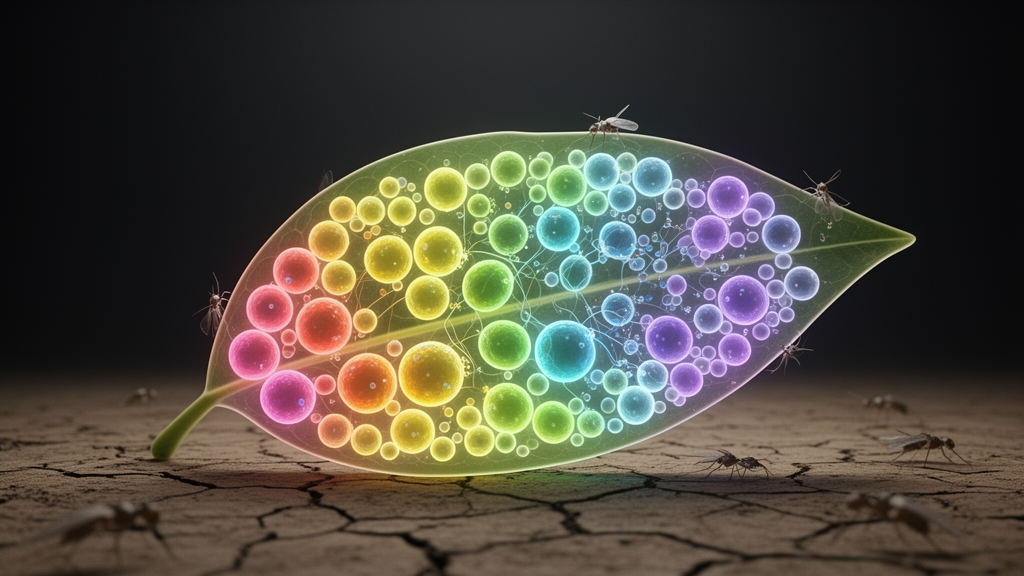
Plants facing drought, heat, pathogens, or salinity do not respond as uniform tissues, and a new review in Plant Cell Reports argues that this cellular diversity is the key to understanding—and eventually engineering—stress resilience. The article, published online on 27 October 2026 as Volume 45, article number 345, synthesizes recent applications of single-cell and spatial omics technologies in plant stress biology.

The authors, Jiechen Wang, Hongfei Li, Zhan Wang, Lei Xu, and Yue Cheng, contend that bulk omics approaches, while successful at cataloguing stress-responsive pathways, obscure the cellular heterogeneity and spatial organization that underlie stress perception, signal transmission, and response execution. Single-cell RNA sequencing, single-nucleus RNA sequencing, single-cell chromatin accessibility profiling, spatial transcriptomics, and emerging single-cell proteomics now allow researchers to resolve plant stress responses at the level of individual cell types, cell states, and spatial locations.

A central contribution of the review is a systematic comparison of how biotic and abiotic stresses organize themselves differently across plant tissues. Biotic stress, such as pathogen attack, typically generates localized, infection-centered immune landscapes. These are characterized by sentinel-cell activation, vascular defense hubs, and receptor-triggered transcriptional cascades that concentrate defensive activity around the site of infection.

Abiotic stresses, by contrast, more commonly involve organ-scale homeostatic adjustment, developmental plasticity, and sustained growth–tolerance trade-offs.

Despite these contrasting spatial patterns, the review emphasizes that both stress classes converge on shared core regulatory modules. Reactive oxygen species, hormone signaling, transcription factor networks, and vascular long-distance communication recur as common threads linking pathogen defense with environmental tolerance, suggesting that distinct stresses recruit overlapping molecular machinery in different cellular contexts.

The authors also confront the technical obstacles that still limit the field. Protoplast and nuclei preparation remains challenging in many plant species, cell-type annotation is not always straightforward, spatial resolution is constrained by current platforms, and multimodal data integration—combining transcriptomic, chromatin, and proteomic readouts—remains an open problem for plant biologists.

What emerges from the synthesis is a mechanistic framework rather than a single discovery. By linking stress-responsive genes to the specific cell types, cell states, and spatial domains in which they function, single-cell approaches promise to move plant stress research beyond averaged bulk measurements toward a cell-resolved picture of how whole organisms cope with hostile environments.

The review positions this framework as a foundation for precision engineering and breeding of stress-resilient crops.

Subject of Research: Single-cell and spatial omics approaches to plant stress responses

Article Title: Single-cell insights into plant responses to biotic and abiotic stresses: cellular heterogeneity and regulatory mechanisms

Article References: Wang, J., Li, H., Wang, Z., Xu, L., & Cheng, Y. (2026). Single-cell insights into plant responses to biotic and abiotic stresses: cellular heterogeneity and regulatory mechanisms. Plant Cell Reports, 45(11), Article 345. https://doi.org/10.1007/s00299-026-04033-y

Image Credits: AI Generated

DOI: 10.1007/s00299-026-04033-y

Keywords: single-cell RNA sequencing, spatial transcriptomics, plant stress, biotic stress, abiotic stress, cellular heterogeneity, gene regulatory networks, reactive oxygen species, hormone signaling, crop breeding, Plant Cell Reports, Single-cell

News Source: Juliet Wilcox. (October 28, 2026). Research report: Single-cell insights into plant responses to biotic and abiotic stresses: cellular heterogeneity and regulatory mechanisms. Scienmag.


Tags: abiotic stressbiotic stresscellular heterogeneitycrop breedinggene regulatory networkshormone signalingPlant Cell Reportsplant stressreactive oxygen speciessingle-cellsingle-cell RNA sequencingSpatial transcriptomics
Share12Tweet7Share2ShareShareShare1

Related Posts

Resorbable Self-Locking Device for Canine Ovarian Pedicle Ligation Tested Across Four Veterinary Centres

Resorbable Self-Locking Device for Canine Ovarian Pedicle Ligation Tested Across Four Veterinary Centres

October 28, 2026
Marine heatwaves and typhoons reshaped Yellow Sea fungal communities, study finds

Marine heatwaves and typhoons reshaped Yellow Sea fungal communities, study finds

October 28, 2026

New computational tool unearths hidden cell-type signals in bulk and spatial transcriptomics

October 28, 2026

Endophytic Proteus bacterium from Ethiopian medicinal plant shows antibacterial activity in lab tests

October 28, 2026

POPULAR NEWS

  • Resorbable Self-Locking Device for Canine Ovarian Pedicle Ligation Tested Across Four Veterinary Centres

    Resorbable Self-Locking Device for Canine Ovarian Pedicle Ligation Tested Across Four Veterinary Centres

    29 shares
    Share 12 Tweet 7
  • Faster Bandwidth Exploration Brings Near-Real-Time Spatial-Temporal Kernel Density Visualizations

    29 shares
    Share 12 Tweet 7
  • Marine heatwaves and typhoons reshaped Yellow Sea fungal communities, study finds

    29 shares
    Share 12 Tweet 7
  • Mixed reality office reads bodies and moods to reshape virtual space

    29 shares
    Share 12 Tweet 7

About

We bring you the latest biotechnology news from best research centers and universities around the world. Check our website.

Follow us

Recent News

Resorbable Self-Locking Device for Canine Ovarian Pedicle Ligation Tested Across Four Veterinary Centres

Faster Bandwidth Exploration Brings Near-Real-Time Spatial-Temporal Kernel Density Visualizations

Marine heatwaves and typhoons reshaped Yellow Sea fungal communities, study finds

Subscribe to Blog via Email

Enter your email address to subscribe to this blog and receive notifications of new posts by email.

Join 85 other subscribers
  • Contact Us

Bioengineer.org © Copyright 2023 All Rights Reserved.

Welcome Back!

Login to your account below

Forgotten Password?

Retrieve your password

Please enter your username or email address to reset your password.

Log In
No Result
View All Result
  • Homepages
    • Home Page 1
    • Home Page 2
  • News
  • National
  • Business
  • Health
  • Lifestyle
  • Science

Bioengineer.org © Copyright 2023 All Rights Reserved.