• HOME
  • NEWS
  • EXPLORE
    • CAREER
      • Companies
      • Jobs
    • EVENTS
    • iGEM
      • News
      • Team
    • PHOTOS
    • VIDEO
    • WIKI
  • BLOG
  • COMMUNITY
    • FACEBOOK
    • INSTAGRAM
    • TWITTER
Tuesday, October 20, 2026
BIOENGINEER.ORG
No Result
View All Result
  • Login
  • HOME
  • NEWS
  • EXPLORE
    • CAREER
      • Companies
      • Jobs
        • Lecturer
        • PhD Studentship
        • Postdoc
        • Research Assistant
    • EVENTS
    • iGEM
      • News
      • Team
    • PHOTOS
    • VIDEO
    • WIKI
  • BLOG
  • COMMUNITY
    • FACEBOOK
    • INSTAGRAM
    • TWITTER
No Result
View All Result
Bioengineer.org
No Result
View All Result
Home NEWS Science News Agriculture

Research report: Optimization of nitrogen source ratios for somatic embryo maturation in Pinus elliottii

by
October 20, 2026
in Agriculture
Reading Time: 2 mins read
0
Research report: Optimization of nitrogen source ratios for somatic embryo maturation in Pinus elliottii

Research report: Optimization of nitrogen source ratios for somatic embryo maturation in Pinus elliottii

Share on FacebookShare on TwitterShare on LinkedinShare on RedditShare on Telegram

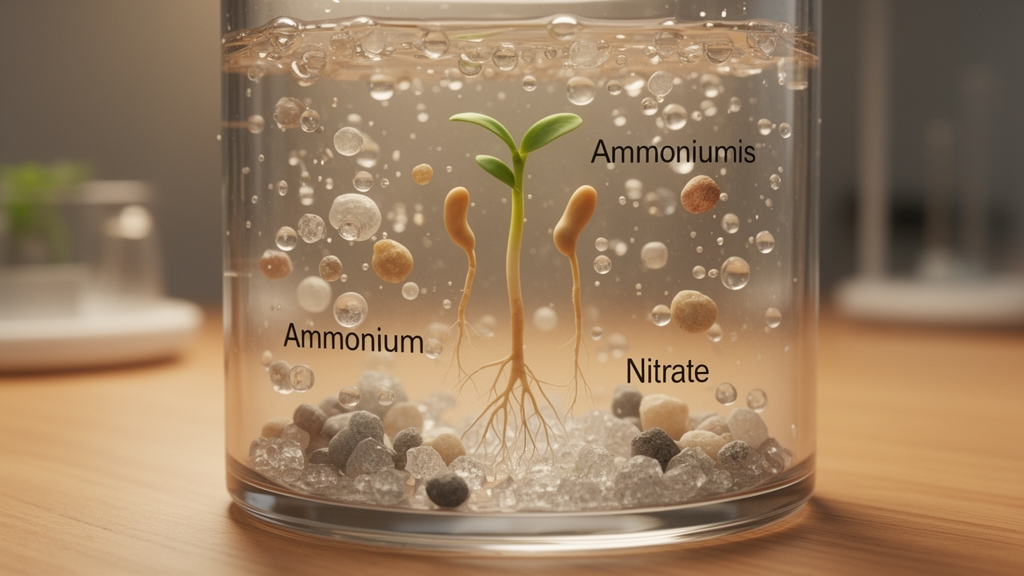
Optimizing the ratios of five nitrogen sources increased somatic embryo maturation in slash pine, according to a controlled laboratory study of three embryogenic lines. The strongest responses depended on the tree line and developmental endpoint, indicating that no single nitrogen mixture was universally best for every stage of embryo development. Researchers examined calcium nitrate, asparagine, choline, glutamine and proline as nitrogen sources in embryogenic callus of Pinus elliottii.

The work was designed to address low maturation efficiency, identified by the authors as a major limitation to the commercial application of somatic embryogenesis. Somatic embryogenesis is a biotechnology platform used for large-scale propagation and germplasm conservation. The investigators first evaluated the five nitrogen sources and then used an L18(3⁵) orthogonal experimental design to test combinations of them.

This approach allowed the researchers to assess several source combinations systematically while examining total embryo formation and cotyledonary embryo formation as separate outcomes. The results showed distinct optima among the three tested slash pine lines. Medium 14 was most conducive to total embryo formation in the S7-5 and S24-1 lines and to cotyledonary embryo formation in S7-2.

Medium 11 was optimal for total embryo formation in S7-2 and for cotyledonary embryo differentiation in S24-1, while Medium 13 was most favorable for cotyledonary embryo formation in S7-5. These line-specific results suggest that the most effective nitrogen balance can differ according to the embryogenic material and the developmental stage being evaluated. The study therefore identified several practical media options rather than a single formulation intended to maximize every outcome across slash pine lines.

Its scope remained the controlled maturation of somatic embryos from the tested cultures. Correlation analysis identified calcium nitrate and glutamine as significant promoting factors associated with embryo maturation. Instead, calcium nitrate and glutamine emerged as components that tracked with improved maturation outcomes in the tested conditions.

Enzyme activity assays provided a biochemical measure accompanying the developmental response. Under the optimized nitrogen ratio, activity of glutamine synthetase, or GS, increased, while the activities of nitrate reductase, NR, and nitrite reductase, NiR, decreased. The authors interpreted this pattern as facilitating the assimilation of nitrogen into organic forms.

By linking medium composition to embryo formation, cotyledonary development and enzyme activity, the study provides a nitrogen-focused regulatory framework for slash pine somatic embryogenesis. The authors say the results offer theoretical foundations and technical support for large-scale breeding and genetic improvement. However, the reported evidence comes from laboratory maturation experiments with three slash pine lines; it does not establish performance across additional lines, laboratories, culture cycles or subsequent plant-regeneration stages.

Subject of Research: Nitrogen-source optimization for somatic embryo maturation in three Pinus elliottii embryogenic lines

Article Title: Optimization of nitrogen source ratios for somatic embryo maturation in Pinus elliottii

Article References: Xu, L., Liu, Q., Du, Q., Deng, Z., Ding, W., Luan, Q., & Yang, C. (2026). Optimization of nitrogen source ratios for somatic embryo maturation in Pinus elliottii. BMC Plant Biology. https://doi.org/10.1186/s12870-026-09765-3

Image Credits: AI Generated

DOI: 10.1186/s12870-026-09765-3

Keywords: slash pine, Pinus elliottii, somatic embryogenesis, nitrogen nutrition, embryo maturation, cotyledonary embryos, glutamine synthetase, nitrate reductase, plant biotechnology, orthogonal design, Optimization, nitrogen

News Source: Alan Morgan. (October 20, 2026). Research report: Optimization of nitrogen source ratios for somatic embryo maturation in Pinus elliottii. Scienmag.

Tags: cotyledonary embryosembryo maturationglutamine synthetasenitrate reductasenitrogennitrogen nutritionoptimizationorthogonal designPinus elliottiiPlant biotechnologyslash pinesomatic embryogenesis
Share12Tweet7Share2ShareShareShare1

Related Posts

Research report: Quantification of soil loss by using RUSLE model under different land use and land cover conditions in AKANYARU catchment in Rwanda

Research report: Quantification of soil loss by using RUSLE model under different land use and land cover conditions in AKANYARU catchment in Rwanda

October 20, 2026
Research report: Nano-encapsulation of peppermint essential oil in chitosan nanoparticles improves salinity tolerance in lettuce

Research report: Nano-encapsulation of peppermint essential oil in chitosan nanoparticles improves salinity tolerance in lettuce

October 20, 2026

Soybean seed pigmentation is associated with oil and lipid differences

October 20, 2026

Postbiotics Gain Ground as Functional Foods, but Human Evidence Varies

October 20, 2026

POPULAR NEWS

  • Single-arm phase II trial reports strong response with junctional cancer combination

    Single-arm phase II trial reports strong response with junctional cancer combination

    29 shares
    Share 12 Tweet 7
  • Research report: A lightweight multi-scale fourier enhancement network for image forgery detection

    29 shares
    Share 12 Tweet 7
  • Qualitative study maps uneven spiritual coping among cancer patients

    29 shares
    Share 12 Tweet 7
  • Research report: Genetic code expansion enables plant-directed control of bacterial activity

    29 shares
    Share 12 Tweet 7

About

We bring you the latest biotechnology news from best research centers and universities around the world. Check our website.

Follow us

Recent News

Single-arm phase II trial reports strong response with junctional cancer combination

Research report: A lightweight multi-scale fourier enhancement network for image forgery detection

Qualitative study maps uneven spiritual coping among cancer patients

Subscribe to Blog via Email

Enter your email address to subscribe to this blog and receive notifications of new posts by email.

Join 85 other subscribers
  • Contact Us

Bioengineer.org © Copyright 2023 All Rights Reserved.

Welcome Back!

Login to your account below

Forgotten Password?

Retrieve your password

Please enter your username or email address to reset your password.

Log In
No Result
View All Result
  • Homepages
    • Home Page 1
    • Home Page 2
  • News
  • National
  • Business
  • Health
  • Lifestyle
  • Science

Bioengineer.org © Copyright 2023 All Rights Reserved.