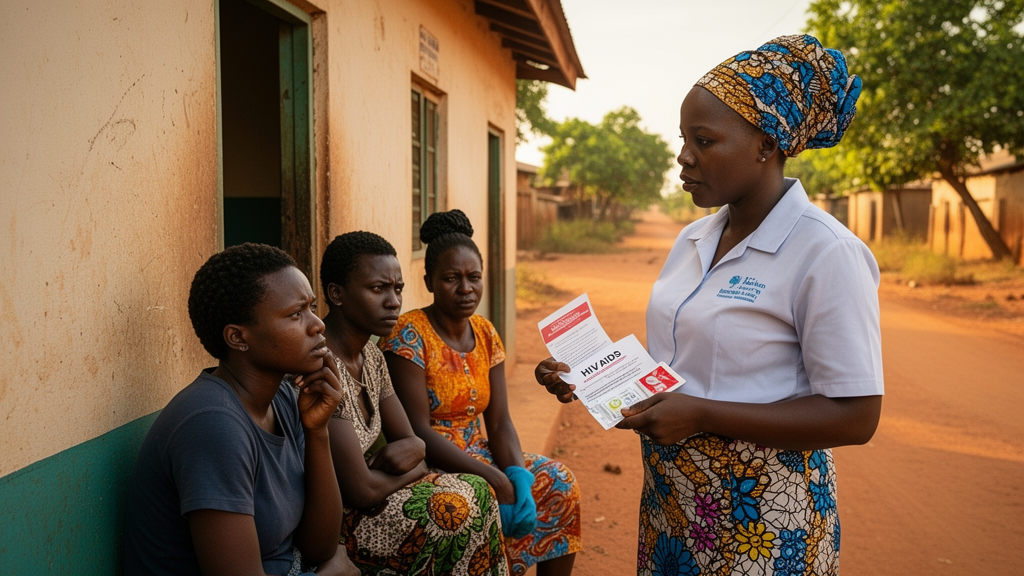
A cross-sectional study of female sex workers in Nsukka, Nigeria, found that 76.5% perceived their risk of HIV infection as high, even though only 10.2% reported ever using pre-exposure prophylaxis, or PrEP. Depressive and anxiety symptoms were also common, as were several self-reported indicators of HIV risk. The findings describe associations within a single community-based sample and do not establish that mental health symptoms caused elevated risk perception or limited PrEP use.
Researchers surveyed 98 female sex workers recruited through snowball sampling at sex-work venues in Nsukka, Enugu State. An interviewer-administered questionnaire collected information on sociodemographic characteristics, mental health symptoms, perceived HIV risk, risk behaviors and prevention indicators. Most participants were between 19 and 35 years old, accounting for 72.4% of the sample; 67.3% were single, and 89.8% had secondary-school education or below.
The study examined the population at one point in time, so its results provide a local snapshot rather than evidence of trends or nationwide prevalence. Mental health symptoms were assessed with modified single-item screening questions based on the Patient Health Questionnaire-2 and the Generalised Anxiety Disorder-2. These instruments were screening tools rather than diagnostic assessments.
Reported depressive symptoms were present in 44.9% of participants, or 44 women, while anxiety symptoms were reported by 51.0%, or 50 women. In the adjusted model, anxiety symptoms were not associated with high perceived HIV risk. Several self-reported indicators relevant to HIV acquisition were common in the survey.
A history of sexually transmitted infection was reported by 87.8% of participants. In addition, 55.1% reported engaging in sex work every day of the week, and the same proportion reported consuming alcohol or other substances before sexual activity. These findings do not by themselves establish that any participant acquired HIV or quantify individual exposure to the virus.
The low level of reported PrEP experience nevertheless provides a notable contrast with the high proportion who considered their HIV risk high: 10.2% said they had ever used PrEP, while 76.5% rated their risk as high on a five-point likelihood scale. Bivariate associations were evaluated with chi-square and Fisher’s exact tests, and factors independently associated with high perceived risk were estimated using Firth-penalised multivariable logistic regression. Condom use at the most recent sexual intercourse was associated with lower odds of high perceived risk, with an adjusted odds ratio of 0.18 and a 95% confidence interval of 0.03–0.77.
Alcohol or substance use before sex was associated with higher odds, with an adjusted odds ratio of 2.79 and a 95% confidence interval of 1.04–7.81. These are adjusted associations, not evidence that either behavior caused participants to perceive their risk differently. The abstract does not report the frequency of condom use beyond the most recent sexual intercourse, and the survey did not test whether the reported behaviors directly preceded HIV acquisition.
Taken together, the results identify a population experiencing multiple reported vulnerabilities alongside low recorded PrEP use, while leaving the relationships among mental health, risk perception and prevention practices unresolved.
Subject of Research: Perceived HIV risk, mental health symptoms and prevention practices among female sex workers in Nsukka, Nigeria
Article Title: Mental health status, perceived and actual risks of HIV/AIDS Acquisition among female sex workers: a cross-sectional study in a Nigerian semi-urban community
Article References: Ezenri, G., Ugwu, D. O., Ngige, A. P., Onyehalu, J. C., Nwachuya, C., Idabor, C., Ugochukwu, E. J., Abubakar, M. M., & Isah, A. (2026). Mental health status, perceived and actual risks of HIV/AIDS Acquisition among female sex workers: a cross-sectional study in a Nigerian semi-urban community. BMC Public Health. https://doi.org/10.1186/s12889-026-29805-9
Image Credits: AI Generated
DOI: 10.1186/s12889-026-29805-9
Keywords: HIV risk, female sex workers, PrEP, mental health, Nsukka, Nigeria, cross-sectional study, perceived risk, condom use, public health, Mental, health
News Source: Glenn Wilkins. (October 21, 2026). Research report: Mental health status, perceived and actual risks of HIV/AIDS Acquisition among female sex workers: a cross-sectional study in a Nigerian semi-urban community. Scienmag.