• HOME
  • NEWS
  • EXPLORE
    • CAREER
      • Companies
      • Jobs
    • EVENTS
    • iGEM
      • News
      • Team
    • PHOTOS
    • VIDEO
    • WIKI
  • BLOG
  • COMMUNITY
    • FACEBOOK
    • INSTAGRAM
    • TWITTER
Tuesday, October 27, 2026
BIOENGINEER.ORG
No Result
View All Result
  • Login
  • HOME
  • NEWS
  • EXPLORE
    • CAREER
      • Companies
      • Jobs
        • Lecturer
        • PhD Studentship
        • Postdoc
        • Research Assistant
    • EVENTS
    • iGEM
      • News
      • Team
    • PHOTOS
    • VIDEO
    • WIKI
  • BLOG
  • COMMUNITY
    • FACEBOOK
    • INSTAGRAM
    • TWITTER
No Result
View All Result
Bioengineer.org
No Result
View All Result
Home NEWS Science News Technology

Research report: Long-term electoral participation among Swedish survivors of the 2004 Indian Ocean tsunami

by
October 27, 2026
in Technology
Reading Time: 2 mins read
0
Research report: Long-term electoral participation among Swedish survivors of the 2004 Indian Ocean tsunami

Research report: Long-term electoral participation among Swedish survivors of the 2004 Indian Ocean tsunami

Share on FacebookShare on TwitterShare on LinkedinShare on RedditShare on Telegram

Swedish tourists who survived the 2004 Indian Ocean tsunami did not withdraw from politics after the disaster. Instead, they turned out to vote at slightly but persistently higher rates than comparable citizens for at least 14 years, according to a study published in Nature Communications.

The researchers followed approximately 16,000 Swedish tourists who were exposed to the tsunami and returned home to communities that were themselves untouched by the disaster. Because these survivors faced no destruction of local infrastructure and no added cost of voting, the case isolates the motivational effects of disaster exposure from the practical barriers that usually depress participation after catastrophes.

The team linked a survivor registry to population-wide Swedish administrative data covering up to 7 million citizens and used entropy balancing to compare survivors with matched, non-exposed voters over 25 years. Exposed individuals were 1.4 percentage points more likely to vote in both 2010 and 2018, a modest gap the authors describe as persistent rather than fading with time.

The effect was unevenly distributed. The gap in turnout was more than twice as large among survivors who lost family members in the tsunami. Mobilization was strongest among people who were between 16 and 25 years old at the time of exposure, a pattern the researchers note is consistent with what political habit formation would predict.

A follow-up survey conducted in 2023, with 3,956 respondents and between 3,198 and 3,625 participants per analysis after item non-response, provided descriptive evidence that survivors still evaluated the government’s crisis response negatively many years later. Their partisan sympathies had also shifted away from the party that was in government at the time of the disaster.

The authors conclude that failed crisis management may have lasting consequences for turnout and potentially for party choice, and that the electoral stakes of disaster response extend beyond the disaster zone itself. Because the survey component is descriptive, the partisan findings should be read as survivors’ reported evaluations rather than causal estimates, while the turnout results rest on the register-based comparison of survivors and matched non-exposed citizens.

Subject of Research: Long-term electoral participation and partisan attitudes among Swedish survivors of the 2004 Indian Ocean tsunami

Article Title: Long-term electoral participation among Swedish survivors of the 2004 Indian Ocean tsunami

Article References: Ekholm, K., Eriksson, L. M., & Vernby, K. (2026). Long-term electoral participation among Swedish survivors of the 2004 Indian Ocean tsunami. Nature Communications, 17(1), Article 11038. https://doi.org/10.1038/s41467-026-78593-8

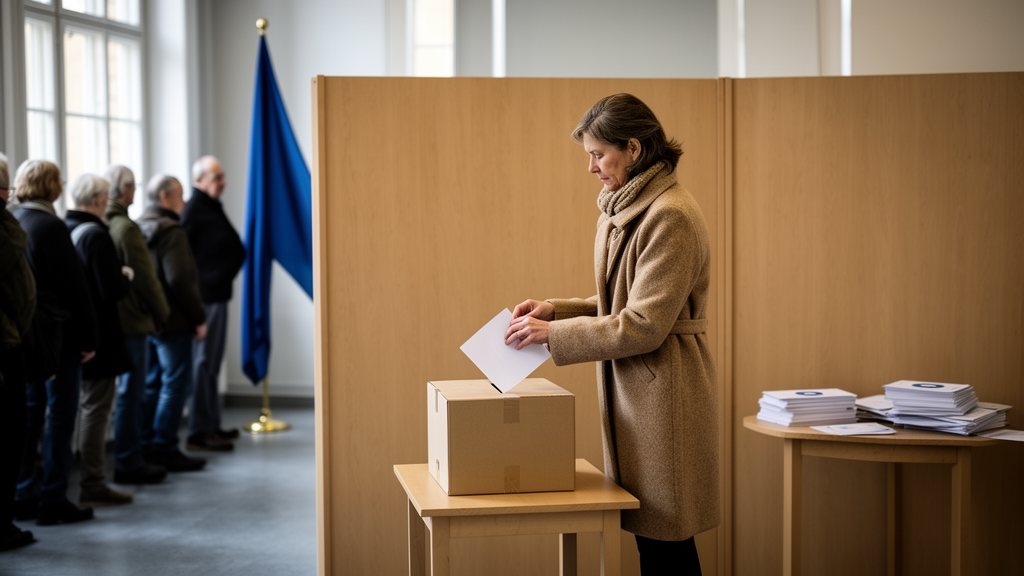
Image Credits: AI Generated

DOI: 10.1038/s41467-026-78593-8

Keywords: tsunami, electoral participation, voter turnout, Sweden, disaster exposure, political behavior, crisis management, entropy balancing, habit formation, survivors, Long-term, electoral

News Source: Violet Maxwell. (October 27, 2026). Research report: Long-term electoral participation among Swedish survivors of the 2004 Indian Ocean tsunami. Scienmag.


Tags: crisis managementdisaster exposureelectoralelectoral participationentropy balancinghabit formationLong-termpolitical behaviorsurvivorsSwedentsunamivoter turnout
Share12Tweet7Share2ShareShareShare1

Related Posts

AI model designs working proteins from plain-language descriptions

AI model designs working proteins from plain-language descriptions

October 27, 2026
Neonatal brain network growth tracks early cognitive, language and motor outcomes in critical congenital heart disease

Neonatal brain network growth tracks early cognitive, language and motor outcomes in critical congenital heart disease

October 27, 2026

Fires and drought push Amazon carbon balance to 0.32 PgC per year

October 27, 2026

Acupoint stimulation shapes brain microstates during virtual reality immersion

October 27, 2026

POPULAR NEWS

  • Frontiers Retracts Corrigendum on ABTL0812 in Glioblastoma Over Image Concerns

    Frontiers Retracts Corrigendum on ABTL0812 in Glioblastoma Over Image Concerns

    29 shares
    Share 12 Tweet 7
  • Research report: Long-term electoral participation among Swedish survivors of the 2004 Indian Ocean tsunami

    29 shares
    Share 12 Tweet 7
  • Obesity May Harm Sperm Motility Through a STAT3/MTND4 Mitochondrial Pathway in Mice

    29 shares
    Share 12 Tweet 7
  • AI model designs working proteins from plain-language descriptions

    29 shares
    Share 12 Tweet 7

About

We bring you the latest biotechnology news from best research centers and universities around the world. Check our website.

Follow us

Recent News

Frontiers Retracts Corrigendum on ABTL0812 in Glioblastoma Over Image Concerns

Research report: Long-term electoral participation among Swedish survivors of the 2004 Indian Ocean tsunami

Obesity May Harm Sperm Motility Through a STAT3/MTND4 Mitochondrial Pathway in Mice

Subscribe to Blog via Email

Enter your email address to subscribe to this blog and receive notifications of new posts by email.

Join 85 other subscribers
  • Contact Us

Bioengineer.org © Copyright 2023 All Rights Reserved.

Welcome Back!

Login to your account below

Forgotten Password?

Retrieve your password

Please enter your username or email address to reset your password.

Log In
No Result
View All Result
  • Homepages
    • Home Page 1
    • Home Page 2
  • News
  • National
  • Business
  • Health
  • Lifestyle
  • Science

Bioengineer.org © Copyright 2023 All Rights Reserved.