A new study has revealed the potential for sensory deterrents to reduce marine megafauna bycatch in fisheries.
Credit: ©ProDelphinus, Peru
A new study has revealed the potential for sensory deterrents to reduce marine megafauna bycatch in fisheries.
The Newcastle University research suggests that sensory deterrents can work in some circumstances and may be part of the solution to reduce bycatch.
Sensory deterrents are designed to provide sensory cues for marine megafauna (marine mammals, seabirds, sea turtles, sharks and rays) to avert their contact with fishing gear, whilst maintaining target catch quantity and quality.
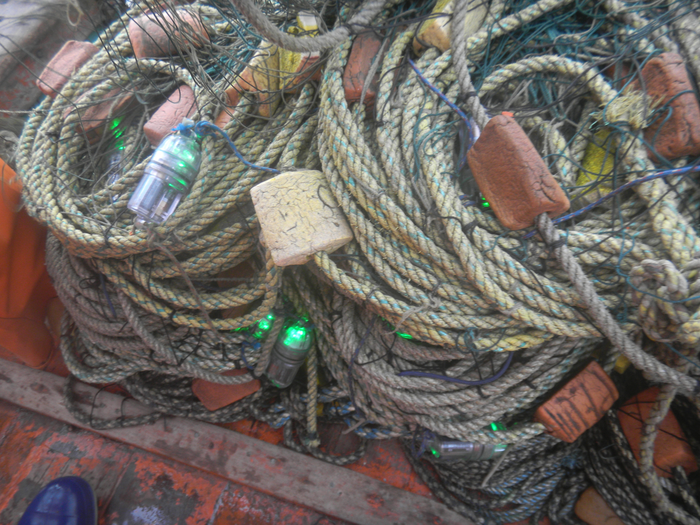
There are several types of sensory technologies designed to reduce bycatch, including acoustic sound devices, using alternative bait type (for example using fish bait instead of squid), using water hose or cannon for deterrent, the use of lights and magnets, and changes to standard gear colour, such as lines and nets.
Multiple technologies were found effective at reducing bycatch in some studies, yet ineffective at reducing bycatch in others. LED lights were the only technology to date found successful in trials across all marine megafauna groups. However, they had also led to increased bycatch in some seabird and elasmobranch (shark and ray) species.
Publishing their findings in the journal Reviews in Fish Biology and Fisheries, the authors argue that sensory deterrents can help reduce bycatch in some circumstances. However, variable results, caused by environmental factors and differences in species biology, make generalisations difficult. Further problems include the cost of equipment and potential for unintended broader environmental harm.
Sol Lucas, PhD student at the School of Natural and Environmental Sciences, Newcastle University, said: “Variability in study results highlights the importance that scientists and policymakers must consider all available evidence when designing bycatch reduction plans for fisheries. This study collates evidence of the use of sensory deterrents in fisheries, contributing to these decision-making processes.”
The authors reviewed available research (116 studies) testing the sensory deterrents to reduce fisheries bycatch (incidental or accidental catch) of multiple marine megafauna species. All available literature on sensory deterrents in peer-reviewed journals were assessed and the study found that the efficacy of available technologies was variable.
Professor Per Berggren, Chair of Marine Megafauna Conservation at the School of Natural and Environmental Sciences, added: “Most of the technologies that we reviewed are immature and the potential ecological impacts are poorly understood. Further research is required to understand the long-term efficacy and impacts of sensory deterrents. Reducing bycatch of marine megafauna is critical, due to their importance for ecosystem health and for the communities that depend on fisheries for income and food security.”
The study’s authors conclude that it is likely multiple measures will be needed to address bycatch in most fisheries (including time-area closures, gear changes and catch limits). They suggest that bycatch mitigation programmes should be made on a case-by-case basis, tailored to the needs of each fishery, species and local community needs.
Reference
Lucas, S., Berggren, P. A systematic review of sensory deterrents for bycatch mitigation of marine megafauna. Rev Fish Biol Fisheries (2022). https://doi.org/10.1007/s11160-022-09736-5
–ends–
Journal
Reviews in Fish Biology and Fisheries
DOI
10.1007/s11160-022-09736-5
Method of Research
Systematic review
Subject of Research
Not applicable
Article Title
A systematic review of sensory deterrents for bycatch mitigation of marine megafauna
Article Publication Date
11-Nov-2022