• HOME
  • NEWS
  • EXPLORE
    • CAREER
      • Companies
      • Jobs
    • EVENTS
    • iGEM
      • News
      • Team
    • PHOTOS
    • VIDEO
    • WIKI
  • BLOG
  • COMMUNITY
    • FACEBOOK
    • INSTAGRAM
    • TWITTER
Monday, May 18, 2026
BIOENGINEER.ORG
No Result
View All Result
  • Login
  • HOME
  • NEWS
  • EXPLORE
    • CAREER
      • Companies
      • Jobs
        • Lecturer
        • PhD Studentship
        • Postdoc
        • Research Assistant
    • EVENTS
    • iGEM
      • News
      • Team
    • PHOTOS
    • VIDEO
    • WIKI
  • BLOG
  • COMMUNITY
    • FACEBOOK
    • INSTAGRAM
    • TWITTER
  • HOME
  • NEWS
  • EXPLORE
    • CAREER
      • Companies
      • Jobs
        • Lecturer
        • PhD Studentship
        • Postdoc
        • Research Assistant
    • EVENTS
    • iGEM
      • News
      • Team
    • PHOTOS
    • VIDEO
    • WIKI
  • BLOG
  • COMMUNITY
    • FACEBOOK
    • INSTAGRAM
    • TWITTER
No Result
View All Result
Bioengineer.org
No Result
View All Result
Home NEWS Science News Biology

Red algae steal genes from bacteria to cope with environmental stresses

Bioengineer by Bioengineer
July 17, 2019
in Biology
Reading Time: 2 mins read
0
IMAGE
Share on FacebookShare on TwitterShare on LinkedinShare on RedditShare on Telegram

Research could lead to designer algae that produces fuels and cleanup chemicals
IMAGE

Credit: Debashish Bhattacharya/Rutgers University-New Brunswick

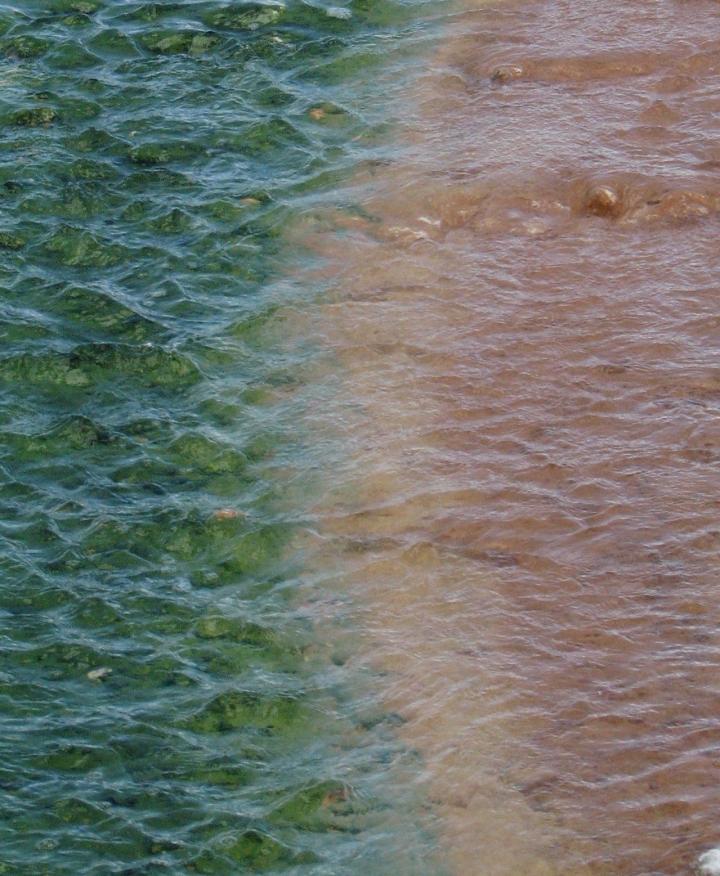
It’s a case of grand larceny that could lead to new fuels and cleanup chemicals. Ten species of red algae stole about 1 percent of their genes from bacteria to cope with toxic metals and salt stress in hot springs, according to a study in the journal eLife.

These red algal species, known as Cyanidiales, also stole many genes that allow them to absorb and process different sources of carbon in the environment to provide additional sources of energy and supplement their photosynthetic lifestyle.

“The role of stolen genes in eukaryotes, which include most living things such as algae, has been hotly debated and many think it is unimportant and plays little to no role in their biology,” said co-author Debashish Bhattacharya, a Distinguished Professor in the Department of Biochemistry and Microbiology at Rutgers University-New Brunswick. “Our robust genome data provide the first major evidence that this is a false narrative and that adaptation to a challenging environment can be directly facilitated by stolen genes.”

Finding such phenomena in nature inspires scientists to figure out how gene theft happens, and they can use these rules of nature to develop novel genetic engineering methods in the lab to benefit humans. This can be done by designing algae that produce fuels or chemicals that can clean up polluted sites because Cyanidiales can process toxic compounds and metals such as arsenic and mercury, according to Bhattacharya, who works in the School of Environmental and Biological Sciences.

In the new study, the scientists generated 10 novel Cyanidiales genomes in the genus Galdieria that thrive in hot springs such as at Yellowstone National Park, despite high temperatures and highly acidic conditions. The goal was to determine whether these algae adapted to their extreme environment by stealing genes from resident, pre-adapted bacteria that made them resistant to the stresses. Genome analyses showed that about 1 percent of the red algal genes came from bacteria.

The next steps are to build genetic tools to study the red algal species and conduct more lab tests to determine if they turn on bacterial genes, as expected, under stress. Julia Van Etten, a doctoral student in the Bhattacharya lab, recently received a three-year NASA award to conduct these studies with Cyanidiales.

###

Study authors include Dana C. Price, an associate research professor in the Department of Plant Biology at Rutgers-New Brunswick who helped design and conduct many of the bioinformatic analyses, and scientists at Heinrich-Heine University in Germany and Arizona State University.

Media Contact
Todd Bates
[email protected]

Original Source

https://news.rutgers.edu/red-algae-steal-genes-bacteria-cope-environmental-stresses/20190717#.XS8477xKi71

Related Journal Article

http://dx.doi.org/10.7554/eLife.45017

Tags: BiologyBiomedical/Environmental/Chemical EngineeringBiotechnologyEcology/EnvironmentEnergy SourcesEnvironmental HealthGeneticsHydrology/Water ResourcesMarine/Freshwater BiologyPollution/Remediation
Share12Tweet8Share2ShareShareShare2

Related Posts

Uncovering C. elegans Immunity via Genetic Screens — Biology

Uncovering C. elegans Immunity via Genetic Screens

May 16, 2026
Single mother must adapt swiftly — the survival of her colony depends on it — Biology

Single mother must adapt swiftly — the survival of her colony depends on it

May 15, 2026

Why Are Nearly Everyone Right-Handed? It Might Be Linked to How We Learned to Walk

May 15, 2026

Excessive Neuronal Activity Initiates Severe Autoimmune Brain Disorder

May 15, 2026
Please login to join discussion

POPULAR NEWS

  • Research Indicates Potential Connection Between Prenatal Medication Exposure and Elevated Autism Risk

    844 shares
    Share 338 Tweet 211
  • New Study Reveals Plants Can Detect the Sound of Rain

    730 shares
    Share 291 Tweet 182
  • Salmonella Haem Blocks Macrophages, Boosts Infection

    62 shares
    Share 25 Tweet 16
  • Breastmilk Balances E. coli and Beneficial Bacteria in Infant Gut Microbiomes

    58 shares
    Share 23 Tweet 15

About

We bring you the latest biotechnology news from best research centers and universities around the world. Check our website.

Follow us

Recent News

Detecting Illicit Bitcoin Transactions with Temporal Graph Learning

New Study Reveals the Massive Economic Impact of Tuberculosis

Age Discrimination Affects Healthcare Use in India

Subscribe to Blog via Email

Enter your email address to subscribe to this blog and receive notifications of new posts by email.

Join 82 other subscribers
  • Contact Us

Bioengineer.org © Copyright 2023 All Rights Reserved.

Welcome Back!

Login to your account below

Forgotten Password?

Retrieve your password

Please enter your username or email address to reset your password.

Log In
No Result
View All Result
  • Homepages
    • Home Page 1
    • Home Page 2
  • News
  • National
  • Business
  • Health
  • Lifestyle
  • Science

Bioengineer.org © Copyright 2023 All Rights Reserved.