• HOME
  • NEWS
  • EXPLORE
    • CAREER
      • Companies
      • Jobs
    • EVENTS
    • iGEM
      • News
      • Team
    • PHOTOS
    • VIDEO
    • WIKI
  • BLOG
  • COMMUNITY
    • FACEBOOK
    • INSTAGRAM
    • TWITTER
Thursday, October 29, 2026
BIOENGINEER.ORG
No Result
View All Result
  • Login
  • HOME
  • NEWS
  • EXPLORE
    • CAREER
      • Companies
      • Jobs
        • Lecturer
        • PhD Studentship
        • Postdoc
        • Research Assistant
    • EVENTS
    • iGEM
      • News
      • Team
    • PHOTOS
    • VIDEO
    • WIKI
  • BLOG
  • COMMUNITY
    • FACEBOOK
    • INSTAGRAM
    • TWITTER
No Result
View All Result
Bioengineer.org
No Result
View All Result
Home NEWS Science News Technology

Reanalysis of Public Electron Microscopy Data Reveals Umbelliferone’s Effects on Synaptic Structure

by
October 29, 2026
in Technology
Reading Time: 2 mins read
0
Reanalysis of Public Electron Microscopy Data Reveals Umbelliferone's Effects on Synaptic Structure

Reanalysis of Public Electron Microscopy Data Reveals Umbelliferone's Effects on Synaptic Structure

Share on FacebookShare on TwitterShare on LinkedinShare on RedditShare on Telegram

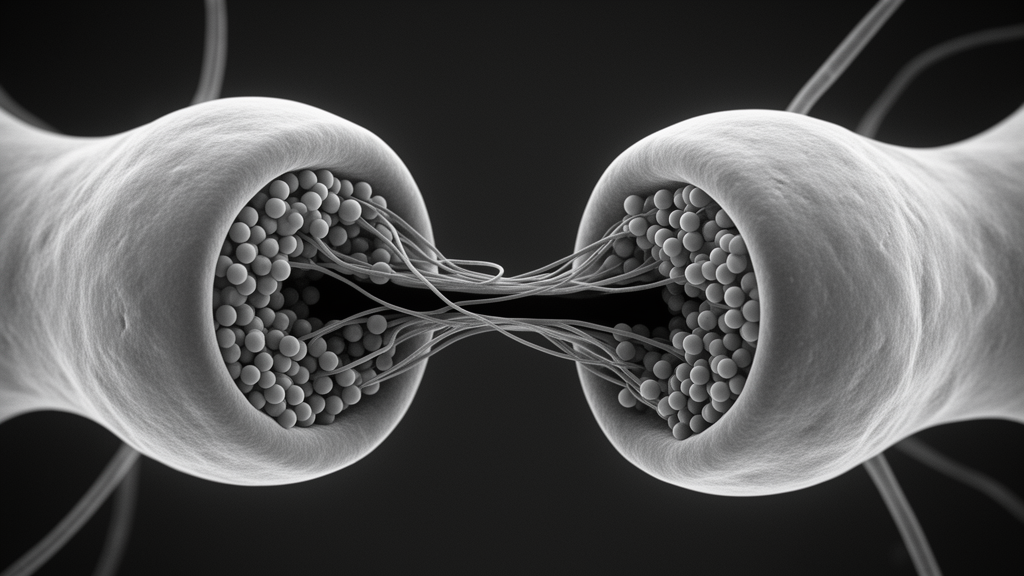
A previously published electron microscopy dataset has yielded new findings in a second life. Researchers reanalyzed publicly available high-resolution transmission electron microscopy images from an earlier umbelliferone study and found that the compound was associated with changes in the postsynaptic density that the original publication had not described.

The original study examined umbelliferone (UMB) under scopolamine (SCO)-induced pathological conditions and reported recovery of synaptic vesicle architecture. Its high-resolution electron microscopy dataset was deposited in the Korea BioData Station (K-BDS), a national biological data platform, making a secondary analysis possible without new experiments.

In the new study, published in Applied Microscopy, the team turned to a structure the original work had not explored: the postsynaptic density (PSD), a structural determinant of synaptic efficacy and plasticity. Using the original images, they performed quantitative secondary analyses of PSD length, width, and ultrastructural features across the experimental groups.

The reanalysis showed that UMB treatment significantly increased PSD length and width compared with the SCO-treated group, which the authors interpret as indicating structural restoration of impaired postsynaptic architecture. These PSD-level alterations had not been described in the original publication.

The authors emphasize that the finding illustrates how purposeful reuse of existing data can generate novel biological insights. Public repositories, they note, not only support reproducibility and transparency but also enable discoveries beyond the scope of the original studies.

The work also serves as a demonstration of K-BDS itself. By showing that a deposited dataset could support a new line of analysis, the study underscores the platform’s role in facilitating secondary discovery and data-driven neuroscience research without additional animal experimentation.

Because the analysis is a reanalysis of existing microscopy images rather than a new experiment, its conclusions rest on the same imaging material and experimental design as the original study. The reported PSD changes are structural measurements from electron micrographs, not direct functional readouts of synaptic transmission.

Nevertheless, the study offers a concrete example of data reuse in neuroscience: a dataset deposited to satisfy open-science practices became the basis for a previously unreported observation about postsynaptic structure, obtained without any new animal work.

Subject of Research: Reanalysis of public electron microscopy data showing umbelliferone-associated changes in postsynaptic density structure

Article Title: Umbelliferone-induced recovery of postsynaptic density structure revealed by the reanalysis of public electron microscopy data

Article References: Choi, G.-Y., Choi, H., Lee, S., & Kweon, H.-S. (2026). Umbelliferone-induced recovery of postsynaptic density structure revealed by the reanalysis of public electron microscopy data. Applied Microscopy, 56(1), Article 17. https://doi.org/10.1186/s42649-026-00129-7

Image Credits: AI Generated

DOI: 10.1186/s42649-026-00129-7

Keywords: umbelliferone, scopolamine, postsynaptic density, electron microscopy, data reuse, synapse, Korea BioData Station, neuroscience, open data, secondary analysis, Umbelliferone-induced, recovery

News Source: Denise Maddox. (October 29, 2026). Reanalysis of Public Electron Microscopy Data Reveals Umbelliferone’s Effects on Synaptic Structure. Scienmag.


Tags: data reuseelectron microscopyKorea BioData StationNeuroscienceopen datapostsynaptic densityrecoveryscopolaminesecondary analysissynapseumbelliferoneUmbelliferone-induced
Share12Tweet7Share2ShareShareShare1

Related Posts

New continuous index scores urbanicity from 0 to 100

New continuous index scores urbanicity from 0 to 100

October 29, 2026
Field test shows long medium-deep U-tube heat exchanger delivers up to 1,035 kW of geothermal heat

Field test shows long medium-deep U-tube heat exchanger delivers up to 1,035 kW of geothermal heat

October 29, 2026

PIK3CA mutation rewires immune and metabolic networks in cervical cancer cells

October 29, 2026

Fungi may help antibiotic resistance genes survive livestock manure composting

October 29, 2026

POPULAR NEWS

  • Health literacy varies widely among women after breast cancer surgery, study finds

    Health literacy varies widely among women after breast cancer surgery, study finds

    29 shares
    Share 12 Tweet 7
  • Water Levels, Not Rainfall, Decide Where Colonial Waterbirds Nest in Southern India

    29 shares
    Share 12 Tweet 7
  • Fuzzy utility framework tackles financial risks where probabilities fail

    29 shares
    Share 12 Tweet 7
  • TCTP and Mcl-1 Proteins Rise in Chronic Lymphocytic Leukemia, Study Finds

    29 shares
    Share 12 Tweet 7

About

We bring you the latest biotechnology news from best research centers and universities around the world. Check our website.

Follow us

Recent News

Molecular dynamics show docking proximity alone cannot guarantee KRAS G12C covalent inhibition

Lymph-Node Radiomics Outperforms Tumor-Based CT Analysis for Predicting Colorectal Cancer Spread

New continuous index scores urbanicity from 0 to 100

Subscribe to Blog via Email

Enter your email address to subscribe to this blog and receive notifications of new posts by email.

Join 85 other subscribers
  • Contact Us

Bioengineer.org © Copyright 2023 All Rights Reserved.

Welcome Back!

Login to your account below

Forgotten Password?

Retrieve your password

Please enter your username or email address to reset your password.

Log In
No Result
View All Result
  • Homepages
    • Home Page 1
    • Home Page 2
  • News
  • National
  • Business
  • Health
  • Lifestyle
  • Science

Bioengineer.org © Copyright 2023 All Rights Reserved.