


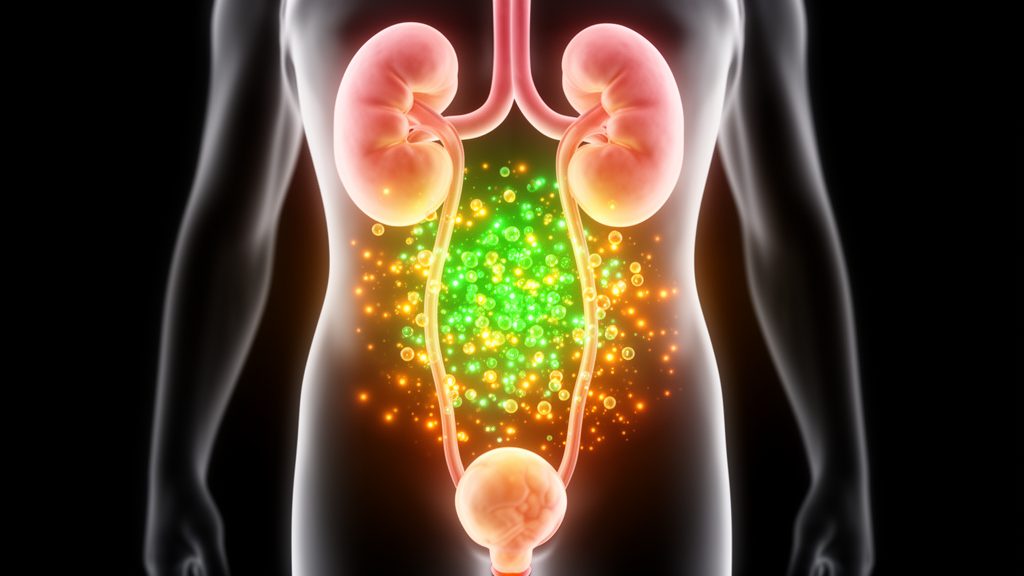
Reactive oxygen species have long been cast as molecular vandals, corroding DNA and pushing cells toward cancer. A review published in Biology Direct argues that this picture is far too simple, particularly for the prostate, bladder and kidneys, where the same molecules that keep tissue functioning can also drive tumour development and treatment resistance. The article, authored by Nadine Gelbrich and Matthias B. Stope, synthesises mechanistic evidence on how redox balance is maintained, how it fails, and what that failure means for benign prostatic hyperplasia, prostate cancer, urothelial carcinoma of the bladder and renal cell carcinoma.
The central claim is that the biological effect of reactive oxygen species depends not on their presence but on their regulation. These oxygen-derived molecules, which include radicals such as superoxide and the hydroxyl radical as well as more stable, diffusible species like hydrogen peroxide, are continuously generated during aerobic metabolism. The mitochondrial electron transport chain is a major source, with incomplete reduction of molecular oxygen producing superoxide particularly at complexes I and III. Dedicated enzymatic systems, notably NADPH oxidases, generate ROS on purpose for host defence, signal transduction and cellular adaptation, while peroxisomal oxidases, oxidative protein folding in the endoplasmic reticulum and enzymes such as xanthine oxidoreductase add further contributions. Under certain conditions, including cofactor depletion, nitric oxide synthases can become uncoupled and themselves switch to producing superoxide, raising the oxidative burden.
At controlled concentrations, ROS act as second messengers. They reversibly modify redox-sensitive amino acid residues, especially cysteine thiols, thereby regulating pathways involved in proliferation, differentiation, immune responses and stress adaptation. Cells keep this signalling within a functional range through a layered antioxidant network: superoxide dismutases convert superoxide into hydrogen peroxide, which catalase and glutathione peroxidases then detoxify, while peroxiredoxins and the thioredoxin system buffer low-level hydrogen peroxide with the precision needed for signalling. Non-enzymatic antioxidants such as glutathione support these enzymatic pathways. Crucially, the review stresses that these systems do not eliminate ROS entirely; they hold them in a controlled window that permits signalling while preventing toxicity.
When that window collapses, oxidative stress follows. The authors define it not simply as elevated ROS but as a failure of regulatory systems to maintain controlled redox signalling. Urological organs are especially vulnerable because they combine high metabolic activity, hormonal regulation, fluctuating oxygen supply and frequent exposure to inflammatory stimuli. In the vasculature, controlled ROS production helps endothelial cells adapt to shear stress, but a sustained rise reduces nitric oxide bioavailability through direct scavenging and endothelial nitric oxide synthase uncoupling, impairing vasodilation and promoting a pro-inflammatory, pro-thrombotic phenotype. ROS also stabilise hypoxia-inducible factors, particularly HIF-1α, shaping angiogenic signalling and metabolic adaptation under low oxygen. Chronic bladder ischaemia, for example, has been associated with oxidative stress, neuronal injury and progressive functional impairment.
The immune dimension adds a further layer of complexity. Phagocytic cells generate ROS during the respiratory burst to destroy pathogens, and this controlled production is essential for host defence. Under persistent stimulation, however, ROS activate redox-sensitive networks including NF-κB, driving transcription of pro-inflammatory mediators and creating a self-reinforcing cycle in which inflammation boosts ROS production and ROS sustain inflammation. In tissues repeatedly exposed to infectious, toxic and mechanical stressors, prolonged ROS exposure induces oxidative DNA damage and undermines genomic stability, linking chronic inflammation to carcinogenic processes.
Perhaps the most striking mechanistic section concerns ferroptosis, a ROS-dependent form of programmed cell death driven by iron-catalysed lipid peroxidation. Its key regulators include glutathione peroxidase 4, which reduces toxic lipid hydroperoxides using glutathione; the cystine/glutamate antiporter system Xc−, whose functional subunit SLC7A11 imports the cystine needed for glutathione synthesis; and ACSL4, which incorporates polyunsaturated fatty acids into membrane phospholipids and thereby raises susceptibility to peroxidation. In urological malignancies, ferroptosis has emerged as a mechanism influencing tumour behaviour and therapy response, and approaches such as inhibiting SLC7A11-mediated cystine uptake, depleting glutathione or pharmacologically blocking GPX4 are being investigated as ways to push tumour cells over the oxidative edge.
The disease-specific analyses show that redox dysregulation is not uniform. In benign prostatic hyperplasia, oxidative stress is closely associated with persistent low-grade inflammation, stromal and epithelial proliferation and altered growth signalling, and experimental models indicate it can induce structural and functional changes consistent with hyperplasia. In prostate cancer, elevated ROS promote oxidative DNA damage, genomic instability and epigenetic alterations that facilitate malignant transformation, while tumour cells adapt by activating antioxidant programmes, including Nrf2-associated responses that can also be triggered through ROS-independent mechanisms. ROS and androgen receptor signalling interact closely, and in castration-resistant disease chronic oxidative stress contributes to genomic instability, alternative survival pathways, altered AR expression and constitutively active AR variants, all of which limit the efficacy of antiandrogen therapies.
Bladder cancer presents a different profile because the urothelium is continuously exposed to environmental and urinary factors that elevate oxidative stress and lipid peroxidation. Experimental work implicates NADPH oxidase 4-mediated ROS production in early urothelial transformation, although the authors caution that these mechanisms are context-dependent rather than universally established. Notably, the clinically important luminal and basal subtypes of muscle-invasive urothelial carcinoma, defined largely by gene expression, show no consistent differences in fundamental redox biology so far. ROS nonetheless run through established treatment: radiotherapy and cytotoxic chemotherapy kill tumour cells partly by raising intracellular ROS, at the cost of damage to healthy tissue, and intravesical BCG therapy induces ROS that promote pro-inflammatory cytokine release and anti-tumour immunity through NF-κB activation, though chronically elevated ROS can exhaust antitumour immune cells. In renal cell carcinoma, clinical studies show increased oxidative stress markers and correlations between redox parameters and tumour stage, with the KEAP1-Nrf2 axis enabling tumour cells to tolerate oxidative stress and resist therapy.
Translational prospects remain promising but constrained. Direct ROS measurement is limited by high reactivity, short half-life and compartmentalisation, so indirect markers are under investigation; the most mature clinical application is oxidation-reduction potential in seminal plasma as an adjunct test in male infertility workup, while redox diagnostics in uro-oncology still lack standardisation and prospective validation. Therapeutically, established radiotherapy and chemotherapy already exploit tumour sensitivity to oxidative stress, and targeted interventions against Nrf2 signalling, glutathione metabolism, GPX4 or SLC7A11 are gaining attention. Medical gas plasma, which generates locally high concentrations of reactive oxygen and nitrogen species, has shown in preclinical urological tumour models the inhibition of cell proliferation, induction of apoptotic and ferroptotic signalling and selective tumour toxicity while largely sparing healthy tissue. The authors emphasise, however, that because oxidative signalling is essential for healthy cells, tumour-specific selectivity remains the decisive hurdle before any of these redox-based strategies can reach routine clinical use.
Subject of Research: Redox imbalance in urological diseases
Article Title: Redox imbalance in urology: mechanistic insights into the development and progression of selected urological conditions
Article References: Gelbrich, N., & Stope, M. B. (2026). Redox imbalance in urology: mechanistic insights into the development and progression of selected urological conditions. Biology Direct, 21(1), Article 206. https://doi.org/10.1186/s13062-026-00885-2
Image Credits: AI Generated
DOI: 10.1186/s13062-026-00885-2
Keywords: reactive oxygen species, redox homeostasis, prostate cancer, bladder cancer, renal cell carcinoma, ferroptosis, oxidative stress, medical gas plasma, Nrf2, urology, Redox, imbalance
News Source: Nathaniel Bowman. (October 30, 2026). Reactive Oxygen Molecules Sit at the Heart of Prostate, Bladder and Kidney Disease. Scienmag.



