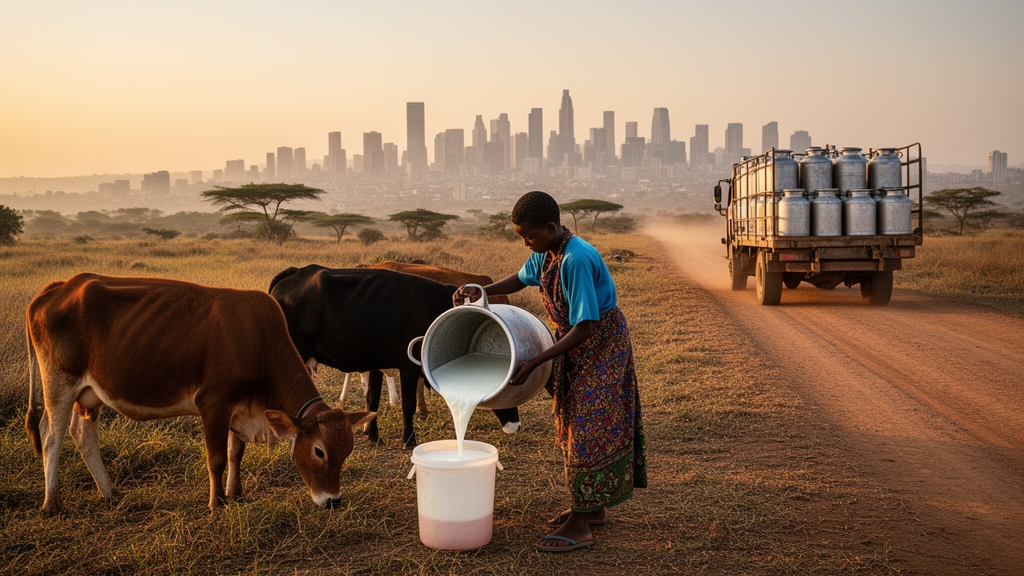
Raw cow milk collected in and around Addis Ababa showed a progressive decline in several physicochemical quality indicators as it moved along the dairy value chain, according to a study published in BMC Nutrition. Milk sampled at the consumer level had the lowest fat content of any supply-chain stage, a pattern the researchers say is consistent with possible dilution or cream removal, although the study did not directly test for adulterants.
The research team, led by Meseret Gebreselama Gidey with colleagues from Ethiopian and international institutions, collected milk samples between June and September 2022 from four dairy-producing areas: Sebeta, Sheno, Sululta, and Bishoftu. Samples were taken along the dairy value chain and transported to the Veterinary Drugs and Feed Administration and Control Authority laboratory for analysis.
At the laboratory, a Lactoscan milk analyzer was used to measure key physicochemical parameters, including fat, solids-not-fat, protein, lactose, density, freezing point, and mineral content. Data were analyzed using two-way analysis of variance at a 95 percent confidence level, and the results were compared with minimum standards established by the Ethiopian Standards Agency.
The mean fat percentages of milk from Sebeta, Sheno, Sululta, and Bishoftu were 2.621 ± 0.967, 2.429 ± 0.838, 2.147 ± 1.026, and 2.602 ± 0.689, respectively. These figures show that fat content varied between locations, but the study found no statistically significant differences among the four study areas, with P values greater than 0.05.
Where the milk was sourced along the value chain mattered more. Milk obtained directly from farms had a mean fat content of 2.831 ± 1.023, while samples from collectors measured 2.419 ± 0.650 and milk from cafeterias measured 2.099 ± 0.835. The differences in fat content across the value chain were statistically significant, with P = 0.017, indicating that quality indicators changed measurably between the farm gate and the point of sale.
Several physicochemical parameters fell below the minimum limits set by the Ethiopian Standards Agency. The authors note that the lower quality of milk at the consumer level suggests possible adulteration, including the addition of water and the removal of fat. However, the study’s conclusion is careful to distinguish between suggestion and proof: the findings are consistent with dilution, cream removal, or other handling-related factors, but direct evidence of adulteration was not assessed in this research.
The study’s background places these findings in a wider context. Milk is a highly nutritious food and an important source of income for smallholder farmers in Ethiopia, and ensuring the safety and quality of raw milk is essential for public health and consumer confidence. Milk quality may deteriorate along the dairy value chain due to poor handling, storage conditions, and possible adulteration practices, making monitoring at multiple stages an important safeguard.
The authors conclude that the results highlight the need for improved milk quality monitoring, stronger regulatory oversight, and further studies incorporating microbiological and adulterant detection analyses. Because the published version is an early-release, peer-reviewed accepted article that is subject to further edits before the final version of record, the reported figures should be read in that light. The study was limited to physicochemical parameters measured in four dairy-producing areas around the capital, and its authors explicitly frame the adulteration interpretation as a possibility requiring confirmation by future work rather than a demonstrated finding.
Subject of Research: Physicochemical quality of raw cow milk along the dairy value chain in and around Addis Ababa, Ethiopia
Article Title: Assessment of the physicochemical properties of raw milk in Addis Ababa and its surrounding areas, Ethiopia
Article References: Gidey, M. G., David, L., Abunna, F., Mendefro, H., & Regassa, F. (2026). Assessment of the physicochemical properties of raw milk in Addis Ababa and its surrounding areas, Ethiopia. BMC Nutrition. https://doi.org/10.1186/s40795-026-01531-w
Image Credits: AI Generated
DOI: 10.1186/s40795-026-01531-w
Keywords: raw milk, dairy value chain, physicochemical properties, Ethiopia, Addis Ababa, milk fat, adulteration, food safety, Lactoscan, Ethiopian Standards Agency, Assessment, physicochemical
News Source: Daisy Hatcher. (October 28, 2026). Raw milk quality drops along the dairy value chain around Addis Ababa, study finds. Scienmag.