Two major families of rare genetic disorders, the RASopathies and the ciliopathies, may be more closely connected than their distinct gene lists suggest. In a perspective article published in Developmental Biology Advances, Daniel Kwaku Abankwa and Jeroen den Hertog propose that the two disease groups share a common mechanistic denominator: defective cilia function. The authors present this as a hypothesis grounded in their most recent experimental data, not as an established clinical finding.
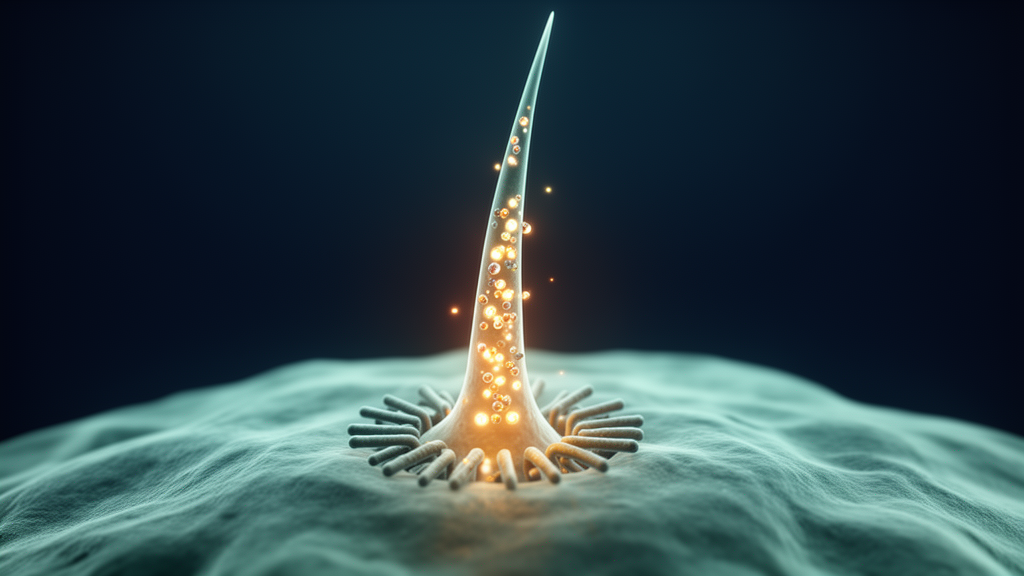
The article argues that primary cilia act as signalling hubs on stem and progenitor cells, hosting critical developmental pathways, and that the RAS pathway fundamentally affects ciliogenesis in a differentiating system.
A striking element of the proposal concerns KRAS, a well-known RAS-family protein. According to the authors’ data, KRAS may protect ciliation and thereby preserve stemness during asymmetric cell divisions. If correct, this would mean that RAS signalling helps shape cell differentiation hierarchies from the earliest stages of development, with cilia sitting at the centre of that process.
The authors suggest a mechanism for how small perturbations could produce large effects. Minor imbalances in cellular hierarchies, they argue, accumulate throughout development and are exponentially aggravated, ultimately producing defects in multiple organ systems of the kind typically observed in these disorders. This framework is presented as a way to explain why phenotypically similar features appear across two disease families with different underlying genes.
The perspective also situates the hypothesis within the practical realities of rare disease research. Although each individual condition is rare, the authors note that collectively millions of individuals are affected, often facing diagnostic uncertainty and a lack of therapeutic options. The rarity of individual diseases means classical clinical studies are not feasible, and costly drug development frequently fails to find a sufficiently large market.
As a response to those constraints, the authors call for cost-effective predictive disease models that can translate molecular mechanistic insights into therapeutic progress. They outline a combined strategy: simple cellular differentiation models in the laboratory, paired with zebrafish disease models. In their view, such models could drive understanding of the underlying molecular and cellular processes and also enable drug screening, an avenue that classical clinical study designs cannot readily provide for these populations.
The proposal extends beyond embryonic development. The authors state that primary cilia may be important not only for understanding several developmental diseases but also for tissue homeostasis in the adult, positioning the organelle as a continuing player in biology after development is complete.
It is important to read the article for what it is: a perspective and hypothesis paper, published open access on 9 October 2026, that frames a testable model rather than reporting a definitive clinical result. The authors explicitly describe their argument as a hypothesis, supported by their recent data on RAS-pathway effects on ciliogenesis in differentiating systems. Testing whether KRAS-mediated protection of ciliation during asymmetric division holds across relevant disease contexts will require the very modelling and screening approaches the authors advocate, and any therapeutic implications remain speculative at this stage.
For now, the article offers a conceptual bridge between two disease families and a concrete experimental roadmap, combining differentiation models and zebrafish, for putting that bridge to the test.
Subject of Research: A hypothesis that RAS-pathway signalling affects ciliogenesis, potentially linking RASopathies and ciliopathies
Article Title: Do RASopathies and ciliopathies share underlying developmental mechanisms?
Article References: Abankwa, D. K., & den Hertog, J. (2026). Do RASopathies and ciliopathies share underlying developmental mechanisms?. Developmental Biology Advances. https://doi.org/10.1186/s13227-026-00277-7
Image Credits: AI Generated
DOI: 10.1186/s13227-026-00277-7
Keywords: RASopathies, ciliopathies, primary cilia, KRAS, developmental biology, rare diseases, zebrafish models, drug screening, cell differentiation, stem cells, share, underlying
News Source: Drew Townsend. (October 27, 2026). RASopathies and ciliopathies may share a common ciliary root cause. Scienmag.