• HOME
  • NEWS
  • EXPLORE
    • CAREER
      • Companies
      • Jobs
    • EVENTS
    • iGEM
      • News
      • Team
    • PHOTOS
    • VIDEO
    • WIKI
  • BLOG
  • COMMUNITY
    • FACEBOOK
    • INSTAGRAM
    • TWITTER
Saturday, June 27, 2026
BIOENGINEER.ORG
No Result
View All Result
  • Login
  • HOME
  • NEWS
  • EXPLORE
    • CAREER
      • Companies
      • Jobs
        • Lecturer
        • PhD Studentship
        • Postdoc
        • Research Assistant
    • EVENTS
    • iGEM
      • News
      • Team
    • PHOTOS
    • VIDEO
    • WIKI
  • BLOG
  • COMMUNITY
    • FACEBOOK
    • INSTAGRAM
    • TWITTER
  • HOME
  • NEWS
  • EXPLORE
    • CAREER
      • Companies
      • Jobs
        • Lecturer
        • PhD Studentship
        • Postdoc
        • Research Assistant
    • EVENTS
    • iGEM
      • News
      • Team
    • PHOTOS
    • VIDEO
    • WIKI
  • BLOG
  • COMMUNITY
    • FACEBOOK
    • INSTAGRAM
    • TWITTER
No Result
View All Result
Bioengineer.org
No Result
View All Result
Home NEWS Science News

Rarest seal breeding site discovered

Bioengineer by Bioengineer
March 2, 2021
in Science News
Reading Time: 2 mins read
0
IMAGE
Share on FacebookShare on TwitterShare on LinkedinShare on RedditShare on Telegram

IMAGE

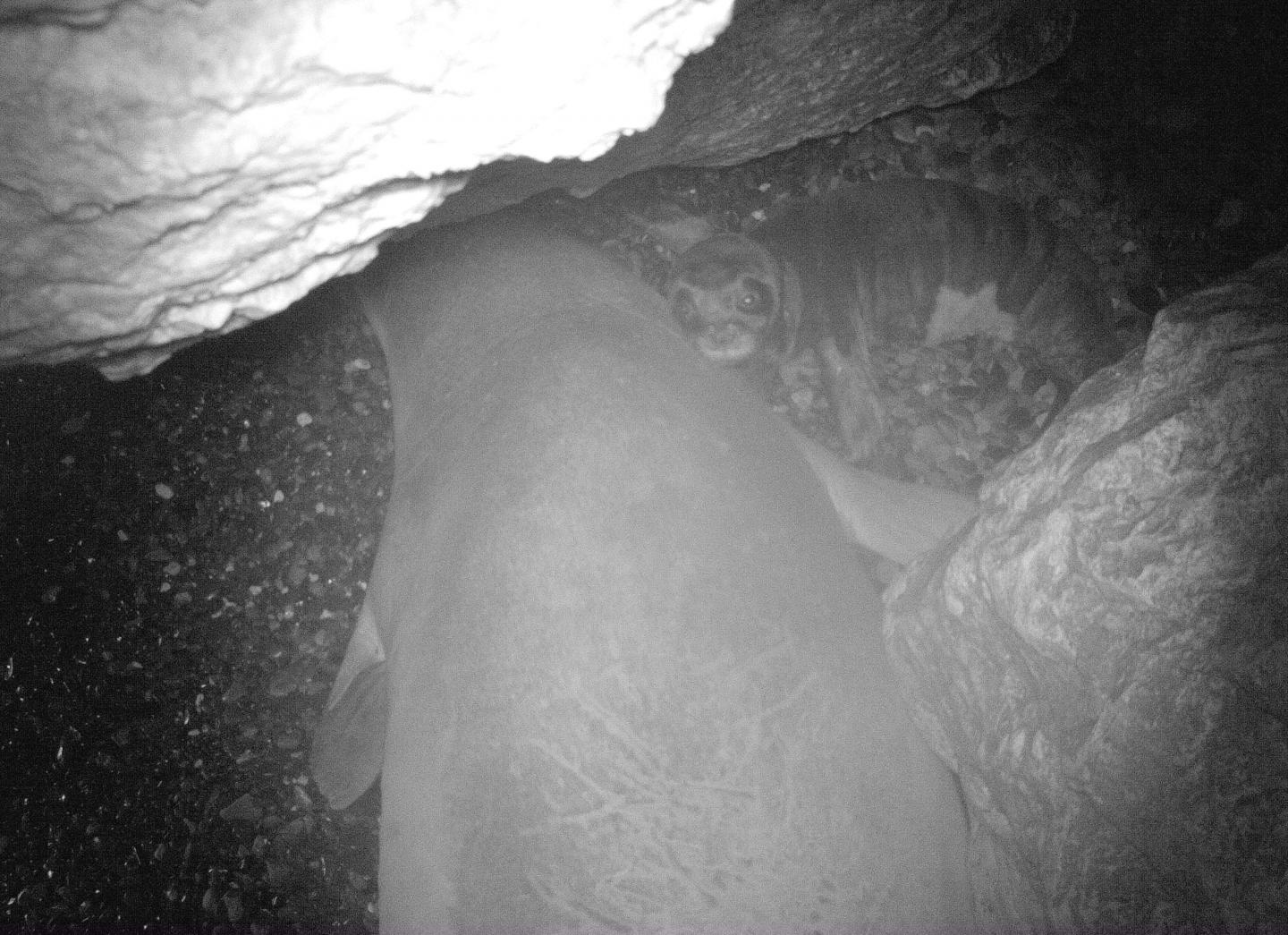
Credit: SPOT/Monk Seal Project

Scientists have discovered a previously unknown breeding site used by the world’s rarest seal species.

The Mediterranean monk seal is classified as “endangered”, with a total population of about 700.

The new study – by the University of Exeter and the Society for the Protection of Turtles (SPOT) – used camera-traps to confirm breeding in caves in northern Cyprus, with at least three pups born from 2016-19 at one cave.

Only certain caves are suitable for monk seal breeding and resting, so – although the numbers are small – the researchers say urgent action is needed to protect these caves.

“This area of coastline in being developed rapidly, especially for construction of hotels,” said Dr Robin Snape, of the Centre for Ecology and Conservation on Exeter’s Penryn Campus in Cornwall.

“A survey of the coast in 2007 found 39 possible breeding caves, and some of these have already been destroyed.

“The main breeding site we identify in this study currently has no protected status, and we are working with local authorities to try to change this.”

Lead author Dr Damla Beton, of SPOT, added: “Another major threat to monk seals in this area is bycatch (accidental catching by fisheries).

“We are working with fishers and government ministries to ensure protection areas at sea, because at present no measures are implemented to mitigate bycatch in the core areas used by these seals.”

The team has now established long-term monitoring of the breeding caves, aiming to determine the size of this seal population.

###

The study, carried out in collaboration with the Middle Eastern Technical University with the support of the local authorities, received funding from the MAVA Foundation.

The paper, published in Oryx – the International Journal of Conservation, is entitled: “New monitoring confirms regular breeding of the Mediterranean monk seal in Northern Cyprus.”

Media Contact
Alex Morrison
[email protected]

Related Journal Article

http://dx.doi.org/10.1017/S0030605320000848

Tags: BiodiversityBiologyDevelopmental/Reproductive BiologyEcology/EnvironmentFisheries/AquacultureMarine/Freshwater BiologyPopulation BiologyZoology/Veterinary Science
Share12Tweet8Share2ShareShareShare2

Related Posts

Tracking Lanthanide-Labeled Microplastics in Plants

June 25, 2026

POSTECH Researchers Slash Cost of Reconstituted Cell-Free Systems by 95%

June 25, 2026

AI and Physics Collaborate to Design Advanced Hydrogen Storage Materials

June 25, 2026

Natural Hallucinogens: Evolution’s Ecological Tools, Not Mere Chemical Byproducts

June 25, 2026
Please login to join discussion

POPULAR NEWS

  • Saying Goodbye to PGY-6: Pediatric Fellowship Realities

    103 shares
    Share 41 Tweet 26
  • Multi-Hospital Study Reveals Long Covid Burden Is Twice as High as Current Estimates

    92 shares
    Share 36 Tweet 23
  • Detection of EDCs in Breast Milk and Infant Urine Up to Six Months Highlights Early Exposure Risks

    77 shares
    Share 31 Tweet 19
  • New Drug Candidate Developed at McMaster Shows Potential for Treating Brain Cancer

    58 shares
    Share 23 Tweet 15

About

We bring you the latest biotechnology news from best research centers and universities around the world. Check our website.

Follow us

Recent News

Tracking Lanthanide-Labeled Microplastics in Plants

POSTECH Researchers Slash Cost of Reconstituted Cell-Free Systems by 95%

AI and Physics Collaborate to Design Advanced Hydrogen Storage Materials

Subscribe to Blog via Email

Success! An email was just sent to confirm your subscription. Please find the email now and click 'Confirm' to start subscribing.

Join 82 other subscribers
  • Contact Us

Bioengineer.org © Copyright 2023 All Rights Reserved.

Welcome Back!

Login to your account below

Forgotten Password?

Retrieve your password

Please enter your username or email address to reset your password.

Log In
No Result
View All Result
  • Homepages
    • Home Page 1
    • Home Page 2
  • News
  • National
  • Business
  • Health
  • Lifestyle
  • Science

Bioengineer.org © Copyright 2023 All Rights Reserved.