• HOME
  • NEWS
  • EXPLORE
    • CAREER
      • Companies
      • Jobs
    • EVENTS
    • iGEM
      • News
      • Team
    • PHOTOS
    • VIDEO
    • WIKI
  • BLOG
  • COMMUNITY
    • FACEBOOK
    • INSTAGRAM
    • TWITTER
Saturday, November 14, 2026
BIOENGINEER.ORG
No Result
View All Result
  • Login
  • HOME
  • NEWS
  • EXPLORE
    • CAREER
      • Companies
      • Jobs
        • Lecturer
        • PhD Studentship
        • Postdoc
        • Research Assistant
    • EVENTS
    • iGEM
      • News
      • Team
    • PHOTOS
    • VIDEO
    • WIKI
  • BLOG
  • COMMUNITY
    • FACEBOOK
    • INSTAGRAM
    • TWITTER
No Result
View All Result
Bioengineer.org
No Result
View All Result
Home NEWS Science News Technology

Conical Scrolled Dies Optimize Material Flow and Microstructure in Friction Extrusion

by
November 14, 2026
in Technology
Reading Time: 2 mins read
0
Conical Scrolled Dies Optimize Material Flow and Microstructure in Friction Extrusion

Conical Scrolled Dies Optimize Material Flow and Microstructure in Friction Extrusion

Share on FacebookShare on TwitterShare on LinkedinShare on RedditShare on Telegram

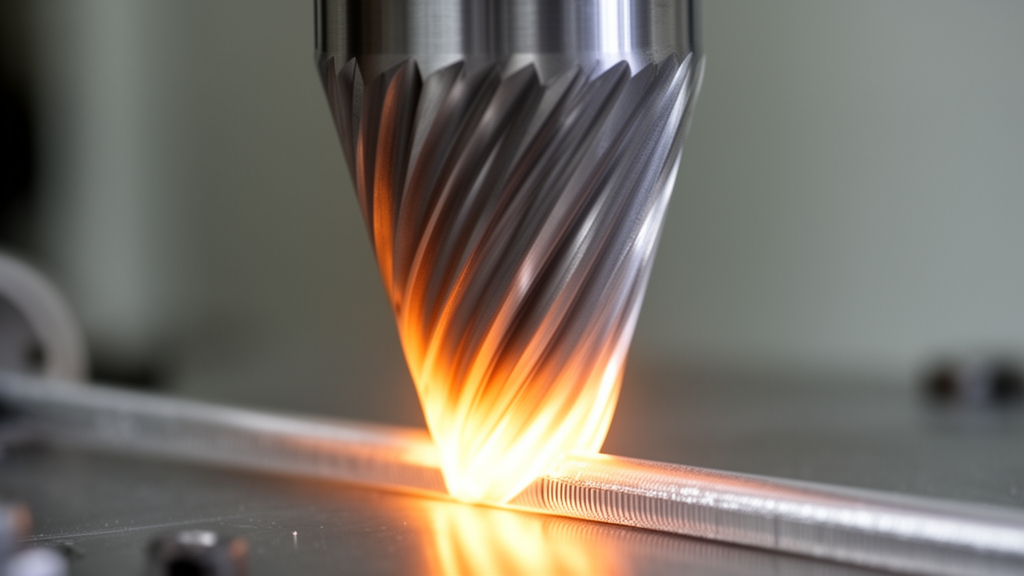
A computational and experimental investigation has clarified how die face geometry governs material flow, thermomechanical history, and grain refinement during the friction extrusion of aluminum rods. Friction extrusion operates as a solid-phase manufacturing method capable of producing high-performance composites characterized by low porosity and homogeneous microstructures through industrially scalable routes. Despite these practical benefits, the specific role of die surface architecture in steering localized deformation and thermal evolution had previously remained unclear. To resolve these mechanisms, researchers evaluated five distinct die geometries using an experimentally validated smoothed particle hydrodynamics computational framework alongside electron backscatter diffraction measurements of processed AA1100 aluminum alloy in the O temper condition.

The study specifically focused on aluminum feedstocks intended for electrical grid-conductor applications, comparing a standard flat die against scrolled variants and conical scrolled variants, tested both with and without a central counterbore. Numerical simulations revealed that the conventional flat die face develops a narrow interfacial sticking zone accompanied by pronounced slip adjacent to the extrusion orifice. This localized contact behavior produces concentrated strain rate and temperature fields near the tooling surface, generating steep core-to-edge gradients in accumulated plastic strain across the processed rod profile.

Introducing scroll features to the die face fundamentally alters interfacial interaction by enlarging the effective processing zone and enhancing material mixing through promoted sticking contact. When conical face profiles are implemented, they systematically lower interfacial contact pressures and homogenize the resulting thermomechanical fields throughout the deformation zone. Consequently, combining conical taper with surface scrolls balances contact dynamics and moderates severe localized heating, establishing a more uniform deformation pathway across the entire cross-section of the feedstock.

Microstructural characterization confirmed the direct mechanical consequences of these modified deformation histories on dynamic recrystallization behavior. Electron backscatter diffraction showed that the conical scrolled die and the conical scrolled die with a counterbore produced the finest dynamically recrystallized grains among all examined configurations. By correlating these microstructural observations with localized thermomechanical conditions, the authors established a quantitative Zener-Hollomon parameter-grain size relationship that offers a physics-based framework for designing future friction extrusion dies and process parameters.

Subject of Research: Influence of die geometry on friction extrusion mechanics and microstructure

Article Title: Influence of die face geometry on material flow, thermomechanical history, and microstructure in friction extrusion

Article References: Li, L., Das, H., Reza-E-Rabby, M., Shukla, S., Nittala, A. K., Soulami, A., & Kappagantula, K. S. (2026). Influence of die face geometry on material flow, thermomechanical history, and microstructure in friction extrusion. npj Advanced Manufacturing. https://doi.org/10.1038/s44334-026-00122-8

Image Credits: AI Generated

DOI: 10.1038/s44334-026-00122-8

Keywords: friction extrusion, die geometry, material flow, thermomechanical history, microstructure, AA1100, aluminum alloy, smoothed particle hydrodynamics, electron backscatter diffraction, dynamic recrystallization, grain refinement, Zener-Hollomon parameter, solid-phase processing, grid conductors, conical scrolled die, interfacial sticking, plastic strain

News Source: Denise Maddox. (November 14, 2026). Conical Scrolled Dies Optimize Material Flow and Microstructure in Friction Extrusion. Scienmag.


Tags: AA1100aluminum alloyconical scrolled diedie geometrydynamic recrystallizationelectron backscatter diffractionfriction extrusiongrain refinementgrid conductorsinterfacial stickingmaterial flowmicrostructureplastic strainsmoothed particle hydrodynamicssolid-phase processingthermomechanical historyZener-Hollomon parameter
Share12Tweet7Share2ShareShareShare1

Related Posts

Physician-Modified Endograft Preserves Renal Artery in Complex Aortic Aneurysm Repair

Physician-Modified Endograft Preserves Renal Artery in Complex Aortic Aneurysm Repair

November 14, 2026
Open-Source Python Library pt13528 Verifies ISO Proficiency Statistics and Exposes Discrepancies

Open-Source Python Library pt13528 Verifies ISO Proficiency Statistics and Exposes Discrepancies

November 14, 2026

Treating Hospital Associated with Breast Cancer Care Coordination Patterns in Australian Study

November 14, 2026

Bidirectional Graph Neural Networks Better Withstand Noise in Text-Derived Biomedical Graphs

November 14, 2026

POPULAR NEWS

  • Disordered Protein Termini Suppress Cotranslational Degradation in Yeast and Human Cells

    Disordered Protein Termini Suppress Cotranslational Degradation in Yeast and Human Cells

    29 shares
    Share 12 Tweet 7
  • Open-Source Python Library pt13528 Verifies ISO Proficiency Statistics and Exposes Discrepancies

    29 shares
    Share 12 Tweet 7
  • Machine Learning Model Predicts In-Hospital Mortality in Severe Fever with Thrombocytopenia Syndrome

    29 shares
    Share 12 Tweet 7
  • Machine Learning Accurately Predicts Chronic Ankle Reinjury Using Sex-Adjusted Thresholds

    29 shares
    Share 12 Tweet 7

About

We bring you the latest biotechnology news from best research centers and universities around the world. Check our website.

Follow us

Recent News

Physician-Modified Endograft Preserves Renal Artery in Complex Aortic Aneurysm Repair

Disordered Protein Termini Suppress Cotranslational Degradation in Yeast and Human Cells

Open-Source Python Library pt13528 Verifies ISO Proficiency Statistics and Exposes Discrepancies

Subscribe to Blog via Email

Enter your email address to subscribe to this blog and receive notifications of new posts by email.

Join 87 other subscribers
  • Contact Us

Bioengineer.org © Copyright 2023 All Rights Reserved.

Welcome Back!

Login to your account below

Forgotten Password?

Retrieve your password

Please enter your username or email address to reset your password.

Log In
No Result
View All Result
  • Homepages
    • Home Page 1
    • Home Page 2
  • News
  • National
  • Business
  • Health
  • Lifestyle
  • Science

Bioengineer.org © Copyright 2023 All Rights Reserved.