A 60-day nutritional investigation published in Aquaculture Science and Management has demonstrated that rain tree seed protein concentrate can completely substitute for conventional soybean meal in the diets of juvenile Nile tilapia, Oreochromis niloticus. Led by researchers Namitha Dileep, Nikhila Peter, Sweta Das, and Chiranjiv Pradhan, the controlled feeding trial evaluated graded dietary substitutions across five experimental groups to assess whether this underutilized botanical resource could serve as an effective, sustainable protein replacement. Plant protein concentrates have attracted growing interest across global aquaculture as researchers seek functional substitutes for conventional terrestrial plant meals like soybean meal, which currently serve as primary dietary protein sources across commercial operations. Although soybean meal supplies between 44.0 percent and 49.0 percent crude protein along with favorable levels of lysine, tryptophan, phenylalanine, and leucine, its practical application remains constrained by nutritional challenges. Specifically, soybean meal is inherently deficient in the essential sulfur-containing amino acid methionine, contains antinutritional factors such as phytate and trypsin inhibitors that impair mineral uptake and protein digestion, and has been documented to induce intestinal inflammation in multiple cultured fish species, including common carp, orange-spotted grouper, and larval zebrafish.
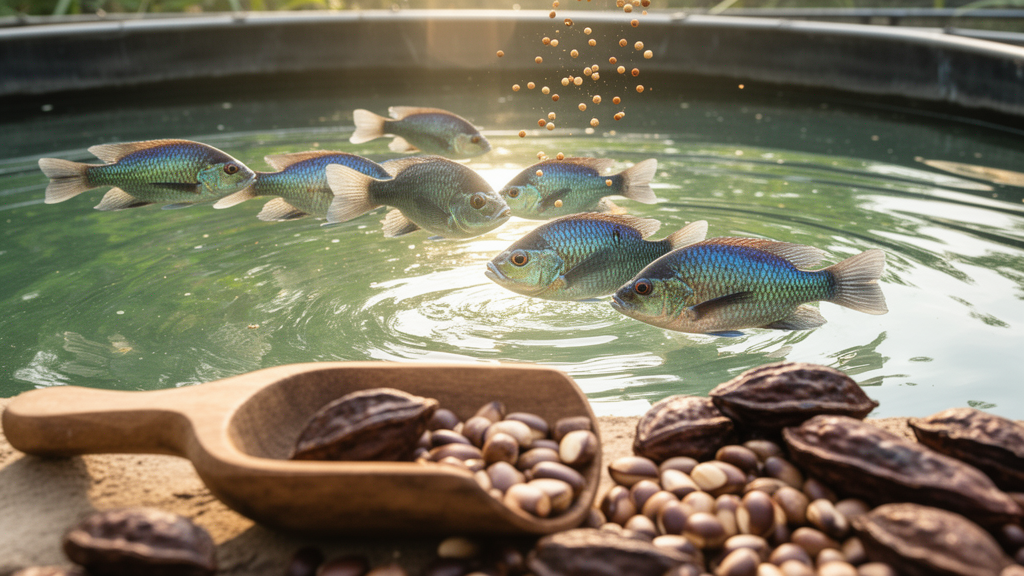
To overcome the limitations associated with standard leguminous meals, the authors focused on the rain tree, Samanea saman, a leguminous tree belonging to the Fabaceae family that originated in northern South America and is now naturalized throughout tropical regions worldwide. Mature rain trees are highly productive, yielding an average of 250 to 300 kilograms of pods per tree during each fruiting season. Each mature pod houses 15 to 20 dark glossy brown, plumply ellipsoidal seeds measuring approximately 8.2 to 11.4 millimeters in length and 5.0 to 7.5 millimeters in width, with one kilogram comprising roughly 4000 to 6000 individual seeds. Unprocessed rain tree seeds contain crude protein levels ranging between 16.6 percent and 31.6 percent. While earlier aquaculture evaluations showed that incorporating whole rain tree pods up to 300 grams per kilogram into feeds supported normal growth in Labeo rohita larvae and Catla catla fingerlings, feeding whole unprocessed seeds to Nile tilapia previously caused depressed growth and reduced nutrient utilization. These adverse reactions were linked to native antinutritional factors within whole seeds, including tannins, saponins, phytates, and trypsin inhibitors, which interfere with normal intestinal function and suppress endogenous digestive enzyme activity.
To eliminate these antinutritional impediments and concentrate the primary protein fraction, the research team harvested rain tree pods from the campus grounds of Kerala University of Fisheries and Ocean Studies located in Panangad, Kerala. The seeds were mechanically excised from their pods, thoroughly dried, dehulled, ground using a specialized mechanical grinder, and passed through analytical sieves to achieve a uniform particle size below 400 micrometers. Following defatting of the resulting seed powder, the investigators subjected the meal to an alkaline and acid wash procedure relying on isoelectric precipitation. This multi-step processing technique insolubilizes target seed proteins while removing soluble carbohydrates, unwanted flavor complexes, and secondary compounds, followed by centrifugal separation of the concentrated protein mass. The resulting rain tree seed protein concentrate achieved an overall recovery yield of 10 percent relative to raw seed mass. Proximate composition analysis confirmed that the concentrate contained 64.16 percent crude protein, representing a substantial 107.97 percent increase relative to the 30.85 percent crude protein measured in defatted raw rain tree seed meal, alongside a 54.53 percent elevation in total ash content and concurrent reductions in crude lipid, fiber, and nitrogen-free extract.
Beyond elevating absolute crude protein, the concentration protocol dramatically enhanced the nutritional quality of the ingredient by expanding its essential amino acid density and stripping out physiological deterrents. Amino acid profiling conducted via ultra-performance liquid chromatography coupled with tandem mass spectrometry demonstrated a 234.36 percent overall expansion in total essential amino acids in the concentrate compared to raw seed meal, with marked individual elevations across all essential amino acids. Concurrently, spectrophotometric and biochemical assays revealed that the extraction method removed nearly all native antinutritional compounds. Compared to untreated seed meal, total phenolic compounds decreased by 99.57 percent, phytate-phosphorus levels dropped by 99.43 percent, and trypsin inhibitor activity was reduced by 99.81 percent. These analytical reductions ensured that when the concentrate was subsequently formulated into experimental diets, the finished feeds incorporating the highest levels of the concentrate exhibited the lowest residual quantities of total phenolics, phytate-phosphorus, and trypsin inhibitors, whereas diets reliant entirely on standard soybean meal carried noticeably higher baseline levels of these digestive inhibitors.
Using the purified concentrate, the investigators formulated five experimental diets designed to be iso-nitrogenous at 30 percent crude protein and iso-lipidic at 6 percent crude lipid. The baseline control diet, designated RTSPC0, relied on standard soybean meal as its sole secondary plant protein foundation without any rain tree seed protein concentrate. Four experimental test diets were formulated by replacing 25, 50, 75, and 100 percent of the soybean meal protein with rain tree seed protein concentrate, designated as RTSPC25, RTSPC50, RTSPC75, and RTSPC100, respectively. All ingredient mixtures were uniformly ground, accurately weighed, blended, and autoclaved at 75 degrees Celsius under 15 pounds per square inch of pressure for 15 minutes to deactivate any lingering heat-sensitive antinutritional factors. The hydrated dough was supplemented with vegetable oil, a premix of vitamins and minerals, carboxymethylcellulose binder, tricalcium phosphate, choline chloride, and crystalline L-methionine and L-lysine before being extruded through a mechanical pelletizer equipped with a 2-millimeter die, oven-dried at 55 degrees Celsius, crumbled to an appropriate particle diameter, and preserved in airtight containers.
The biological feeding trial utilized healthy Nile tilapia fingerlings procured from the Marine Products Development Authority of the Government of India in Kochi, Kerala. Prior to the trial, the juvenile fish were bathed in a 1 part per million potassium permanganate solution for external prophylactic disinfection and acclimated to experimental holding facilities for two weeks while receiving the control feed twice daily. A total of 300 fingerlings displaying an initial mean body weight of 1.81 plus or minus 0.12 grams were randomly distributed across 15 circular plastic tanks containing 100 liters of water each, establishing stocking densities of 20 fish per tank with three complete tank replicates per dietary treatment. Fish were hand-fed their assigned diets to apparent satiation twice each day at 09:00 and 16:00 hours across an uninterrupted 60-day experimental schedule. To preserve environmental stability, approximately 25 percent of the water volume in every tank was replaced daily with fresh aerated water. Monitored physical and chemical parameters remained within optimal thresholds throughout the duration of the study, averaging a water temperature of 29.4 plus or minus 0.13 degrees Celsius, pH of 6.9 plus or minus 0.56, dissolved oxygen of 5.66 plus or minus 0.10 milligrams per liter, and total ammonia nitrogen of 0.01 plus or minus 0.001 milligrams per liter.
Growth performance parameters measured at the conclusion of the 60-day trial showed significant improvements among fish receiving higher dietary levels of the seed protein concentrate, with general survival remaining exemplary across all treatments at levels exceeding 99 percent. Nile tilapia fed diets containing 75 percent and 100 percent soybean meal replacement exhibited superior final body weights, net weight gains, weight gain percentages, and specific growth rates that did not significantly differ between RTSPC75 and RTSPC100 but were significantly higher than those fed the unsupplemented control diet RTSPC0. Mathematical regression analysis confirmed that weight gain followed a significant linear and quadratic pattern relative to inclusion rate, described by the quadratic function y = 0.0027x squared plus 0.1874x plus 152.96 with an R-squared of 0.8747. Feed conversion efficiency improved in tandem, showing the highest feed conversion ratio of 1.91 in the soybean control group RTSPC0 and decreasing significantly to 1.25 in RTSPC75 and 1.26 in RTSPC100. Protein efficiency ratio and protein retention efficiency reached their maximum values in fish receiving the RTSPC75 diet, whereas whole-body lipid retention efficiency peaked in fish consuming the complete replacement RTSPC100 diet. Evaluation of somatic indices indicated that viscerosomatic index values did not differ significantly among diets, whereas hepatosomatic index showed a transient elevation specifically in the RTSPC50 cohort. Whole-body proximate analysis revealed that fish receiving the complete substitution diet RTSPC100 accumulated significantly higher crude protein and crude lipid reserves, alongside a reciprocal decline in whole-body moisture and unchanging total ash content.
Physiological assessments of circulating serum confirmed that the total replacement of soybean meal supported systemic fish health without eliciting signs of metabolic stress or organ toxicity. Blood samples collected from caudal vessels following clove oil anesthesia at 50 milligrams per liter demonstrated significant differences in hematological and serum parameters across treatments. Circulating hemoglobin levels changed significantly across treatments, with the lowest values recorded in fish fed the unsupplemented RTSPC0 control diet. Serum glucose concentrations dropped significantly from a peak of 108.34 milligrams per deciliter in the RTSPC25 group down to 82.42 milligrams per deciliter in the RTSPC75 group, with similarly low levels maintained in the RTSPC100 cohort, reflecting efficient carbohydrate assimilation and systemic glucose utilization for energetic needs. Circulating total protein followed a quadratic response curve across diets, whereas serum albumin concentrations remained virtually identical across all treatment levels, verifying that the seed concentrate caused no systemic liver dysfunction. Serum cholesterol and triglyceride concentrations exhibited marked, progressive reductions that followed strong quadratic trends, modeled respectively by regression equations showing lower circulating lipid values at higher replacement rates. Furthermore, serum alkaline phosphatase activity, a recognized clinical biomarker whose elevation denotes cellular injury or hepatic bile duct obstruction, declined significantly as rain tree seed concentrate inclusion increased, with the highest activity observed in control fish fed RTSPC0 and the lowest in fish receiving the complete replacement diet.
Evaluations of digestive physiology, hepatic antioxidant defenses, and metabolic enzymatic cascades provided biochemical evidence explaining the improved somatic performance observed in the higher concentrate groups. Although intestinal protease and lipase activities showed no statistically significant differences across dietary treatments, intestinal amylase activity increased significantly in fish consuming the concentrate, reaching its highest level in the RTSPC100 cohort and adhering to a quadratic mathematical response curve described by y = negative 0.0001x squared plus 0.0515x plus 13.785 with an R-squared of 0.7917. In hepatic tissue, primary antioxidant enzymes responded robustly to dietary concentrate levels, with superoxide dismutase and catalase activities escalating across inclusion levels. Hepatic glutathione peroxidase and glutathione S-transferase activities similarly adhered to quadratic relationships, with glutathione peroxidase activity peaking significantly in the RTSPC100 group. Analysis of central hepatic metabolic enzymes revealed substantial upregulation across glycolytic, pentose phosphate, and tricarboxylic acid pathways: hexokinase activity reached 14.51 units per milligram of protein in RTSPC100, an 8.4-fold elevation over the control level of 1.73 units per milligram of protein, while glucose-6-phosphate dehydrogenase activity rose 4.5-fold to 68.51 units per milligram of protein compared to 15.11 units per milligram of protein in controls. Malate dehydrogenase activity in liver tissue likewise showed significant increases in both RTSPC75 and RTSPC100 cohorts, confirming elevated cellular capacity for aerobic respiration and intermediary energy generation.
Complementing these enzymatic and somatic responses, quantitative real-time polymerase chain reaction analysis of hepatic tissue confirmed that dietary rain tree seed protein concentrate modulated the endocrine growth axis at the transcriptional level. Using beta-actin as a reference housekeeping gene, relative expression analysis of hepatic insulin-like growth factor 1, or IGF-1, demonstrated progressive transcriptional upregulation with increasing dietary concentrate levels, achieving its maximum expression in the RTSPC100 cohort, followed closely by RTSPC75, and remaining at its baseline minimum in the control RTSPC0 group. Because insulin-like growth factor 1 functions as a primary hormonal mediator driving DNA synthesis, cell proliferation, and hypertrophic and hyperplastic muscle tissue growth in teleost fish, this molecular upregulation aligns directly with the heightened weight gains, superior feed conversion efficiencies, and elevated whole-body protein deposition documented in the trial. While these laboratory findings confirm that rain tree seed protein concentrate can successfully replace 100 percent of dietary soybean meal in juvenile Nile tilapia feeds under experimental holding conditions, the researchers noted that commercial adoption will depend on future research resolving processing scalability, long-term physiological outcomes over multi-season grow-out cycles, and overall economic cost-effectiveness in large-scale aquafeed manufacturing.
Subject of Research: Evaluation of rain tree seed protein concentrate as a dietary replacement for soybean meal in Nile tilapia aquaculture
Article Title: Evaluation of rain tree seed protein concentrate as an alternative to soybean meal in the diet of Nile tilapia Oreochromis niloticus
Article References: Dileep, N., Peter, N., Das, S., & Pradhan, C. (2025). Evaluation of rain tree seed protein concentrate as an alternative to soybean meal in the diet of Nile tilapia Oreochromis niloticus. Aquaculture Science and Management, 2(1), Article 10. https://doi.org/10.1186/s44365-025-00016-4
Image Credits: AI Generated
DOI: 10.1186/s44365-025-00016-4
Keywords: Nile tilapia, Oreochromis niloticus, rain tree seed, protein concentrate, soybean meal replacement, aquafeed nutrition, antioxidant enzymes, gene expression, Evaluation, rain, tree, seed
News Source: Alan Morgan. (November 9, 2026). Rain Tree Seed Protein Concentrate Can Fully Replace Soybean Meal in Tilapia Feed. Scienmag.