


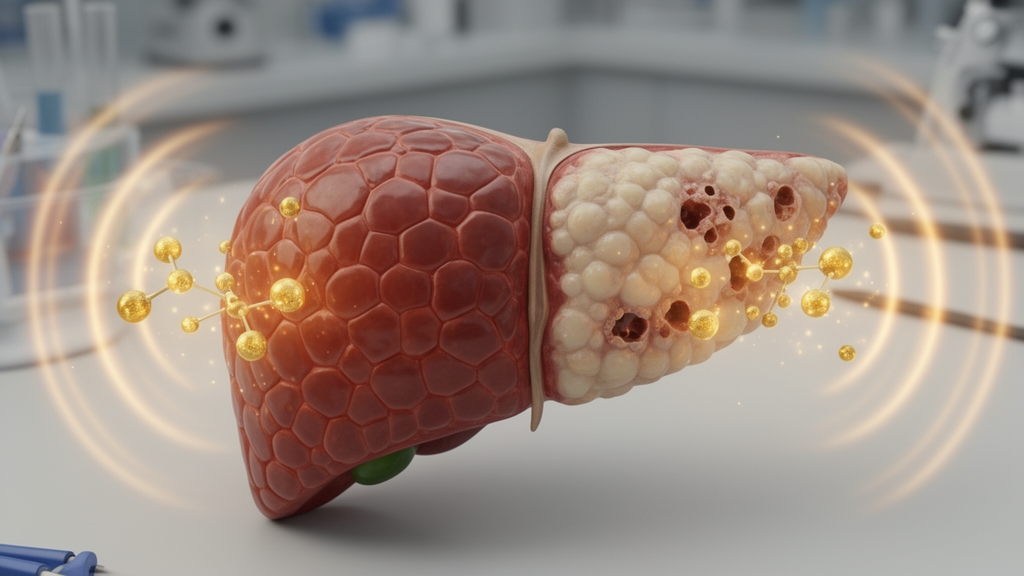
A combination of the dietary flavonoid quercetin and fractionated low-dose gamma irradiation outperformed either treatment alone in rats with chemically induced liver cancer, according to a new study published in the journal Genes & Nutrition.
The team induced liver injury and tumor formation in male Wistar rats using diethylnitrosamine, or DEN, a potent hepatocarcinogen widely used to mimic the oxidative stress, inflammation, autophagy dysregulation and apoptosis resistance that characterize human hepatocellular carcinoma. Ninety rats were randomly divided at the outset: ten received saline as healthy controls, while eighty received DEN intraperitoneally at 75 mg/kg weekly for three weeks, followed by 100 mg/kg weekly for another three weeks. After six weeks, one randomly selected DEN rat was euthanized to confirm histologically that preneoplastic foci and dysplastic hepatocytes had developed before any therapy began. The remaining seventy-nine DEN-exposed rats were then re-randomized into four groups of roughly twenty animals each for an eight-week treatment period, bringing the total experiment to fourteen weeks.
The four treatment arms were designed to isolate each intervention’s contribution. One group received no therapy beyond DEN exposure. A second received oral quercetin at 50 mg/kg per day. A third underwent whole-body gamma irradiation totaling 1 Gy, delivered as four weekly fractions of 0.25 Gy at a calibrated dose rate of 0.403 Gy per minute using a cesium-137 biological irradiator. The fourth received both quercetin and irradiation. The fractionated low-dose regimen was chosen because 0.25 Gy falls within the hormetic window of 0.01 to 0.5 Gy previously associated with adaptive antioxidant and anti-inflammatory responses in rodent liver, and the cumulative 1 Gy total remains far below the threshold for radiation-induced hepatic fibrosis. Mortality from chronic DEN toxicity was substantial and uneven across groups: at study termination, survivors numbered ten controls, six DEN-only rats, fourteen quercetin-treated rats, sixteen irradiated rats and seventeen combination-treated rats.
The clearest signal of protection came from liver enzymes. DEN alone drove serum alanine aminotransferase up 9.1-fold and aspartate aminotransferase up 22.4-fold relative to healthy controls, confirming severe hepatocyte damage. Quercetin monotherapy cut these elevations by 43.9 percent and 47.6 percent respectively, while low-dose irradiation reduced them by 33.1 percent and 47.4 percent. The combination was markedly stronger, lowering ALT by 61.2 percent and AST by 82.7 percent versus DEN alone, differences that were statistically superior to either monotherapy. Even so, the authors emphasize that enzymes in the combination group remained significantly above control levels, at 3.4-fold for ALT and 3.9-fold for AST, indicating substantial but incomplete normalization.
Oxidative stress measurements told a parallel story. DEN exposure raised hepatic malondialdehyde, a lipid peroxidation marker, by 5.6-fold and reactive oxygen species by 3.6-fold, while depleting the antioxidant enzymes superoxide dismutase and reduced glutathione by roughly 76 to 77 percent. Quercetin reduced MDA by 46.0 percent and ROS by 40.3 percent; irradiation reduced them by 38.1 percent and 41.8 percent. The combination cut MDA by 70.2 percent and ROS by 60.5 percent, and boosted SOD by 209.1 percent and GSH by 267.2 percent relative to DEN, again exceeding either single agent. The authors note that their ROS assay measured stable oxidative byproducts through an ELISA kit rather than detecting transient radicals directly, a limitation they acknowledge.
Inflammatory and growth signaling pathways showed the same hierarchy. DEN increased the pro-inflammatory transcription factor NF-κB p65 by 8.0-fold and STAT-3 by 4.4-fold, while raising mTOR and p38 MAPK gene expression by 9.0-fold and 10.6-fold respectively. Quercetin alone suppressed NF-κB by 44.8 percent and STAT-3 by 33.1 percent; irradiation suppressed them by 34.6 percent and 32.4 percent. The combination achieved reductions of 70.2 percent for NF-κB, 59.0 percent for STAT-3, 64.9 percent for mTOR and 78.6 percent for p38 MAPK versus DEN, all significantly greater than either monotherapy. Yet the authors are careful to state that these pathways approached, but did not fully return to, baseline levels.
Two cellular processes central to cancer biology shifted in the combination group as well. DEN suppressed autophagy markers dramatically, reducing ULK-1 by 80.0 percent, LC3-II by 85.5 percent and ATG5 by 64.6 percent. All treatments restored these markers, but the combination produced the largest recovery, increasing ULK-1 by 318.6 percent, LC3-II by 531.1 percent and ATG5 by 1654.3 percent versus DEN. The authors caution that autophagic flux was not directly assessed, since they did not measure p62 degradation or use flux inhibitors such as chloroquine, so they cannot distinguish genuine flux restoration from late-stage flux blockade. Apoptosis likewise moved toward cell death: DEN reduced caspase-3 activity by 74.6 percent while raising anti-apoptotic BCL-2 by 4.5-fold, and the combination reversed this most strongly, increasing caspase-3 by 1231.8 percent and cutting BCL-2 by 63.2 percent relative to DEN.
Flow cytometry added single-cell evidence. In DEN-only liver, cells accumulated in S phase at 43.8 percent with a shrunken apoptotic Sub-G1 fraction of 1.3 percent. Quercetin alone pushed cells into G2/M arrest at 33.7 percent; irradiation alone produced S-phase arrest at 56.2 percent. The combination drove the deepest G2/M arrest at 47.2 percent, reduced the S-phase population to 10.0 percent, and raised the Sub-G1 apoptotic fraction to 6.0 percent, the highest of any group. Annexin V/PI staining, performed on fresh cells, showed total apoptosis reaching 40 percent with viable cells falling to 35 percent in the combination group, significantly higher than in non-irradiated counterparts. The authors note an important caveat here: these suspensions came from whole liver tissue and contained hepatocytes, Kupffer cells and stellate cells, so the molecular shifts reflect the tumor microenvironment collectively rather than isolated hepatocellular carcinoma cells.
Histopathology, scored blindly by a board-certified veterinary pathologist on a 0-to-3 scale in six animals per group, corroborated the biochemical findings. DEN-treated livers showed disrupted lobular architecture, bridging fibrosis, pseudolobule formation and foci of well-differentiated hepatocellular carcinoma, with HCC confirmed in four of six animals. Quercetin monotherapy yielded only mild improvement with a median injury score of 2; irradiation alone scored 1.5; and the combination achieved a median score of 1, with five of six animals showing only mild injury and none showing severe damage. No HCC foci were observed in the irradiation-only or combination groups, though the authors stop short of claiming cancer prevention, noting instead that the combination produced the lowest pathology scores and restored hepatic architecture.
The authors frame these results as preclinical and bounded. The study used a single animal model, a single dosing regimen, and biochemical analyses restricted to six randomly selected samples per group because of DEN-related mortality. The proposed hormetic mechanism of low-dose radiation remains hypothetical, since DNA repair proteins and antioxidant response elements were not quantified, and no healthy irradiated control group was included to monitor the effects of the radiation schedule on normal liver. Comparisons with sorafenib in similar DEN models suggest the combination’s magnitude of effect is comparable or greater, but no head-to-head comparison was performed. The team concludes that further studies must determine optimal dosing and timing, evaluate long-term safety, and validate efficacy in additional models before any clinical translation of quercetin combined with low-dose gamma irradiation can be considered.
Subject of Research: A rat study testing combined quercetin and low-dose gamma irradiation against DEN-induced liver injury and hepatocarcinogenesis
Article Title: Quercetin and low-dose gamma irradiation modulate oxidative stress, inflammation, autophagy, and apoptosis in DEN-induced hepatocarcinogenesis
Article References: Khatab, N. S., Elbakary, N. M., Ali, M., Maarouf, R. E., & Zahran, F. (2026). Quercetin and low-dose gamma irradiation modulate oxidative stress, inflammation, autophagy, and apoptosis in DEN-induced hepatocarcinogenesis. Genes & Nutrition, 21(1), Article 12. https://doi.org/10.1186/s12263-026-00810-2
Image Credits: AI Generated
DOI: 10.1186/s12263-026-00810-2
Keywords: quercetin, low-dose gamma irradiation, diethylnitrosamine, hepatocellular carcinoma, oxidative stress, NF-kB, autophagy, apoptosis, rats, preclinical study, radiation hormesis, liver injury
News Source: Nathaniel Bowman. (October 29, 2026). Quercetin Plus Low-Dose Gamma Rays Curbed Chemically Induced Liver Cancer in Rats. Scienmag.



